OpenAI acquires Ona to give Codex a persistent cloud computer
OpenAI plans to acquire Ona and bring its customer-controlled cloud development environments into Codex, shifting coding-agent competition toward runtime, credentials, logs, and long-running work.
- What happened: OpenAI announced on June 11, 2026 that it plans to acquire Ona.
- After closing, the Ona team is expected to join the Codex team.
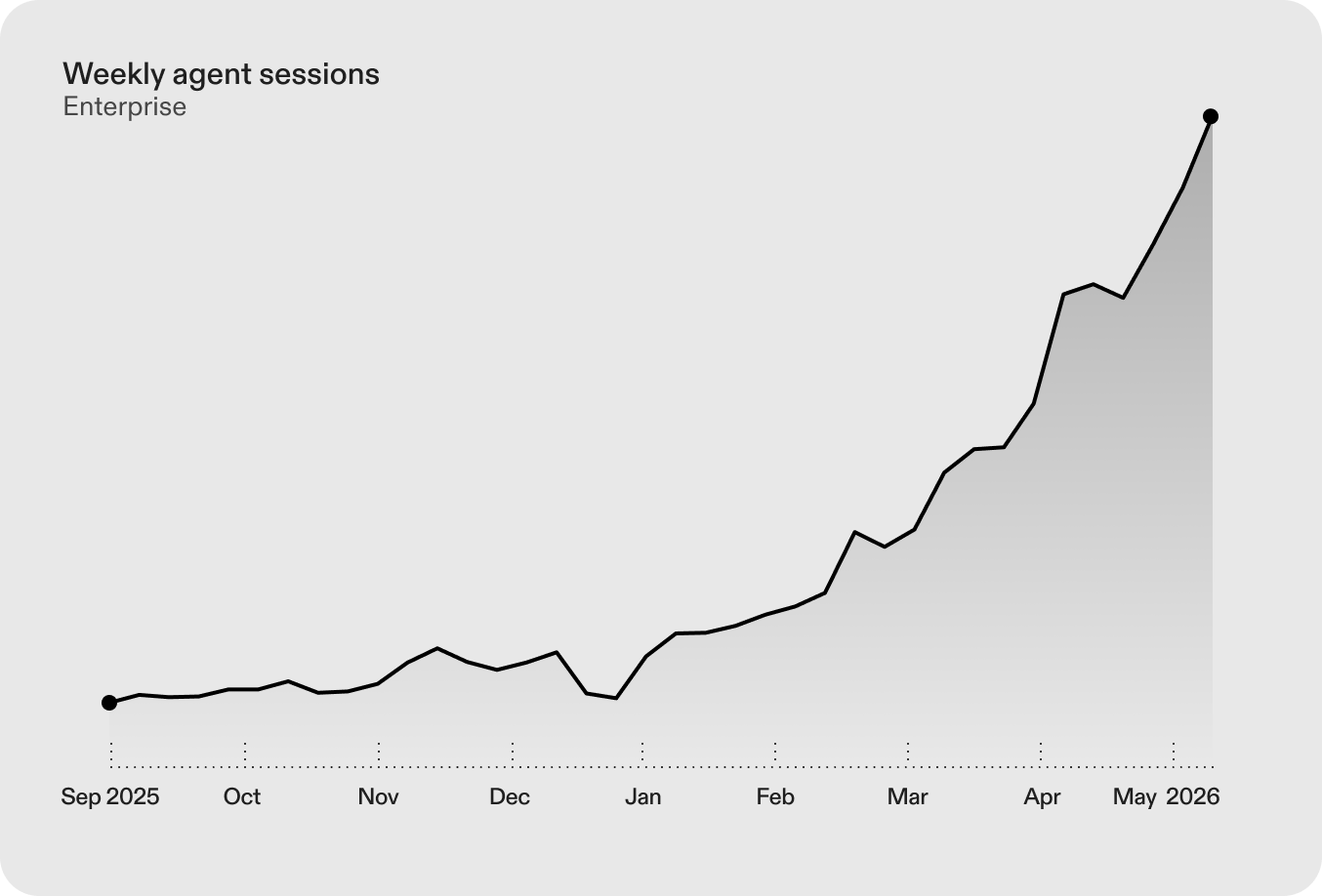
- Numbers to watch: OpenAI says Codex now has more than 5 million weekly users, while Ona cites 13x growth in production agent sessions since earlier this year.
- Technical shift: the competitive layer moves from model scores toward
persistent environments, scoped credentials, audit trails, and customer-controlled execution. - Watch: the transaction still needs closing conditions and regulatory approvals, and OpenAI has not published the exact Codex integration, pricing, or deployment architecture.
OpenAI announced on June 11, 2026 that it plans to acquire Ona. The headline is not only another acquisition. OpenAI frames the deal as a way to give Codex a "persistent place to work." Ona grew out of Gitpod's cloud development environment lineage and now focuses on agent orchestration and customer-controlled cloud workspaces. If the transaction closes, the Ona team will join the Codex team and work on secure cloud infrastructure for long-running coding tasks.
That makes this an infrastructure story, not a new-model story. Coding agents are moving beyond a short local terminal session or an IDE tab on a developer's laptop. They need somewhere to keep a repository clone, installed dependencies, build artifacts, task context, logs, credentials, and review state while work continues for hours or days. OpenAI is buying the company that argues this "somewhere" should be reproducible, persistent, and controlled by the customer.
OpenAI's own usage number explains why the runtime question is arriving now. The announcement says Codex has more than 5 million weekly users, up 400% since earlier this year. OpenAI also says Codex began as a tool for software developers but is expanding into research, analysis, building, and automation. At that scale, the product problem is no longer only whether the model can write a patch. The next problem is whether the agent can safely keep working inside the systems where real software delivery happens.
Ona's announcement makes the same point from the customer operations side. In Ona's post, co-founder Johannes Landgraf says weekly Ona agent sessions in production have grown 13x since earlier this year. The customer examples include the oldest bank in the United States, a large European pharmaceutical company, and a major Asian sovereign wealth fund. Those industries matter because a bad software change can become a compliance failure, a broken customer workflow, a sensitive-data exposure, or a trust problem. Ona is selling against the cost of being wrong, not just the time it takes to write code.
The technical keywords in the two announcements are more important than the acquisition label. OpenAI names secure persistent environments, customer-controlled cloud execution, tools, systems, and context. Ona adds reproducible environments, repeatable automations, deployment inside the customer's cloud, scoped credentials, audit trails, agent orchestration, and runtime AI security. A coding agent that opens a pull request may need to clone a repository, install dependencies, run tests, read an issue, inspect build artifacts, redact secrets, and preserve a review record. If the developer closes a laptop, the state cannot disappear with the local machine.
Ona's starting point is the cloud development environment. Since the Gitpod era, the underlying argument has been that software work should not be trapped on one laptop. A developer should be able to open a project from any device and land in a prepared cloud environment with code and tools ready. Agents make that argument less optional. Humans need computers to work, and agents do too. The difference is that agents may use that computer for longer stretches, with more automated tool calls, and with fewer natural pauses for human judgment.
OpenAI connects that idea directly to Codex's next product phase. Its post says the most valuable Codex work can take more than minutes and can stretch into hours or days. Users should not be tied to the machine where the task began; they should be able to check progress, give direction, make decisions, and review results from wherever they are. That is not just remote desktop. It is a product model where agent work, permissions, intermediate state, and outputs survive beyond a single session boundary.
Security teams will look at the execution environment before they look at the slogan. Coding agents sit in a riskier position than ordinary chatbots. They read repositories, run tests, install packages, edit configuration files, and may touch cloud deployment paths. Their errors show up as broken builds, leaked secrets, bad migrations, or policy violations rather than merely wrong answers. For enterprise adoption, the deciding questions become which environment the agent runs in, which credentials it receives, which logs it leaves, and which human reviews the result.
Ona's customer quotes point to a broader product surface. One customer says a security-breach investigation can be started from a phone during an internal meeting. Another describes Ona as more than a developer-only product, citing diagrams, presentations, and flow charts. Those examples sound ambitious, but they clarify the target shape. If Codex is only a code-completion feature, phone-initiated breach work feels misplaced. If Codex is a long-running workflow runner with customer cloud context, scoped tools, credentials, and audit trails, mobile review and direction become ordinary interface problems.
The acquisition also fits the recent Codex sequence. OpenAI has been adding Codex plugins, comments, Sites, and role-specific workflow expansion. On June 10, it announced an Oracle cloud commitment route that would let some customers access OpenAI models and Codex through OCI purchasing paths. Those announcements handled distribution surfaces and buying paths. Ona answers the next question: once a customer can buy Codex and ask it to take on larger work, where does the agent actually run?
Competitors are already converging on the same layer. GitHub Copilot coding agent operates inside GitHub issues and pull requests. Devin foregrounds a dedicated agent workspace and long-running tasks. Cursor, Factory, and similar tools are pushing background agents, task execution, and review workflows. Microsoft, Google, and AWS have natural incentives to bind agent runtime to their own cloud, identity, and governance surfaces. If OpenAI folds Ona into Codex, the comparison narrows from "who writes code well" to "who gives the coding agent a safe computer to work on."
"Cloud computer" is the concrete phrase here. An agent needs CPU, memory, a filesystem, network access, installed dependencies, environment variables, a secret store, a browser, a terminal, and some representation of IDE or task state. A developer laptop has those pieces by default, but it is also a hard place for an enterprise to govern. A customer-controlled cloud environment can attach access boundaries, network controls, logging, data-residency choices, and cost attribution. None of that is automatic. OpenAI and Ona still have to show what the integrated product actually exposes.
The phrase "customer-controlled" deserves caution. It can mean several architectures: execution inside a customer VPC, a managed OpenAI cloud with tenant isolation, a hybrid workspace, or something more limited. Buyers will need to know where source code and build artifacts persist, whether OpenAI can access credentials, whether logs can stream into a SIEM, which regions are supported, and how private package registries connect. The acquisition announcement gives direction. It does not replace product terms or architecture documentation.
The deal has not closed. OpenAI says the acquisition is subject to customary closing conditions and required regulatory approvals. Until closing, OpenAI and Ona remain separate and independent companies. Ona also says it will continue supporting customers under existing commitments. As of June 12, 2026 KST, organizations should read this as a confirmed acquisition plan and product direction, not as an immediately available Codex runtime.
Platform teams can turn the news into a practical checklist. First, decide whether coding-agent pilots are local-machine centered or cloud-workspace centered. Second, separate agent credentials from human accounts where possible. Third, reduce repository, ticket, CI, artifact-storage, and package-registry access to the task boundary. Fourth, connect agent-created patches to human review and rollback workflows. Fifth, track logs and spend by team, repository, and project so long-running tasks can be audited after they finish.
Build reproducibility becomes more valuable in this model. The old "works on my machine" problem becomes more expensive when an autonomous agent is the one stuck on dependency installation, operating-system differences, private-registry access, flaky tests, stale caches, or missing secrets. If the environment is not reproducible, a failed agent run can look like a weak model even when the real problem is the workspace. Ona's reproducible cloud environments are a way to separate model limitations from environment failures.
Security teams should also read Ona's "runtime AI security" language literally. AI coding agents can encounter prompt injection in issues, malicious dependencies, poisoned test fixtures, compromised build scripts, and secret-exfiltration attempts. Human developers face some of the same risks, but agents call tools quickly and can repeat unsafe actions at scale. Policy before execution, network egress controls during execution, secret access boundaries, output review, and activity logs need to be designed together. Ona's earlier Veto security work sits in that context; the open question is how much of that runtime guardrail becomes part of Codex.
Product teams and non-engineering roles may see a different effect. Ona's post does not limit the workspace to code: it mentions diagrams, presentations, and flow charts. OpenAI says Codex can support testing, issue resolution, application modernization, vulnerability addressing, and complex workflows across the software lifecycle. The Codex name still points to code, but a sufficiently safe execution environment can support operational analysis, documentation, migration planning, and incident investigation. In that version, Codex looks less like an IDE assistant and more like a workflow runner.
The Korean developer community had already been tracking adjacent Codex moves such as mobile integration, plugins, Sites, and remote control. The Ona acquisition sits underneath those surface features. A remote workflow only becomes enterprise-grade when the runtime has durable state, bounded authority, auditability, and a recovery path after mistakes. That is the part of the story that developers should watch after the acquisition headlines pass.
The lack of a disclosed acquisition price also matters. This is not primarily a valuation story. It is a product-infrastructure story inside a broader OpenAI pattern: expanding hardware access, desktop control, enterprise deployment, procurement routes, and agent runtime. Ona covers the workspace layer for Codex. The open strategic question is whether coding-agent platforms will keep model providers and work environments separate, or whether products like Codex will bundle both.
Five signals will show whether the deal changes daily work. First, watch when an Ona-backed persistent environment appears in Codex and which pricing tier receives it. Second, watch whether customer-cloud or VPC execution is available, and in which clouds and regions. Third, watch how audit logs and credential scopes connect to enterprise IAM, secret managers, and SIEM tools. Fourth, watch whether OpenAI ships phone or tablet review flows for long-running Codex tasks. Fifth, watch whether OpenAI moves beyond weekly-user counts and publishes stronger enterprise metrics such as completed tasks, accepted pull requests, or vulnerability remediation.
The short conclusion is that Codex competition will not end at model benchmarks. Long-running work requires a trusted computer for the agent. OpenAI's reason for acquiring Ona is to put that computer closer to Codex. For development teams, the important shift is not simply that AI writes more code. It is that AI may work for longer inside an environment the company can govern.