Gemini CLI June 18 cutoff and the price of open source agents
Google is moving individual Gemini CLI users to Antigravity CLI. A 100K-star open source agent is being absorbed into a broader platform.
- What happened: Google will stop processing Gemini CLI requests for individual, free, Pro, and Ultra flows on
June 18, 2026.- The migration path is Antigravity CLI; enterprise customers and paid API key users keep their current access.
- The numbers: Google described the Gemini CLI community as millions of users, 100K+ GitHub stars, and 6,000 merged PRs.
- Why it matters: Coding-agent competition is moving from raw model quality toward shared harnesses and platform control.
- Watch: Google says Antigravity CLI will not have
1:1 feature paritywith Gemini CLI on day one.
Google is closing the individual-developer door for Gemini CLI. In a May 19, 2026 Google Developers Blog post, the company said Gemini CLI and Gemini Code Assist IDE extensions will stop processing requests from Google AI Pro, Google AI Ultra, and free Gemini Code Assist for individuals accounts on June 18, 2026. Google's replacement path is Antigravity CLI.
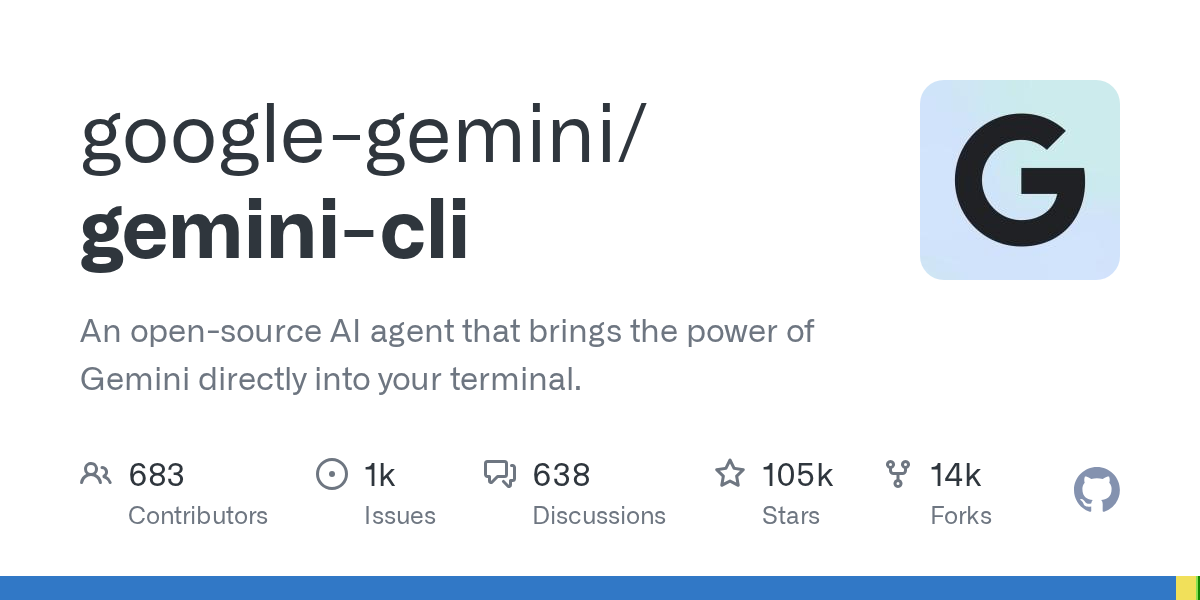
On the surface, this looks like a familiar product consolidation: move the terminal tool to a new CLI, make it faster with a Go implementation, add asynchronous workflows, and share the same agent harness as the Antigravity 2.0 desktop app. But this is not just a rename. Google itself describes Gemini CLI as a community tool with millions of users, more than 100,000 GitHub stars, 6,000 merged pull requests, and hundreds of contributors. A GitHub API check on May 24, 2026 showed the google-gemini/gemini-cli repository above 104,000 stars and 13,000 forks.
That makes the real story larger than "there is a new CLI." An open source coding agent grew into a large community testing ground, and now its main individual access path is being folded into a bigger agent platform. For individual developers, the migration window is less than a month. For teams, it is a reminder to audit the operational risk hidden inside agent automation.
What exactly changes
Google's announcement separates the affected users clearly. Starting June 18, 2026, the impacted group is the individual and consumer-plan side: Google AI Pro and Ultra users, free Gemini Code Assist for individuals users, and developers using Gemini CLI or Gemini Code Assist IDE extensions through those account flows.
Gemini Code Assist for GitHub organizations is also affected. Google says new installations for GitHub organizations will stop on the same date, and request processing will be shut down over the following weeks. If a team has relied on automatic review, pull request assistance, or repository connections through individual account paths, "it should keep working from my account" is no longer a safe assumption.
Enterprise customers are the exception. Organizations using Gemini Code Assist Standard or Enterprise, and organizations using Gemini Code Assist for GitHub through Google Cloud, keep their access. Google also says Gemini CLI remains accessible through paid Gemini API keys and Gemini Enterprise Agent Platform API keys. That split is the political center of the migration. Google is not eliminating terminal agents; it is realigning individual free and subscription account access around a platform-led path.
Google's argument is multi-agent work
Google is not framing this as a simple maintenance decision. The announcement says Gemini CLI proved that the terminal can be a strong interface for agentic tasks, but that developer expectations have changed. Developers now want multiple agents to communicate with one another, split up work, solve complex problems, and share the same backend as the rest of the workflow.
That argument matches the current shape of the coding-agent market. Claude Code, Codex, Cursor, Antigravity, and similar tools are no longer selling only "a model that suggests code in a chat box." They bundle filesystem access, terminal execution, browser interaction, long-running jobs, subagents, scheduling, organization policy, and permission management. The harness in which an agent operates is becoming as important as the model plugged into it.
Antigravity CLI is Google's version of that answer. Google says the new CLI is written in Go, making it faster and more responsive. It is also designed to orchestrate multiple agents in the background, so large refactors or multi-topic research can continue without blocking the terminal session. Because it shares the same agent harness as the Antigravity 2.0 desktop app, core agent improvements should arrive consistently across surfaces.
The open question is whether individual developers will immediately experience those benefits. Google says Antigravity CLI will preserve core Gemini CLI capabilities such as Agent Skills, Hooks, Subagents, and Extensions, with Extensions moving into Antigravity plugins. But the more important sentence is that Antigravity CLI will not have 1:1 feature parity from day one. That turns the announcement into both an upgrade path and a migration risk notice.
The trust cost of open source agents
Gemini CLI's unusual status came from being open source. It had an Apache-2.0 repository, external issues, outside pull requests, plugins, and personal automation layered on top. Google's own number of 6,000 merged PRs is not just a promotional metric. It means many developers treated the tool as both a Google product and something they could inspect, fix, and extend.
Agent tools, however, depend more heavily on their access layer than ordinary CLIs do. A binary or source repository may remain available, but if authentication, model access, quotas, or server-side features stop, the workflow can still fail. Google's announcement is not a repository deletion; it is a request-processing cutoff. The practical risk for developers is less "the code disappears" and more "my automation path was always tied to a product policy."
The enterprise exception has two sides. Enterprise customers need stability, and it is rational for Google to keep existing tools alive longer through paid contracts and managed security controls. But individual developers and open source contributors can read a different message: a community helped grow the tool, while long-term access stability is now allocated more heavily toward enterprise contracts.
| Segment | After June 18 | Operational checkpoint |
|---|---|---|
| Free or individual Code Assist | Gemini CLI request processing stops | Test Antigravity CLI authentication and script compatibility |
| Google AI Pro or Ultra | Existing CLI request processing stops | Check subscription limits and Antigravity CLI quota behavior |
| Code Assist for GitHub organizations | New installs stop, then request processing winds down | Review organization app installs, PR automation, and review bot routing |
| Standard or Enterprise | Existing access continues | Run legacy support and Antigravity pilots as separate tracks |
Teams should audit dependencies, not just install commands
It is easy to treat this as a migration guide and miss the harder question. The immediate work may be installing Antigravity CLI, authenticating it, moving plugins, checking MCP configuration, and rewriting hooks. The larger question is whether a team's agent automation is vulnerable to policy changes in a consumer account flow.
For an individual developer using the CLI only for local prompts, the switching cost may be modest. Change the command, move custom commands and hooks one by one, and keep working. But if Gemini CLI sits inside CI helpers, internal code-generation templates, pull request review automation, documentation pipelines, or local provisioning tools, the risk profile changes. Antigravity CLI may be more powerful, yet output formats and execution semantics can still break automation.
"Asynchronous multi-agent" is a benefit for user experience, but it is also an operations checkpoint. More background work means logs, cancellation, retry behavior, permission boundaries, and per-task cost tracking become more important. A terminal session that no longer blocks is convenient, but it also means teams must track which agent changed what and in what order. Google's emphasis on a shared harness is telling: in the agent era, product competition is moving from smarter responses to more controllable execution environments.
Antigravity CLI is Google's platform statement
TechCrunch's Google I/O 2026 coverage framed Antigravity 2.0 broadly: a new desktop app, CLI, SDK, custom workflows, AI Studio export, and Android and Firebase integration all arrived in the same product story. That scope shows Google trying to make Antigravity more than a coding assistant. It is positioning it as the coordination layer above development work.
That strategy collides directly with OpenAI Codex, Anthropic Claude Code, GitHub Copilot, Cursor, and the rest of the coding-agent market. Everyone is reaching the same conclusion: model APIs alone are not enough. Developers need tools that read files, run commands, execute tests, check results in a browser, preserve history, and respect organization policy. The battleground is not only the model picker; it is operational control of the workspace.
The move from Gemini CLI to Antigravity CLI concentrates that control inside Google's platform. The terminal remains, but not as an independent entry point. It becomes one surface sharing the same harness as Antigravity 2.0. That is also why some individual developers will find the migration uncomfortable. A better platform often arrives with less independence.
Community concern is about trust, not only features
Across GeekNews summaries and Reddit threads, the repeated reaction is less about any single feature and more about the migration pattern. Some users see the consolidation as natural. If Gemini CLI was an early terminal tool and Antigravity now bundles a desktop app, CLI, SDK, and broader workflow system, unification makes sense.
The criticism focuses on the short window and the lack of initial feature parity. From a May 19 announcement to a June 18 cutoff, users get roughly a month. That is tight for unwinding personal automation and team-level usage. The phrase "not 1:1 feature parity" can read as "users move first, missing pieces follow later." For open source contributors, it means the main access path of a tool they helped improve is moving under a new platform policy.
Google's position is also understandable. Agent tools combine security, cost control, abuse prevention, model routing, and organization management. Keeping a broad individual-account CLI surface indefinitely may create product consistency and operating-cost problems. Still, trust matters as much as features in developer tools. That is especially true for AI agents, because they edit files and run commands. Before developers build on such tools, they ask whether the tool is stable enough to become part of their workflow foundation.
What to check now
Gemini CLI users should first classify how they use it. Is it mostly local question answering and coding assistance? Does it depend on hooks or subagents? Is it tied to a GitHub organization app or an IDE extension? Is it called automatically from CI, local scripts, or internal developer tooling? Google's announcement says Antigravity CLI preserves key capabilities, but actual compatibility depends on each team's usage pattern.
The second step is to test real work before June 18. Installation is not the interesting test. A useful migration test should complete one meaningful task end to end: create a refactor branch, run tests, review file changes, draft a pull request description, and handle failure through cancellation and retry. If background execution is involved, logs and artifacts should fit the team's existing review process.
The third step is to document account and cost boundaries. Check whether any automation is running under a personal subscription account. Decide whether it should move to a paid API key or enterprise license. Write down which agents can access which repositories under organization policy. This transition is not unique to Gemini CLI. It is the same question every team will face as coding agents become workflow infrastructure.
The center of gravity is no longer the CLI
The June 18 Gemini CLI transition is not just a lifecycle event for one Google product. It shows how developers trust open source agent tools, how platform companies absorb those tools into higher-level products, and how access diverges between individual developers and enterprise customers.
Antigravity CLI may well be faster, more capable, and better suited to multi-agent work. Google's shared-harness argument could lead to better reliability and faster feature delivery over time. But the announcement leaves a hard question behind. As agent tools become the foundation of development workflows, developers have to evaluate access policy, account boundaries, feature parity, and migration notice periods alongside model performance.
Gemini CLI helped popularize the idea that AI agents can work from the terminal. Antigravity CLI pulls that idea into a platform. June 18, 2026 is not merely a cutoff date. It is a marker for coding agents moving from open source experimentation toward managed execution platforms.