Mistral Picks a Narrow Path Into Industrial Agents With Emmi AI
Mistral AI’s acquisition of Emmi AI shows the LLM race moving into physics simulation, CAD/CAE workflows, and industrial R&D agents.
- What happened: Mistral AI acquired physics AI startup Emmi AI to build an AI stack for industrial engineering.
- Emmi's
30+researchers and engineers are joining Mistral's Science and Applied AI teams in May 2026.
- Emmi's
- Key numbers: NeuralWing cites
30,000CFD simulations and a1000xspeedup, while NeuralMould cites200xfaster rollouts. - Why it matters: Foundation model competition is moving from chat into CAD/CAE, digital twins, and agentic engineering.
- Watch: The performance figures are product claims under demo conditions, so real adoption still depends on validation, regulation, and solver-in-the-loop workflows.
Mistral AI has acquired Emmi AI, a physics AI startup based in Linz, Austria. The announcement landed on May 19, 2026. At the surface, this is another acquisition by a European AI company. Underneath, it is a more specific signal than a normal LLM product update. Mistral did not buy a chat UI, an IDE plugin, or a retrieval tool. Emmi works on reducing the computational bottlenecks inside industrial engineering, including computational fluid dynamics, injection molding, and aircraft aerodynamics.
Two details anchor the deal. First, Emmi's co-founders and more than 30 researchers and engineers are joining Mistral's Science and Applied AI teams. Second, Linz becomes an official Mistral office alongside Paris, London, Amsterdam, Munich, San Francisco, and Singapore. That can look like a small office expansion, but Mistral explicitly framed it as an investment in industrial AI talent and research. The company is trying to become more than a foundation model provider that sells APIs into generic enterprise workflows.
Emmi's own founder note says the same thing more directly. Johannes Brandstetter wrote that Emmi is joining Mistral to build a "frontier lab for industrial engineering." The phrase has the shape of marketing, but the problem it points at is concrete. Partial differential equations describe how fluids move, how structures bend, and how heat transfers through a system. Industrial design and manufacturing improve products by running those calculations again and again. If AI can replace, compress, or prioritize parts of that simulation loop, the leverage is large.
Mistral bought a workflow, not just a model
LLM company acquisitions usually fit into a few buckets. A company buys a research team to improve core models. It buys an app to expand distribution. Or it buys domain expertise to move into a specific vertical. The Emmi deal is closest to the third category. Mistral's announcement names energy, automotive, semiconductors, and aerospace. In those markets, the harder problems are not text generation. They are design validation, physical simulation, process optimization, safety constraints, and cost reduction.
So the story is not "Mistral is building an industrial chatbot." A better reading is that Mistral wants to combine foundation models, applied AI, enterprise customer relationships, and Emmi's engineering models into a stack for manufacturing R&D. There is a repeated loop inside engineering teams: create geometry in CAD, run solvers in CAE, interpret the result, change the conditions, then run the next experiment. If that loop can move from hours to seconds for certain classes of problems, an agent's job changes. It no longer only summarizes documents. It can propose design candidates, check physical constraints, and choose the next experiment worth running through a slower solver.
Emmi's language points in that direction. The founder note says the mission remains "foundational intelligence for engineering" and describes a path toward digital twins and agentic engineering. The important phrase is agentic engineering. A lot of current agent discussion is about browser control, coding, document workflows, and SaaS automation. Emmi's version puts the agent inside an environment connected to physical models and design tools, where it can reason, design, simulate, and iterate. The implementation burden is very different. Plausible text matters less than boundary conditions, meshes, material properties, solver agreement, and validation reports.
NeuralWing and NeuralMould show the target
Emmi's model pages make the acquisition easier to understand. NeuralWing targets real-time neural simulation and design optimization for transonic aircraft aerodynamics. Emmi says it created a dataset of 30,000 steady-state CFD simulations for 3D wings, then trained an AB-UPT surrogate model to predict pressure, friction, velocity fields, and integral forces such as lift and drag. On the official page, a numerical CFD simulation takes four CPU hours, while AB-UPT predicts a surface field in 100 milliseconds and a volume field in one second. The page also cites a 1000x simulation speedup, 99.8% drag and lift data agreement, and 30-second design parameter optimization.
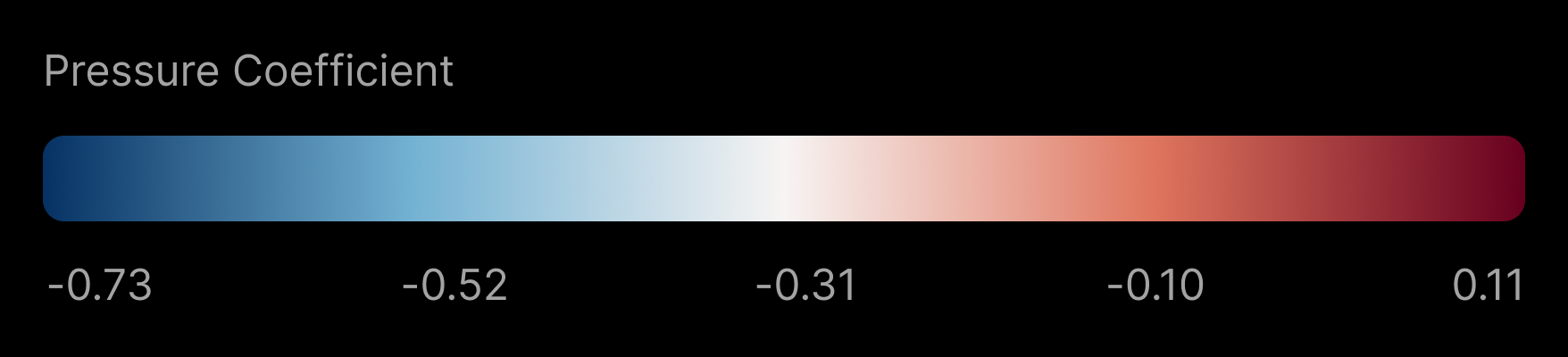
This image is not just product decoration. It compares CFD ground truth, the AB-UPT prediction, and prediction error. In industrial simulation AI, the main question is not only "how fast is it?" It is also "where does it fail?", "under which conditions is it stable?", and "can an engineer validate it next to the existing solver?" That is why pressure fields, lift, drag, and error maps matter together. AI for engineering does not end inside a chat window. It has to sit beside existing calculations and expose enough uncertainty for engineers to judge risk.
NeuralMould is a Large Engineering Model for injection molding. Emmi describes injection molding as a complex multi-physics problem involving thin-wall geometry, viscous plastic flow, temperature and pressure conditions, materials, and gate placement. The official page claims 200x faster rollouts than a traditional solver, 5% relative errors, support for 1M+ node geometries, more than 10 conditioning parameters, and more than 1000 tested real company products. Again, the point is not simply that a model calculates something. The practical value is changing process parameters, materials, and gate locations to test many scenarios quickly.
| Area | NeuralWing | NeuralMould |
|---|---|---|
| Target problem | Transonic aircraft aerodynamics | Injection molding flow simulation |
| Inputs | Geometry mesh, speed, angle of attack | Mold geometry, process parameters, materials, gate locations |
| Official speed claim | 1000x speedup over CFD | 200x faster rollouts than a traditional solver |
| Practical meaning | Explore wing design candidates in near real time | Iterate mold conditions and gate placement faster |
The two models target different verticals, but their structure is similar. A neural surrogate or Large Engineering Model compresses an expensive solver loop, then real-time exploration and optimization sit above it. That is where agents start to matter. Instead of only asking an AI to summarize a result, an engineering team can imagine an agent that explores a design space, rejects candidates likely to violate constraints, and selects the next cases for full solver validation.
Why industrial AI now
For Mistral, Emmi is a realistic answer to a difficult competitive environment. Competing with OpenAI, Google, Anthropic, and xAI only through general model benchmarks is a hard game, especially when scale, compute, and distribution are all pressure points. Europe, however, has deep customer bases in manufacturing, aerospace, automotive, energy, and industrial software. To enter those accounts, Mistral needs more than a conversational model. It needs domain-specific layers that map to the work those customers already do.
This also puts Mistral closer to companies such as NVIDIA, Siemens, Ansys, and Altair. Engineering and manufacturing are already software-heavy domains. CAD, PLM, CAE, digital twins, simulation pipelines, HPC clusters, and proprietary solvers have been in place for years. An AI startup cannot enter that world with only the claim that its model is smarter. It has to connect to existing workflows, produce verifiable outputs, and give engineers something they can defend. Mistral's enterprise relationships and Applied AI organization may matter as much as the model architecture itself.
From a developer perspective, the acquisition is interesting because industrial agents require a broader notion of context. Most agent infrastructure today focuses on tool calling, browser automation, code execution, RAG, memory, permissions, and observability. An engineering agent also has to handle geometry, meshes, solver configuration, material libraries, simulation history, sensor data, validation rules, and regulatory documents. Its outputs may be field predictions, curves, KPIs, design candidates, or validation tickets, not just text. The runtime needs to understand domain data structures and computational pipelines, not just chain LLM calls together.
How to read the speed claims
The official numbers should still be read carefully. NeuralWing's 1000x speedup and NeuralMould's 200x faster rollouts are strong claims, but these numbers always depend on task definition, baseline, hardware, accuracy threshold, and data distribution. A surrogate model can be extremely fast inside a specific geometry family and condition range. That is not the same as handling every design change and edge case in a production manufacturing environment.
That caution does not diminish the technical direction. It explains why industrial AI is more demanding than many general LLM products. If a chatbot gives a wrong answer, a user can ask for a correction. If a coding agent writes a bad patch, tests may catch it. If a physical prediction is wrong in aerospace, automotive, semiconductors, or energy systems, the cost and safety implications are much larger. Adoption will likely look less like "AI replaces the solver" and more like "AI narrows the search space, while important candidates still go through the existing solver and human review."
Read that way, the center of the Mistral and Emmi announcement shifts. This is not a declaration that solvers disappear tomorrow. It is a more practical attempt to make AI the exploration layer before expensive simulations run. The model can reduce the design space, generate candidates worth checking, and help digital twin or agent workflows move faster without removing the validation loop that engineers still need.
The next LLM battlefield is vertical
AI news often focuses on agent permissions, security, cost, and reasoning speed. Those topics still matter. The Emmi acquisition asks a different question: what does an agent need before it can enter a real industrial process? How much domain knowledge and tooling does a general model company have to own before it can understand a vertical workflow? Mistral's answer, at least in this deal, is to bring the physics AI team and engineering models inside the company.
That has implications for AI builders and product teams. The next product advantage may not come only from a longer context window or faster responses. It may come from quantifying a specific workflow bottleneck, attaching models and toolchains that reduce that bottleneck, and exposing the result through an interface humans can validate. For Emmi, the bottlenecks are CFD and injection molding simulation. In other industries, the bottleneck might be contract review, clinical trial design, logistics planning, wafer inspection, or grid stability. The common pattern is that the workflow becomes the product.
So this deal is best read as Mistral trying not to remain only a chatbot company. It is a move toward European industrial customers, where LLMs, physics AI, and enterprise applied AI can meet inside the computational loop of manufacturing R&D. Success is not guaranteed. The next questions are whether Emmi's demo metrics hold across real customer workflows, how Mistral packages the technology into agentic engineering products, and whether it competes with or integrates into the existing CAE ecosystem.
What is already clear is that the stage for agents is not limited to browsers and IDEs. Mistral is pointing at factories, labs, CAD screens, solver clusters, and the waiting time inside engineering iteration. The narrow path for industrial agents is not simply making simulations faster. It is reducing that wait while keeping the validation loop strong enough for engineers to trust the result.