This Week in AI: DeepSeek retires V4 Pro, Codex harness API, SWE-2
DeepSeek reroutes V4 Pro requests to V4.1 Flash on September 14, and OpenAI opened the Codex agent loop as the Agents API. Cognition SWE-2 scored 50.0% on FrontierCode, 0.9 points behind Fable 5.1, and is free until October 8.
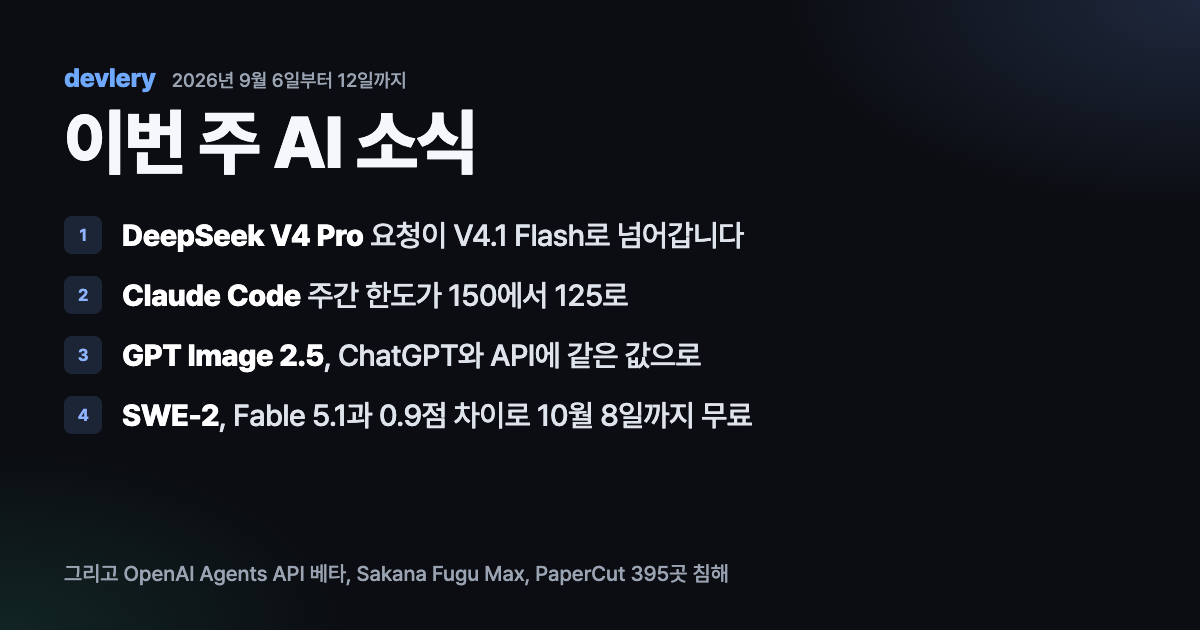
Two things change on September 14. At 04:00 UTC (noon in Singapore) requests to DeepSeek V4 Pro start being answered by V4.1 Flash, and at 06:59 UTC (2:59 p.m. in Singapore) the Claude Code weekly limit drops 17% from the level subscribers have had for four months. Earlier in the week, on September 10, OpenAI opened the loop that runs Codex as the Agents API, and Cognition released SWE-2, a coding model 0.9 points behind Claude Fable 5.1.
Here are seven items from September 6 through September 12.
1. DeepSeek V4 Pro requests switch to V4.1 Flash at 04:00 UTC today
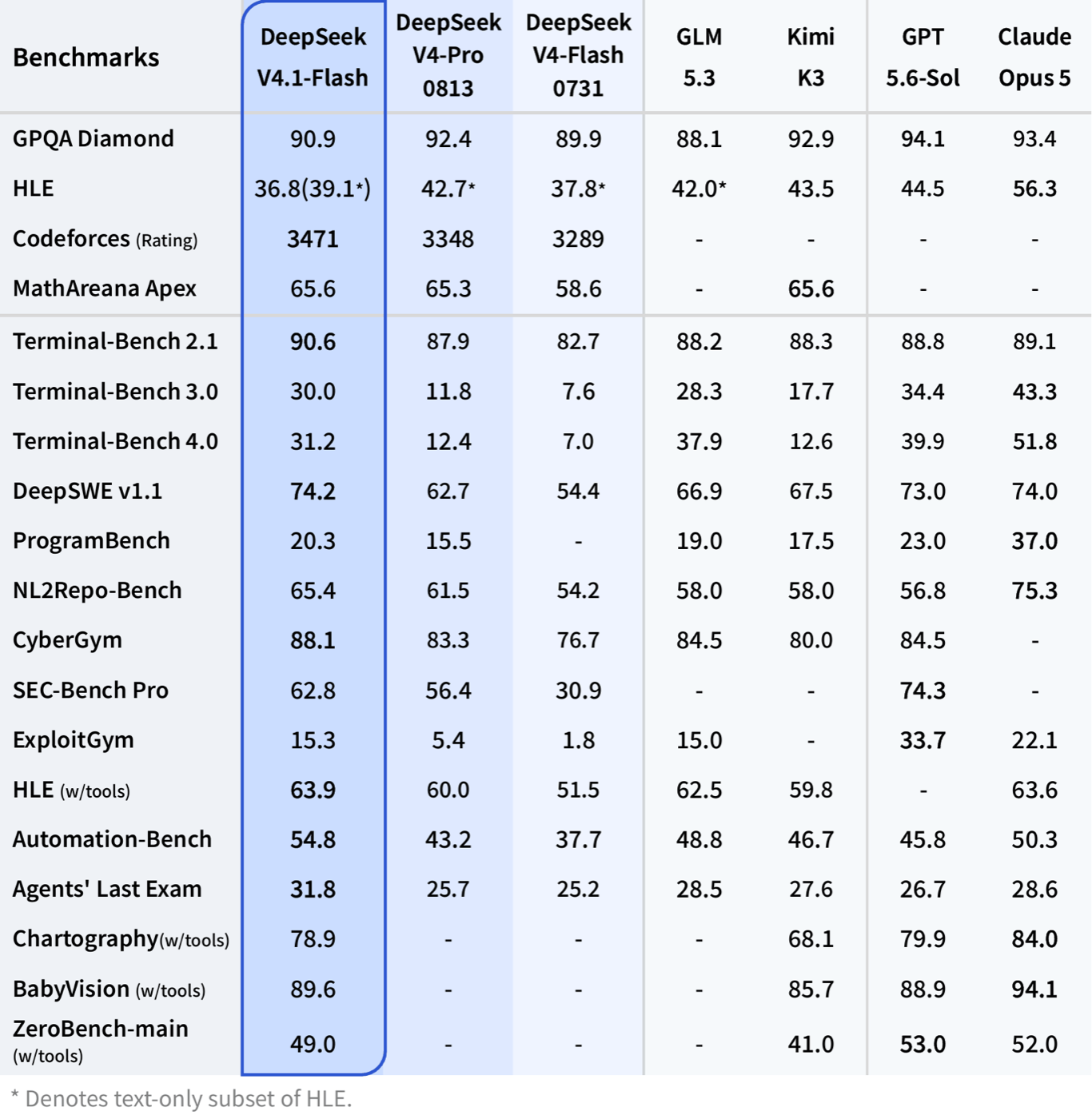
When DeepSeek released V4.1 Flash on September 10, it also said V4 Pro would be retired at 04:00 UTC on September 14. After that, code that still calls deepseek-v4-pro gets no error: V4.1 Flash answers and the request is billed at Flash rates. Peak-hour output drops from $3.96 to $1.20 per million tokens, 70% less than V4 Pro.
The new model is better than V4 Pro at agentic coding and worse at factual recall. DeepSWE v1.1, which scores fixes to real repository bugs, rose from 62.7 to 74.2, while SimpleQA-Verified, which checks facts answered without search, fell from 55.2 to 42.3. The single-topic post covers why the two scores move in opposite directions and the full time-of-day price list.
If you have a prepaid DeepSeek API key, the change applies without any action on your side. DeepSeek has announced no regional restriction, and there is no region to choose: its servers are in China, so a Singapore team sending personal data through the API falls under the PDPA's transfer limitation obligation. Before the cutover, switch the model ID to deepseek-flash, run 20 of your usual jobs, and compare the two models' answers side by side on the jobs that mix in factual questions or summarization in a language other than English. Once the switch happens you cannot call V4 Pro again.
2. Claude Code weekly limits go from 150 to 125 this afternoon
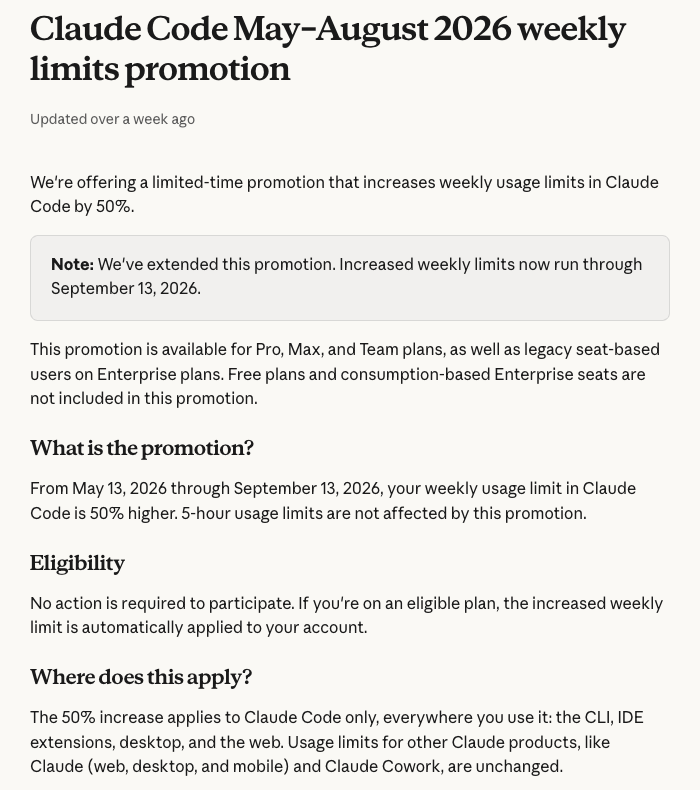
Since May 13 Anthropic has been running a 50% boost to Claude Code weekly limits. It ends at 11:59 p.m. Pacific time on September 13, which is 06:59 UTC on September 14. The new standard is 25% above the pre-May level. Put the pre-May limit at 100: it was 150 for four months and now becomes 125, so compared with yesterday, it is a 17% cut.
The 5-hour limit and pricing do not change. The single-topic post works through how "a 25% increase" and "a 17% cut" describe the same change.
Per the Help Center promotion page, it applies to Pro, Max, Team, and seat-based Enterprise, with no regional distinction and nothing to opt into. API-key usage is not affected. In Claude Code, open /usage and press w to see whether your bar for the last seven days is above 83%. If it is, the same workload will hit the limit before the week is out.
3. GPT Image 2.5 ships in ChatGPT and the API at the same price as GPT Image 2
On September 8 OpenAI released the image model GPT Image 2.5 in two variants, the faster Flare and the more precise Sunburst. When you ask for several rounds of edits, earlier changes hold up better, and there is a new edit mode that changes only the areas you comment on.
The price has not moved. The API model page says token rates for both models match GPT Image 2. It adds that the GPT Image 2 pricing calculator does not estimate how many tokens one image will take.
It is rolling out to all ChatGPT, ChatGPT Work, and Codex users on desktop, mobile, and web, and the announcement lists no plan or country restriction. API access follows OpenAI's supported-countries list, which includes Singapore and most of APAC. If you already use GPT Image 2 through the API, change the model name to gpt-image-2.5-flare, run one edit request you make often, and compare the output and the billed tokens.
| Model ID | Use | Price per 1M tokens | Tier 1 limit |
|---|---|---|---|
gpt-image-2.5-flare | Speed first | $5 text input, $8 image input, $30 image output | 5 images per minute |
gpt-image-2.5-sunburst | Precise edits, longer generation time | Same as Flare | 5 images per minute |
gpt-image-2 | Previous model | Same as 2.5 | - |
Source: OpenAI API model pages, checked 2026-09-13. Both models support the generation and edit endpoints.
4. Cognition SWE-2 lands 0.9 points behind Fable 5.1 and is free until October 8
On September 10 Cognition, the company behind Devin, released the coding model SWE-2. On FrontierCode 1.1, Cognition's own benchmark that grades whether a model produces PRs a human maintainer would actually merge, it scored 50.0%, 8 points above its predecessor SWE-1.7 at 42.0%. Claude Fable 5.1 scores 50.9% and GPT-6 Astra 53.3%.
SWE-2 is retrained on top of Moonshot AI's Kimi K3 (2.8T), and every score here was measured by Cognition. On DeepSWE 1.1, which scores fixes to real repository bugs, it nearly doubled SWE-1.7's 37.7% to 73.0%.
It is available now in Devin Desktop and Devin CLI, with Devin Web still rolling out, and there is no standalone API for SWE-2. The Devin models doc says it is free on self-serve plans through October 8, then $3 input and $15 output per million tokens. No regional restriction is listed. If you use Devin, take one small issue you would normally hand off, run it on SWE-2 medium during the free window, and compare it with your current model's result.
| Model | FrontierCode 1.1 Main | DeepSWE 1.1 | Terminal-Bench 4 |
|---|---|---|---|
| SWE-2 | 50.0% | 73.0% | 27.3% |
| SWE-1.7 (predecessor) | 42.0% | 37.7% | 7.6% |
| Claude Fable 5.1 | 50.9% | - | - |
| GPT-6 Astra | 53.3% | - | - |
Source: Cognition, "Introducing SWE-2" (2026-09-10). All scores measured by Cognition
5. OpenAI's Agents API opens the Codex execution loop in public beta
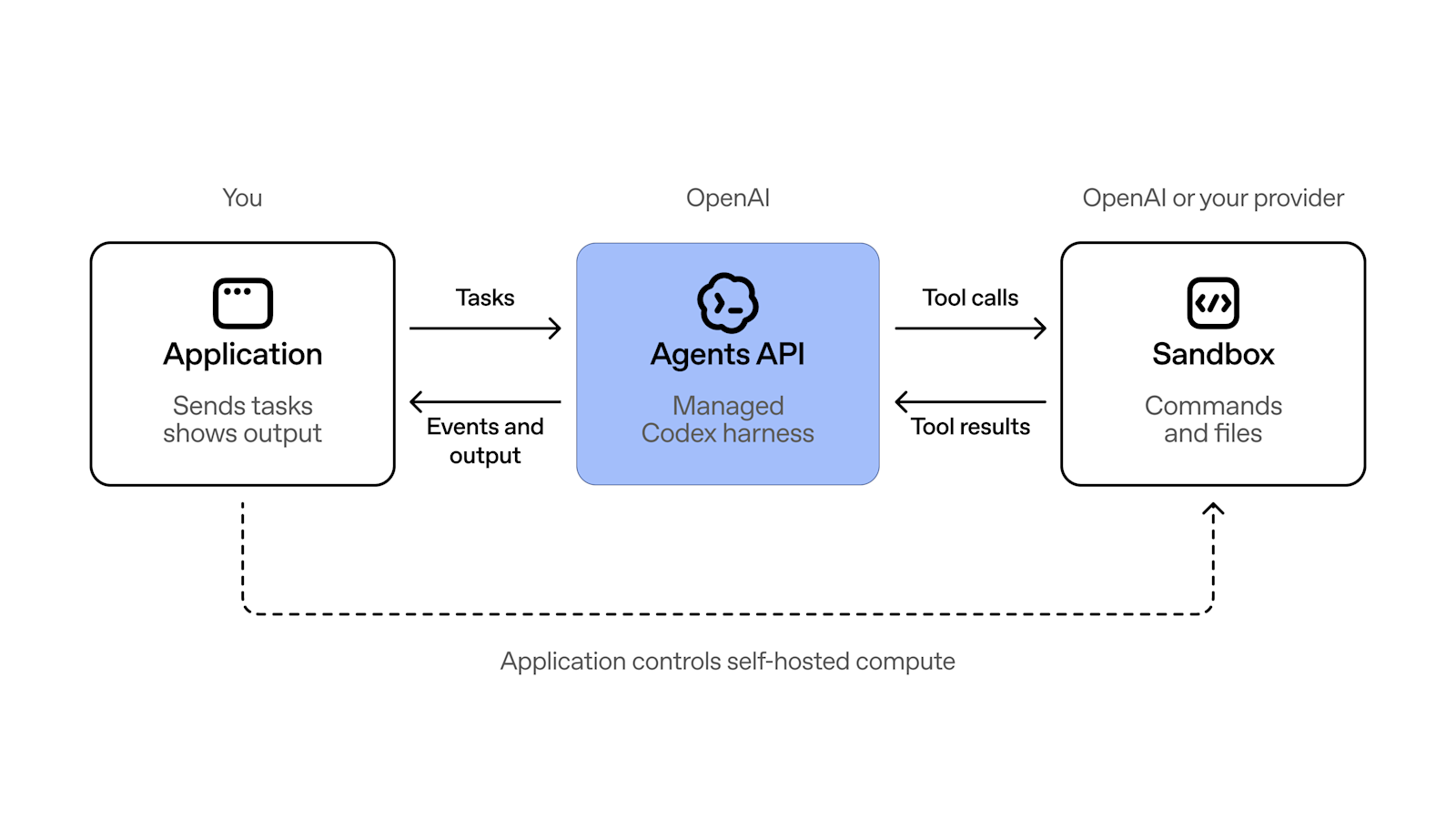
On September 10 OpenAI opened the Agents API in public beta. You hand it a job that may take hours, and the model runs code, writes files, splits work across sub-agents, and returns the result. Until now developers had to build the job queue, session store, and retry policy themselves. Now OpenAI's servers run the same execution loop Codex uses.
The API itself carries no fee; you pay for tokens and sandbox time. OpenAI's hosted 4GB sandbox costs $0.12 per 20 minutes. The single-topic post covers the data terms and a cost comparison with Claude Managed Agents.
Any developer with an API key can use it without applying, in every OpenAI API supported country, which includes Singapore, Japan, Australia, and India. During the beta, though, data is stored only in the US and Zero Data Retention (ZDR) does not apply, which makes customer data hard to put through it; a Singapore team moving personal data into that store also has the PDPA's transfer limitation obligation to satisfy. If your team runs its own agent loop, keep the sandbox on your own servers and compare completion rates against your existing loop on the same 20 inputs.
6. Sakana Fugu Max splits work across several models for $6 per million output tokens
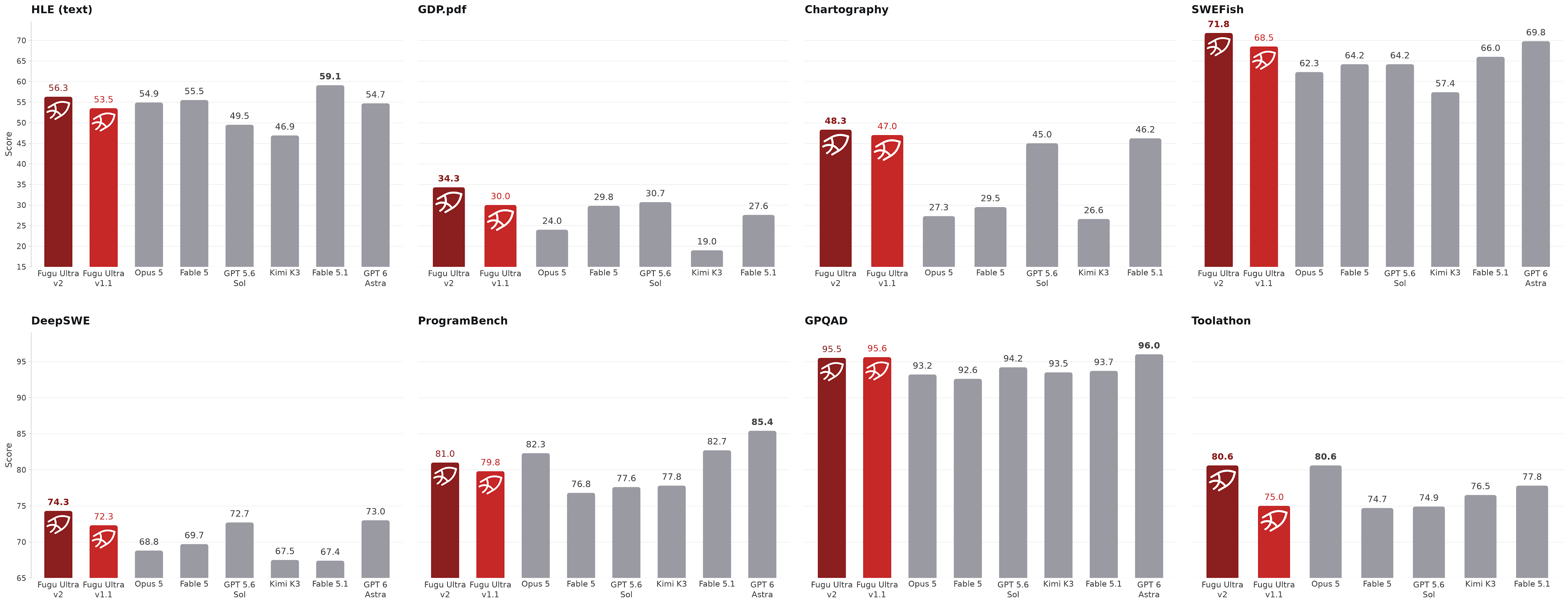
On September 11 Tokyo-based Sakana AI released Fugu Max and Fugu Ultra v2. Fugu takes one question, farms it out to several models, and merges the results, but from the caller's side it looks like calling a single model. Fugu Max is the cheaper option and Ultra v2 the higher-performing one.
Ultra v2 improved on v1.1 in agentic tasks. DeepSWE went from 72.3 to 74.3 and the tool-use benchmark Toolathon from 75.0 to 80.6, while GPQAD, a science benchmark, held level at 95.5 against 95.6. Sakana says Fugu Max's output price is 40% to 60% below Sonnet 5, GPT 5.6 Terra, and Kimi K3.
Per the console pricing page, Fugu Max is $2 input and $6 output per million tokens, Ultra v2 is $5 and $30, and there is also a $20 monthly subscription. Neither the pricing page nor the getting-started doc lists a country restriction, and neither names a processing region. The API accepts OpenAI and Anthropic request formats, so in existing code you can change only the base URL and the model ID fugu-max, run one pass of your eval set, and compare quality and cost directly.
7. Hundreds of AI agents broke into 395 organizations through PaperCut flaws
On September 9 the security firm GreyNoise disclosed a campaign in which attackers ran hundreds of agents on OpenAI Codex and DeepSeek models. They compromised 440 PaperCut NG/MF servers, the software schools and companies use to manage printing, across 395 organizations in 48 countries. At one US high school, it took seven minutes to go from first access to domain admin.
The attackers used two flaws PaperCut flagged in an urgent advisory on August 27 (CVE-2026-81578 and CVE-2026-82078), and the campaign began on August 31. GreyNoise's victim table lists 12 organizations in Taiwan and 11 in Singapore, which puts APAC operators squarely in scope.
This only matters if your organization runs PaperCut. The PaperCut security bulletin says versions 26.0.5, 25.0.13, and 24.1.10, released on September 10, include every emergency patch, and that version 23 and earlier get no fix. If you have a PaperCut server, check its version first, and if its admin interface is reachable from the internet, restrict access to trusted IPs before you update.
| Item | Details |
|---|---|
| Scale | 440 servers, 395 organizations, 48 countries. Credentials stolen at 280, domain admin reached at 12 |
| Vulnerabilities | CVE-2026-81578 (authentication bypass), CVE-2026-82078 (CVSS 9.4). Added to the CISA Known Exploited Vulnerabilities catalog on August 31 |
| Fixed versions | 26.0.5, 25.0.13, 24.1.10 (23 and earlier must move to a supported version) |
| Immediate step | Firewall internet-exposed servers to trusted IPs only |
Source: GreyNoise analysis; PaperCut NG/MF security bulletin (updated 2026-09-10).
The short version
The first things to handle this week are the two changes landing on September 14: DeepSeek V4 Pro turning into V4.1 Flash and the Claude Code weekly limit settling at 125. GPT Image 2.5 is usable today in ChatGPT and the API at the old price, and SWE-2 is free in Devin until October 8. The Agents API and Fugu Max also work today with just an API key, but for the Agents API, check first whether US-only storage and no ZDR fit your data policies. If your organization runs PaperCut, getting to 26.0.5, 25.0.13, or 24.1.10 is this week's job.