The 3-second approval device trying to hold agent authority
Foundation Passport Prime is an experiment in moving final approval for AI agents out of the browser and into dedicated hardware.
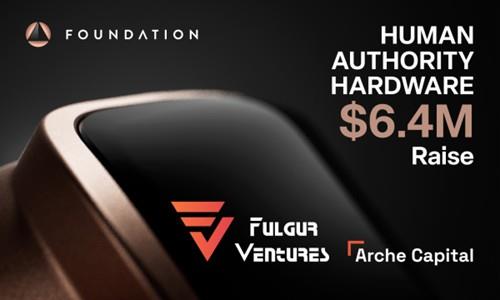
- What happened: Foundation announced a $6.4 million round, general availability for Passport Prime, and a broader KeyOS developer platform.
- The company frames the device as Human Authority Hardware: a separate place for people to approve high-risk AI agent actions involving money, code, accounts, and data.
- Developer angle: KeyOS combines an SDK, simulator, CLI tooling, and a
USB-connected MCP serverso AI coding agents can build and test apps against real hardware. - Watch: This is still an early security-hardware ecosystem, not a proven enterprise standard. The useful question is less adoption today and more where final authority should live.
Foundation announced Passport Prime general availability and an expanded KeyOS developer platform on May 22, 2026. At first glance, this looks like another launch from a Bitcoin hardware wallet company. The language of the announcement points somewhere more interesting. Foundation calls Passport Prime "Human Authority Hardware," meaning a dedicated device in a person's hand should become the last approval point for high-risk actions performed by AI agents.
That phrase matters because most AI agent security conversations stop at three layers. First: can the model resist prompt injection? Second: can tool permissions be narrowed enough? Third: can policy engines and execution logs support audits after the fact? Foundation is trying to add a fourth layer. When money is about to move, code is about to deploy, credentials are about to be used, or sensitive data is about to be opened, the final approval should not be another pop-up on the same computer. It should sit on a separate trust device.
This is not a validated standard yet. It is still a small company's bet on a hard problem. But for AI builders it is a signal worth examining. As agents connect to production systems, approval UI stops being a side feature and becomes execution infrastructure. Passport Prime is an attempt to pull that UI away from the browser, IDE, and phone notification layer and put it into hardware.
The launch looks like hardware, but the claim is an approval layer
According to Foundation's official announcement, the new round was led by Fulgur Ventures with participation from Arche Capital. The company raised $6.4 million in the round and says total funding has reached $16.5 million. Passport Prime started shipping to preorder customers in March 2026, and the May announcement opened availability to general buyers. The announcement lists the device at $349.
The product bundle is familiar if you follow security hardware. Passport Prime combines a Bitcoin hardware wallet, FIDO security key, 2FA code storage, secrets vault, and 50GB of encrypted file storage. Foundation's product page describes the broader idea as moving "digital authority" into dedicated hardware. The argument is that phones were built for convenience and are not ideal places to hold Bitcoin keys, accounts, private files, and critical approvals.
That would be a conventional security-hardware pitch. The more interesting turn comes when the announcement moves from key storage to AI agents. Foundation argues that the problem is no longer just where keys are stored. AI agents can act at machine speed across accounts, wallets, cloud infrastructure, and enterprise systems. In that setting, a browser prompt, a phone notification, or a policy engine running on the same computer as the agent may be too weak to serve as the final authority.
This is where Passport Prime starts to look less like a wallet and more like an approval device. A wallet signs transactions. The broader target here is final consent for money movement, code deployment, credential use, and sensitive data access. Signing is only one instance of the larger approval problem.

Why agent approval may need a separate device
AI agent security does not become simpler as models get more capable. It usually becomes harder. Better agents are connected to more tools, keep longer sessions, read wider context, and propose larger changes. As a result, the word "approval" splits into several different meanings.
There is plan approval, where an agent explains what it wants to do and the user allows it to continue. There is tool approval, where the user allows file access, network calls, shell commands, or API use. Then there is outcome approval, where the agent is about to create a pull request, deploy to production, release a payment, or change a customer record. Most current agent products handle all three on the same screen.
That works during development because it is fast. It becomes weaker when the agent or its environment is under attack. Prompt injection can distort the agent's plan. A compromised browser extension can manipulate the confirmation surface. The UI a person sees can diverge from the payload that is actually executed. A cloud policy engine can enforce organizational rules, but it does not necessarily act as a trusted display showing the user exactly what is being approved.
Foundation's argument sits in that gap. If the same computer runs the agent, receives the input, and displays the approval window, then a compromise of that environment can undermine the user's final judgment. A device with its own screen, operating system, secure element, and communication path tries to create a different trust boundary.
That does not make sense for every agent workflow. Asking for hardware confirmation every time an agent edits a test file or drafts a blog outline would destroy the workflow. The calculus changes when the action involves real money, authentication, production deployment, or data exfiltration risk. If an audit log later says "the human approved this," the system needs a credible path between what the person saw and what was executed.
Why KeyOS is a developer platform
Foundation's emphasis on KeyOS is part of the same story. The developer page describes Passport Prime as a secure, offline-first app platform built around Rust. KeyOS includes a Rust microkernel, sandboxed runtime, curated UI library, simulator, CLI tooling, and real device capabilities. The SDK is in public beta.
Developers can build full Rust app crates for KeyOS. Apps have their own UI, storage, and declared permissions. Device capabilities include the touchscreen, camera, NFC, USB-C, secure storage, secure element, and QuantumLink Bluetooth. Foundation lists use cases beyond Bitcoin signing: identity and access control, SSH and FIDO2 keys, credential managers, encrypted messaging, password managers, and internal approval apps.
The important part is that KeyOS is not being positioned as a skin on top of a wallet. Foundation says KeyOS apps are full Rust binaries that run inside a sandbox, with secrets kept outside the phone, laptop, and browser. In other words, Foundation wants Passport Prime to become a security app distribution platform, not a single-purpose hardware wallet.
That strategy carries risk. When a hardware wallet company opens an app platform, it also expands the attack surface. The operating system, sandbox, app review process, permission model, firmware signing, and supply chain all become critical. Foundation describes KeyOS as open source with an inspectable security model, but a larger ecosystem would raise harder questions. How are malicious apps rejected? Can users understand app permissions? Who reviews apps generated with AI coding agents? What trust chain governs updates and rollback?
Those questions are exactly why KeyOS is interesting. In the agent era, there is a new actor between "developer who writes the app" and "device that runs the app": the AI coding agent. Developers may ask the agent to scaffold the app, adjust the UI, and run tests. A security platform therefore needs an SDK that agents can operate, not only documentation that human developers can read.
The MCP server is the revealing detail
The most AI-native part of the announcement is the USB-connected MCP server. Foundation says the KeyOS developer platform includes documentation, a simulator, CLI tooling, and a USB-connected MCP server that lets AI coding agents build apps, take screenshots, and test on real Passport Prime hardware.
That detail is small, but the direction is large. MCP is often used to connect agents to software surfaces: SaaS APIs, filesystems, databases, browsers, and developer tools. Foundation is taking a physical device and exposing it as an agent tool surface. If an agent is building a KeyOS app, it may need to verify whether the approval text renders correctly, whether the permission prompt appears as intended, and whether the actual hardware screen truncates important details. A simulator may not be enough.
This resembles the role device farms played in mobile app development, but the target is a security approval device. If an agent produces ambiguous approval copy or misrepresents the amount, destination, environment, or permission scope, the problem is not merely bad UX. It becomes a security defect. For AI-generated apps on approval hardware, "the code compiles" is less important than "the user can safely understand what they are approving."
| Approval location | Strength | Remaining risk |
|---|---|---|
| Browser confirmation | Fast and easy to implement. | The meaning of approval weakens if the browser, extension, or page context is compromised. |
| Mobile push | Familiar to users and close to existing 2FA flows. | Detailed payload review is often weak, and fatigue can build quickly. |
| Cloud policy engine | Strong for organization-wide rules, audit, and central control. | It may not prove what the person actually saw before the payload executed. |
| Dedicated hardware | Separates final approval through an independent display and secure element. | Deployment, UX, app ecosystem, and operating cost become heavier. |
The gap between FIDO keys and HSMs
Foundation is aiming at a space between existing security tools. A FIDO security key is excellent for authentication. It can help prove that a user is logging in to the right service and resist phishing. But it usually does not give the user a rich trusted display for approving a specific high-risk business action. A hardware wallet is strong at crypto transaction signing, but it is not a general enterprise workflow platform. An HSM is powerful, but it lives in server infrastructure and centralized systems, not in a user's hand as a visible "I approve this action" device.
Passport Prime tries to blend pieces of all three. It includes FIDO security key behavior and 2FA storage, supports Bitcoin wallet functionality and secure storage, and uses KeyOS apps to expand into identity, signing, credentials, and internal approval workflows. Foundation's phrase for this is a human-facing trust layer: agents act on the software side, while humans approve on the hardware side.
For that idea to hold up, three things need to be true. First, payload representation must be clear. It cannot simply say "approve deployment." It needs to show the repository, commit, environment, permission changes, and other fields that allow a person to reason about the action. Second, the developer SDK needs to enforce safe presentation of those fields. If app developers can hide or blur critical information, the trusted display loses meaning. Third, the platform needs to connect to agent toolchains. If developers use AI agents to create these apps, the approval UI and permission model must be testable.
That is why the MCP server matters. It suggests Foundation is not only accepting AI-generated code as an input. It is also trying to close the feedback loop between an AI coding agent and the real approval UX on the device.
The community signal is small, but the direction is clear
This announcement has not become a major AI-community event. I did not find a large Hacker News discussion, and the visible Reddit activity is mostly inside Foundation's own user community. A post in r/FoundationDevices summarized general availability for Passport Prime, the KeyOS developer platform, Rust SDK, simulator, CLI tooling, and the MCP server for AI coding agents. Another community post discussed a proof-of-concept password manager app built with the KeyOS SDK.
That means it would be exaggerated to say the market has already moved toward hardware approval for agents. The accurate reading is narrower. A security hardware company is using the AI agent era to expand its product category, and it is designing an SDK and MCP-based workflow with AI coding agents in mind.
Two groups may care first. Crypto and identity developers already understand hardware signing, seed phrases, secure elements, and FIDO. Enterprise AI governance teams may care because agent access to cloud infrastructure, secrets, deployment pipelines, and customer data forces a harder question: is an on-screen approval button enough?
Most SaaS teams probably will not deploy Passport Prime immediately. Hardware distribution is operationally heavy. Loss, replacement, onboarding, accessibility, remote work, app updates, and support all become part of the system. Agent approval also has a frequency problem. If the device asks too often, users will approve mechanically. Hardware does not eliminate approval fatigue.
The practical questions for builders
The immediate developer question is not "should we buy Passport Prime?" It is "which agent actions deserve hardened approval?"
Running tests in a local repository is usually low risk. Creating a pull request against a staging branch may be low or medium risk depending on the organization. Production deployment, access-token issuance, customer database export, payment release, privileged IAM policy changes, and automated incident response can be much harder to reverse. Those actions may need a different approval path. The question is whether a browser confirm is enough, whether mobile push is enough, or whether a separate hardware root is justified.
The second question is approval payload standardization. The text that explains an agent action to a human should not be left entirely to model-generated prose. Amount, recipient, permission, execution environment, diff, expiration time, and audit ID are fields that should be structured. The human summary can be natural language, but the device should verify a machine-readable payload. This is where MCP, signed requests, policy-as-code, OPA, workload identity, and hardware approval devices may meet.
The third question is testing. Approval UI needs a higher bar than ordinary UI. It is not enough that the button is visible. The user must not misunderstand the risk. When an AI coding agent builds this kind of interface, tests should include screenshot diffs, accessibility labels, field completeness, localization, truncation behavior, and spoofing resistance. Foundation's MCP server points toward putting that test loop between an AI agent and the physical device.
Hardware is not guaranteed to be the answer
There are plenty of reasons to be skeptical. Hardware devices create a strong trust boundary, but they add serious operational cost. Companies need to issue devices, handle failures and loss, and design emergency fallback paths. A small screen also may not be enough for complex agent actions. Can a user safely approve a Kubernetes deployment or IAM change from a few lines of text?
Opening an app ecosystem creates more review burden. Even if KeyOS provides sandboxing, app distribution, developer signing, dependency supply chains, and update policies remain hard problems. Some agent approval problems are also organizational policy problems rather than hardware problems. Which agents can access which customer data? Which changes require two approvers? Which actions are blocked outside business hours? What exceptions exist during incidents? A device can strengthen the final user approval point, but it cannot replace the whole governance layer.
Still, Foundation's announcement is meaningful because the problem definition is sharp. As agents do more real work, the technical meaning of "the human approved it" becomes more important. Until now, many systems have treated an approval button as approval itself. In the agent era, that assumption is weaker. If the approval surface and the agent execution environment are the same environment, attackers can target both.
Approval UX becomes a product surface
AI developer tooling is moving from model selection toward runtime design. Models write code. Agent runtimes provide sandboxes and tool permissions. MCP connects external systems. Observability tools record execution. One layer is still less settled: when does the human approve, what evidence do they see, and where is that approval anchored?
Passport Prime pulls that layer into dedicated hardware. It may or may not succeed. But the direction is clear. When an AI agent only drafts suggestions, a separate approval device looks excessive. When an agent can move accounts, credentials, infrastructure, and money, the approval boundary becomes part of the product's core surface.
The next signals to watch are concrete. What examples does the KeyOS SDK publish for agent approval flows? How reliable is the USB-connected MCP server beyond simulator-level demos? How does the KeyOS app store handle permissions, signing, review, and updates? Can Foundation build partnerships beyond the crypto community into enterprise identity, developer tooling, and agent governance?
This is not a major model release. It is not a new coding agent. It is a story from the other side of the stack: where does the human keep the stop button when agents start acting? Foundation's answer is a dedicated device in the user's hand. Whether that answer becomes mainstream is unknown. But the larger question is already relevant: the next bottleneck in AI agents may not be model capability, but the location of final authority.