Claude Opus 5.5 Ships at $4 per Million Input Tokens, 60% Under Fable 5.1
Anthropic released Claude Opus 5.5 on September 22. Input runs $4 per million tokens against Fable 5.1 at $10, and Terminal-Bench 4.0 climbs from 52.3% on Opus 5 to 66.4%.

- Opus 5.5 costs $4 per million input tokens, 40% of what Fable 5.1 charges.
- Terminal-Bench 4.0 rises from 52.3% on Opus 5 to 66.4%.
- The default
effortlevel drops from high to medium.
Anthropic released Claude Opus 5.5 on September 22, 2026. The model ID is claude-opus-5-5, and the 1M token context window and 128k max output both carry over unchanged from Opus 5. What changed is the bill. Input went from $5 to $4 per million tokens, and output from $25 to $20.
The announcement says the model "performs at the level of Claude Fable 5.1 on most tasks." Fable 5.1, released three weeks earlier, charges $10 per million input tokens and $50 for output. Run the same work through Opus 5.5 and the invoice drops to 40% of that.
What improved over Opus 5
Agentic coding moved the most. On Terminal-Bench 4.0, which measures whether a model carries a long terminal task through to completion, Opus 5.5 scored 66.4%. Opus 5 scored 52.3% on the same test. CursorBench 4.0, which measures long-running work inside a code editor, went from 46.6% to 57.8%.
The announcement puts Opus 5, Fable 5.1, and OpenAI's GPT-6 Astra in the same table. Opus 5.5 leads on six of the eight benchmarks published, and GPT-6 Astra is ahead on AutomationBench and Terminal-Bench-Science.
| Benchmark | Opus 5.5 | Opus 5 | Fable 5.1 | GPT-6 Astra |
|---|---|---|---|---|
| Terminal-Bench 4.0 (agentic coding) | 66.4% | 52.3% | 55.8% | 57.9% |
| CursorBench 4.0 (long-running work in an editor) | 57.8% | 46.6% | 51.8% | not published |
| FrontierCode v1.1 | 54.4% | 48.0% | 50.3% | 53.3% |
| OSWorld 2.0 (computer use) | 81.8% | 74.0% | 80.7% | not published |
| AutomationBench (business workflow automation) | 40.0% | 26.9% | 31.4% | 41.4% |
| Terminal-Bench-Science 0.1 | 58.7% | 29.0% | 52.6% | 64.6% |
Speed moved too. The announcement states that output generation is more than 30% faster than Opus 5. On top of that, Fast mode in Claude Code and the Claude Platform pushes throughput up to 2.5x, at double the token price: $8 input and $40 output.
Anthropic attached its own caveats. The announcement notes that "at this level of capability, benchmark gaps are becoming less reliable as an indicator of real-world differences," and the safety section reports signs that "Opus 5.5 suspects it is being evaluated." The warning against reading the scoreboard as a direct measure of practical difference came from the party publishing the scores.
Which setting produced the 40% figure
The cost sentence in the announcement reads: "In our testing, typical workloads cost 40% less than Opus 5 at default settings." Per-token pricing only fell 20%, so the other half comes from two places. One is the cache read rate, down from $0.50 to $0.20 per million tokens, a 60% cut. In long agentic runs the same files and the same system prompt get re-read on every turn, so cache reads dominate the invoice. The other is that the model spends fewer tokens finishing the same task.
That leaves one setting worth checking before you migrate. effort controls how many tokens Claude spends on a response, across five levels: low, medium, high, xhigh, and max. It governs more than thinking length. Response text and the number of tool calls move with it, so a lower setting means fewer tool invocations and shorter explanations.
Announcement footnote: "Unless otherwise noted, all Claude Opus 5.5 results use adaptive thinking at max effort."
The Opus 5.5 default. Opus 5 and every earlier Opus model defaulted to high.
The one-level drop in the default is written into the docs. The official effort page says "most Claude models default to high effort, spending as many tokens as needed for excellent results; Claude Opus 5.5 defaults to medium," and the migration guide tells you to re-run your effort sweep, because "a request that omits effort now runs at medium." Swap the model ID and nothing else, and you can ship a system whose responses got shallower by exactly as much as the bill got smaller.
So the two headline numbers do not belong in one sentence. The 66.4% came from a max-effort run, and the 40% saving came from a medium-effort run. Same model, different executions. devlery covered the ARC-AGI scores that split on measurement method for GPT-6 Astra earlier in September; this time the conditions are disclosed by the vendor itself rather than surfaced by an outside evaluator.
The announcement does put both settings into a single comparison once: "At default effort (medium), Opus 5.5 beats GPT-6 Astra at max effort for about a fifth of the cost per task."
Four things that break before you migrate
Four patterns that ran on Opus 5 return a 400 on Opus 5.5. This is the list the migration guide enumerates. The section applies to developers calling the API directly, not to readers using the Claude apps or Claude Code.
- Thinking cannot be turned off. Both
thinking: {"type": "disabled"}and explicitbudget_tokensreturn a 400. Where you switched thinking off to save tokens, set a lowereffortvalue instead. - Forced tool calls are gone. The
anyandtooltypes ontool_choicereturn a 400, and so does the token counting endpoint. Move toautowith strict tool use or structured outputs, and put the "use this tool when X" instruction in the prompt. This is the behavior that first broke on Fable 5.1, now carried into the Opus line. - Thinking blocks are bound to a model and a conversation. Only Fable 5.1 and Mythos 5.1 can read a thinking block produced by Opus 5.5. If a router or fallback hands the conversation to another model, that turn runs without thinking. API accounts created after August 31, 2026 get a 400 by default when a thinking block is re-sent after a mid-conversation edit. That is preserved thinking, the guard against extracting the model's reasoning.
- The computer use tool version changes. On the Claude API and Google Cloud,
computer_20251124returns a 400 and has to move to thecomputer_toolset_20260801toolset, which also means reworking the agent loop. On Amazon Bedrock the existing tool keeps working.
One more change throws no error but does change what users see. The text a model writes between tool calls now comes back as a progress-update thinking block rather than a text block, and at default settings that field is empty. An app that showed that text as a "working on it" status now goes silent while tools run. Set thinking.display to "updates" or "summarized" to get it back.
Can you use it today
Yes, essentially anywhere. Anthropic's supported regions policy lists roughly 195 countries and territories for both the Claude API and Claude.ai, including Singapore, Australia, Japan, India, Indonesia, Malaysia, and South Korea. There is no waitlist and no separate application.
| Item | Detail |
|---|---|
| Who | Pro, Max, Team, and seat-based Enterprise subscribers, plus any developer with an API key |
| Price | $4 per million input tokens / $20 output, $0.20 cache reads. Fast mode is $8 / $40. Batch API takes 50% off |
| Regional availability | Broadly available. Both the Claude API and Claude.ai region lists cover Singapore and the rest of APAC |
| Where it runs | Claude apps, Claude Code, Claude API, AWS, Google Cloud, Microsoft Foundry |
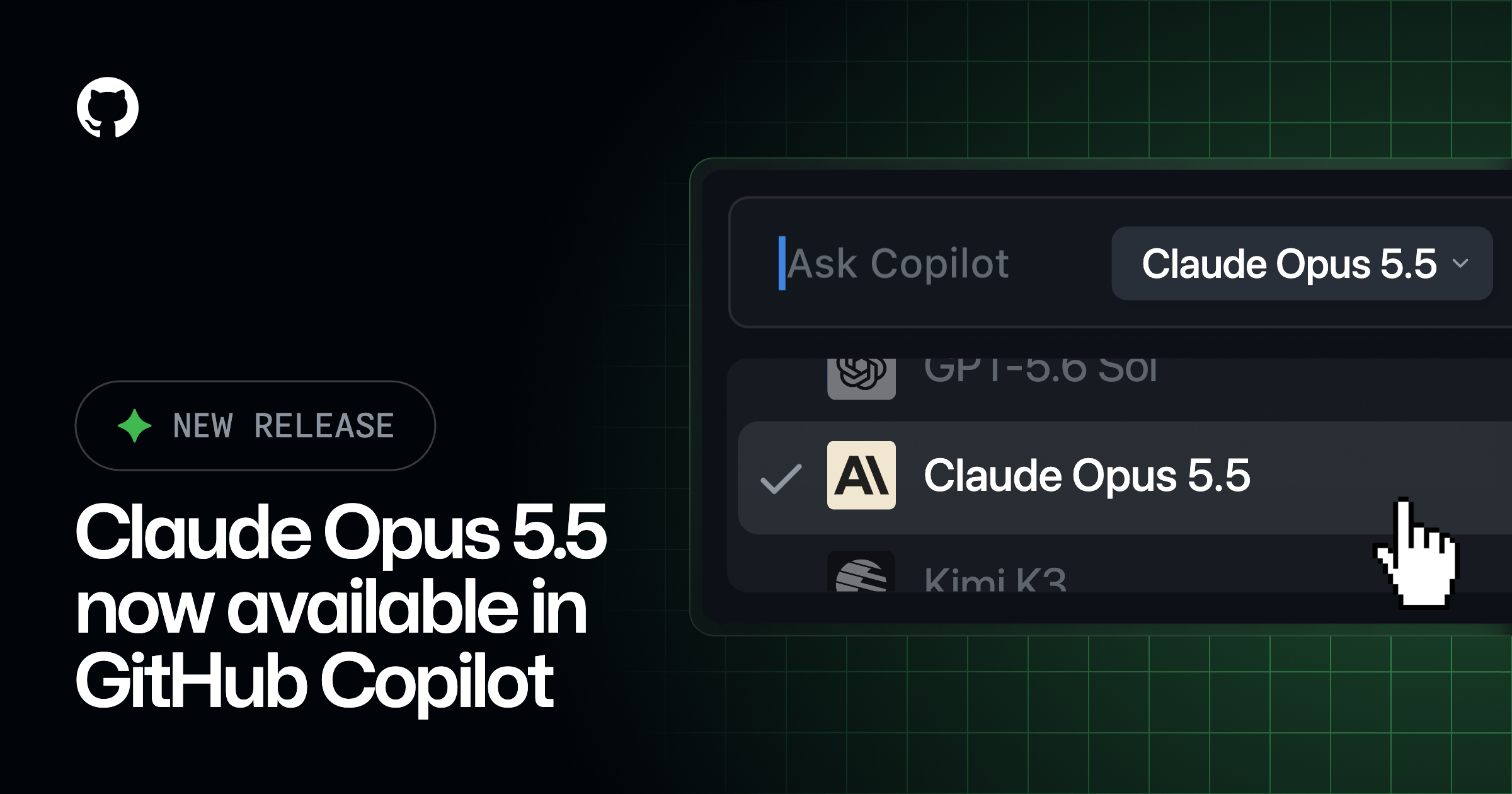
| Requirements | None. On GitHub Copilot it covers Pro+, Max, Business, and Enterprise, and on Business and Enterprise an admin must not have disabled it in model policy |
Subscribers get something too. The announcement says the 5-hour usage limits on Pro, Max, Team, and seat-based Enterprise go up, and that subscribers receive limit resets they can bank and spend when they want. It does not put a number on the increase. The adjustment landed eight days after Claude Code weekly limits effectively fell 17% on September 14, so measuring how much came back is left to your own usage.
The line that drew argument was neither the scores nor the price. Anthropic wrote that "Opus 5.5 is the first model we are releasing since arguing for slowing down at the frontier," and the top comment on the Hacker News announcement thread (898 points, 667 comments) called it inconsistent to advocate slowing down while shipping a higher-tier model 21 days after Fable 5.1. The model was reviewed before release by external evaluators including Frontier Design and METR.
If you have code running on Opus 5, change the model ID and run the same task twice: once with output_config.effort pinned to high, once on the default. If quality and cost land in roughly the same place, stay on the default and keep the 40%. If they diverge, pin high. Skip the comparison and you will see the price drop without seeing the responses get thinner.