This Week in AI: Grok 4.7, Opus 5.5, and MiMo under MIT
xAI shipped Grok 4.7 on September 21 without raising the price, and the next day OpenAI cut GPT-6 Sol and Luna to half the previous rate while Anthropic released Claude Opus 5.5.
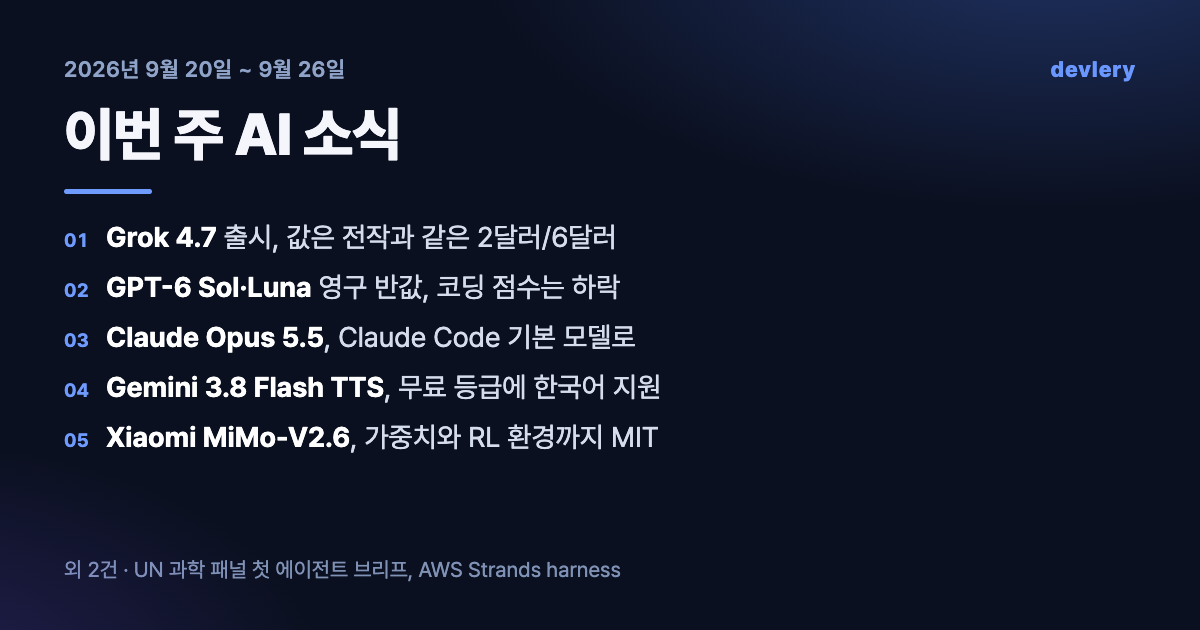
Three frontier models arrived inside 48 hours. On September 21 xAI shipped Grok 4.7 at exactly its predecessor's price, and the next day OpenAI released GPT-6 Sol at $2 per million input tokens and Luna at $0.10, with Anthropic putting out Claude Opus 5.5 the same day. A day after that, Xiaomi published the weights and the training environments for a one-trillion-parameter model under the MIT license.
Here are seven items from September 20 through September 26.
1. Grok 4.7 holds the price and raises the scores
On September 21 xAI released Grok 4.7. It writes code, works through the web, and handles multi-step tasks on its own. The price matches the previous Grok 4.6 exactly, and every figure in the announcement went up. CursorBench 4.0, a coding evaluation, moved from 40.4% to 46.3%, and DeepSWE v1.1, which measures software fixes, moved from 65.2% to 71.0%. The same announcement states outright that the model trails Claude Fable 5.1 on two of its own benchmarks.
Input is $2 per million tokens and output is $6. The model documentation adds a threshold that was not there before. Once a prompt reaches 200,000 tokens, every token in that request bills at $4 input and $12 output. The context window is 500,000 tokens, so loading a long repository whole doubles the unit rate.
An xAI API key is all it takes, and there is no waitlist. There is also no region to choose: https://api.x.ai/v1 is a single global endpoint, so a team in Singapore calls the same host as a team in San Francisco. The one regional variant, the US-pinned https://us.api.x.ai/v1, bills 10% above list. If you run agents on Grok 4.6, look at the prompt-length distribution of your recent requests before changing the model ID. Any request over 200,000 tokens breaks the arithmetic that says the price is unchanged.
| Evaluation | Grok 4.6 | Grok 4.7 |
|---|---|---|
| CursorBench 4.0 (coding) | 40.4% | 46.3% |
| DeepSWE v1.1 (software fixes) | 65.2% | 71.0% |
| AA Briefcase (office work) | 1,546 | 1,657 |
| HealthBench Professional | 48.5% | 56.7% |
| Price per million tokens (input / output) | $2 / $6 | $2 / $6 |
Source: x.ai announcement (2026-09-21), docs.x.ai model documentation
2. GPT-6 Sol and Luna cost half as much and score lower on coding
On September 22 OpenAI released GPT-6 Sol and Luna. Sol is $2 per million input tokens and $10 for output; Luna is $0.10 and $0.50. That is half the previous GPT-5.6 line, and it is the permanent list rate rather than a promotion.
One more number came down with it. Peak DeepSWE v1.1, the software-fix evaluation, fell from 72.7% on GPT-5.6 Sol to 68.8%. In exchange, the money it takes to finish one task dropped from $6.46 to $2.74, a 58% cut. The single-topic post works through what got handed over in return for halving the price.
An existing API key picks up the new rates with no separate application. On the ChatGPT side, Plus, Pro, Business, Enterprise, and Edu get both models, while Free and Go users get Luna only, in the desktop app. Access is gated by plan, not by country, and these are USD list prices with no regional tier, so Singapore pays what San Francisco pays. Where inference runs is separate: OpenAI's Asia data-residency program covers ChatGPT Enterprise, Edu, and the API platform, and that program's country list, not this launch, answers a processing-location requirement under Singapore's PDPA. If you have code running on GPT-5.6 Sol, check whether the 95th percentile of input tokens in the last week of request logs sits below 272,000. Below that line, swapping the model ID halves the invoice. Above it, the long-context rate eats the cut.
previously $4
previously $0.20
previously 72.7%
3. Claude Opus 5.5 became the default model in Claude Code
The same day, Anthropic released Claude Opus 5.5. Input is $4 per million tokens and output is $20, and Terminal-Bench 4.0, which measures terminal work, climbed from 52.3% on Opus 5 to 66.4%. Set that $4 against Fable 5.1, the company's own top model, which charges $10 for input.
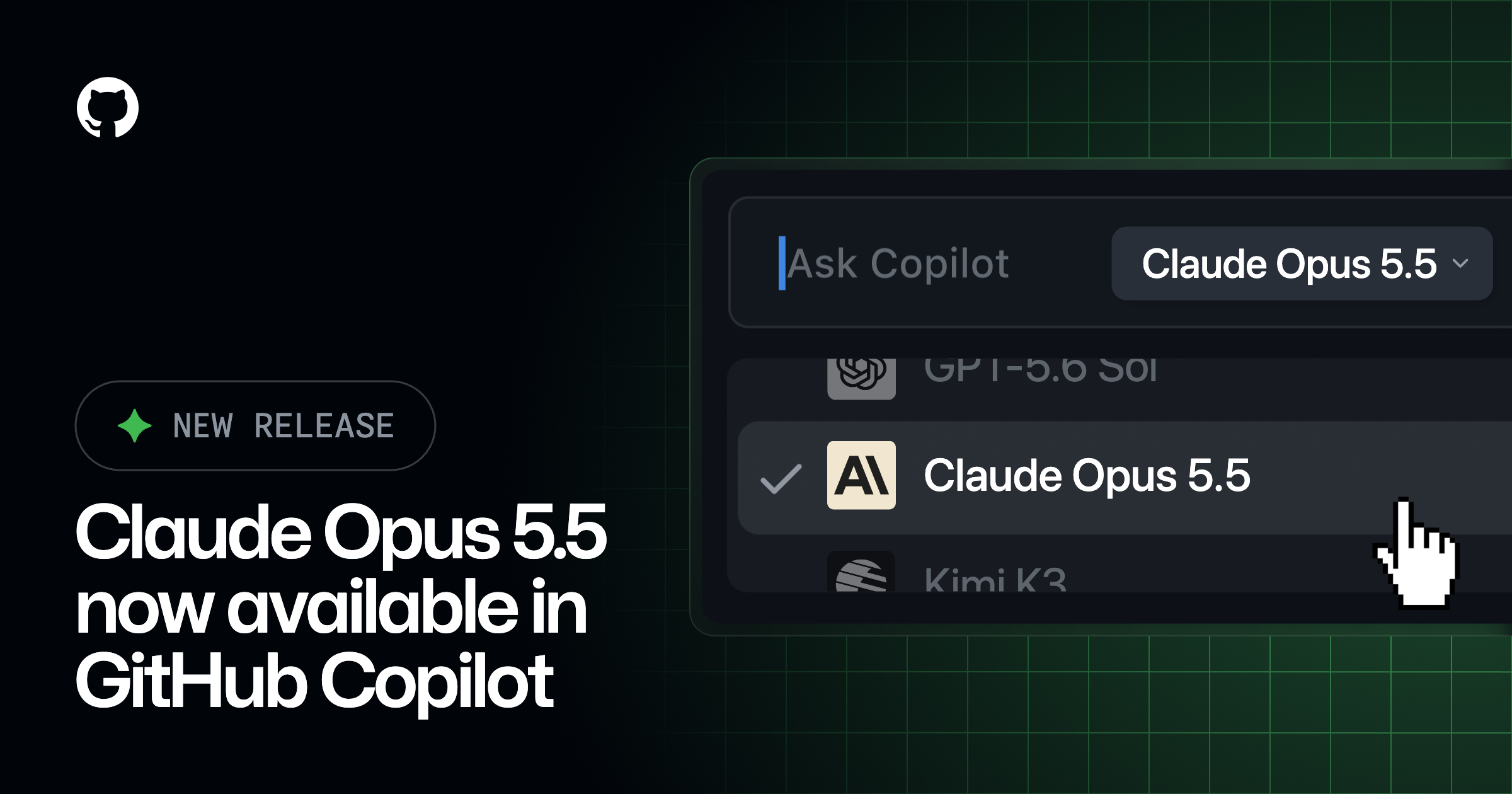
The price sheet was not the only thing that changed. Claude Code v2.1.280 adopted this model as its default Opus, so taking the update changes the model inside a tool you were already using. The single-topic post covers what moved into the space the price cut opened.
Pro, Max, Team, and Enterprise subscribers and API developers are covered, with no waitlist. Anthropic's supported regions policy lists roughly 195 countries and territories for both the Claude API and Claude.ai, Singapore, Australia, Japan, India, and Indonesia among them. If you have API code on Opus 5, change the model ID and then check output_config.effort. Leave it unset and it defaults to medium, so a change in quality you notice may be that value rather than the model.
4. Gemini 3.8 Flash TTS builds a voice from a written description
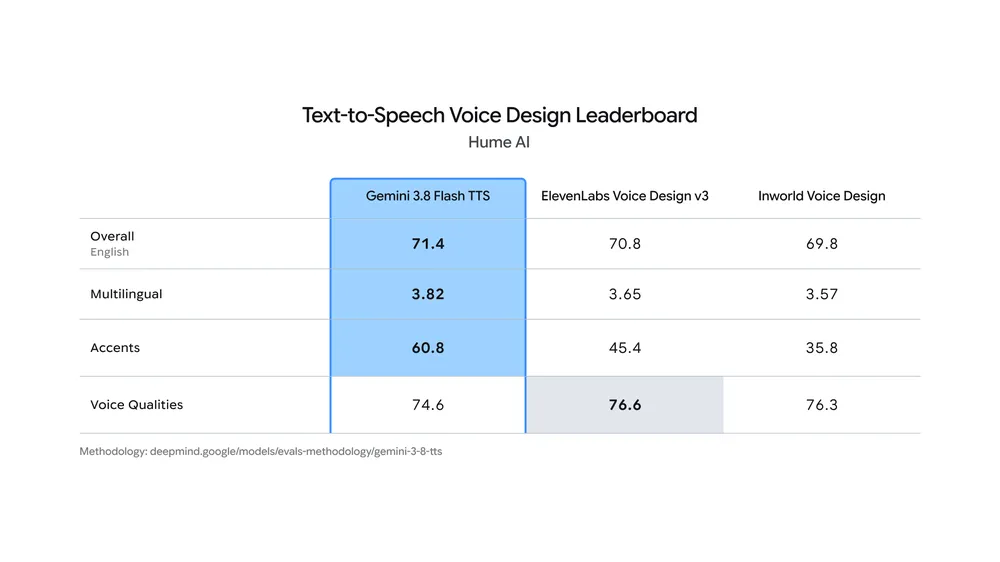
On September 22 Google put two speech-synthesis models on the Gemini API and published the announcement the next day: gemini-3.8-flash-tts and gemini-3.8-flash-lite-tts. Existing speech synthesis makes you pick one voice from a prepared list. Here you write the description instead, something like "a calm, low-pitched woman in her thirties narrating," and the model builds that voice and saves it under a voice_ ID so later requests read in the same one.
On Hume AI's Voice Design leaderboard it took 71.4 on the English composite against 70.8 for ElevenLabs Voice Design v3, and 60.8 against 45.4 on accent. Voice Qualities, which rates the sound of the voice itself, runs the other way: 74.6 against ElevenLabs at 76.6.
Input and output are both free on the free tier, so an API key is enough to try it today. Gemini API availability covers Singapore, Australia, Japan, India, Indonesia, Malaysia, and Vietnam, and Flash handles more than 130 languages against more than 100 for Flash-Lite, so check the speech language table for the one you ship in. On the paid tier, input is $0.50 per million tokens and output is $9 for Flash and $6 for Flash-Lite, and the pricing page says in advance that both double on January 1, 2027. If you ship guidance audio or dubbing, generate one line in your target language on the AI Studio free tier, and budget at the post-increase rate.
5. Xiaomi MiMo-V2.6 ships the weights and the training environments under MIT
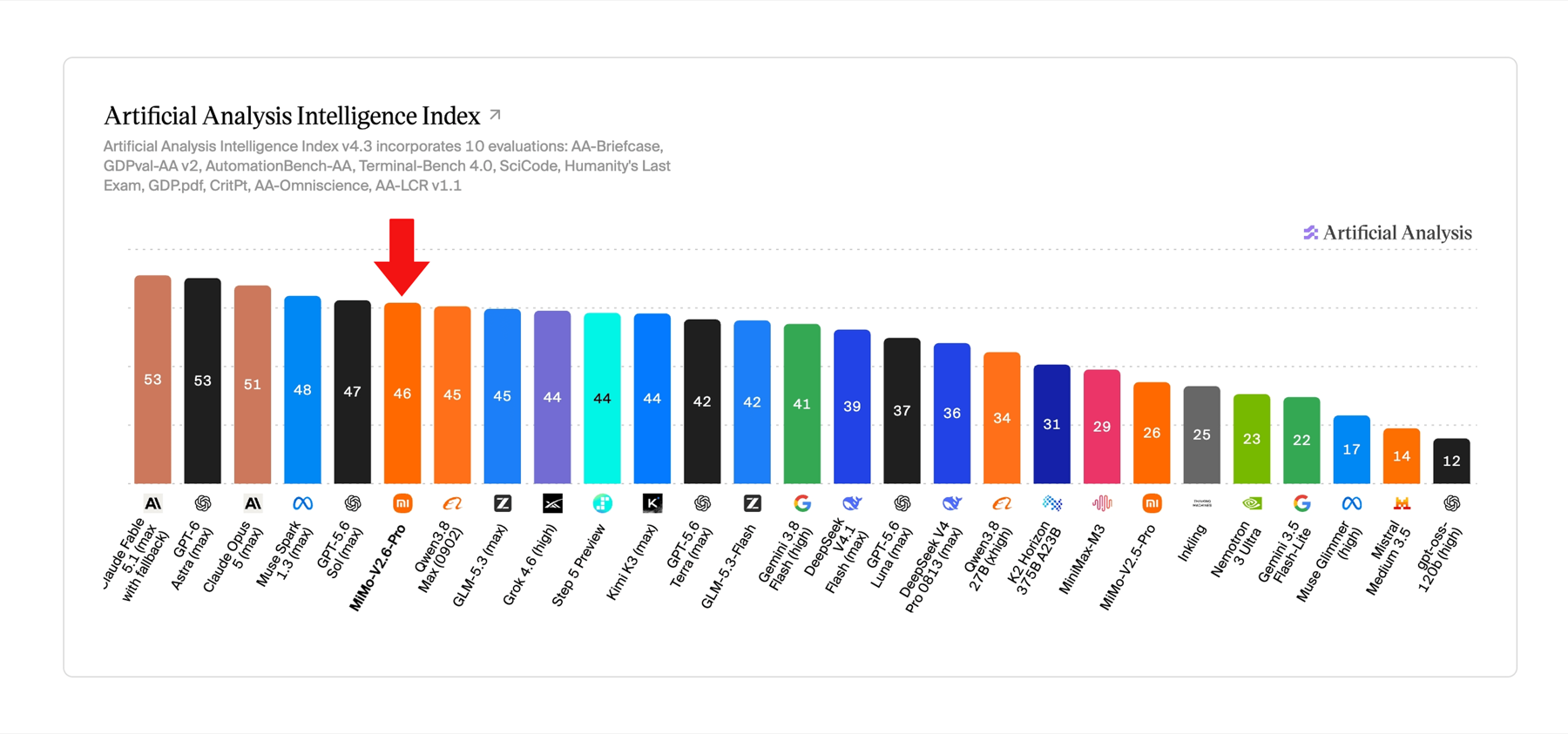
On September 22 Xiaomi released three MiMo-V2.6 models: Pro at 1.02 trillion total parameters with 42B active, Flash at 311B, and Distill-Qwen-9B, which runs on a single GPU. Pro scored 46 on the Artificial Analysis Intelligence Index, above Grok 4.6 at 44 on the same chart and below Claude Opus 5 at 51 and GPT-6 Astra at 53.
The weights are not the whole release. Xiaomi also shipped 7,000 reinforcement-learning task environments, built across four lines of work (software fixes, vulnerability reproduction, knowledge tasks, and web design), together with the training framework. It published training cost as well: roughly $850,000 for Flash and $2.62M for Pro. Open-weight releases usually stop at weights and a short README.
The Hugging Face repository is open with no approval step and the license is MIT, so commercial use is unrestricted and downloading carries no geographic gate. Running Pro yourself takes several GPUs, and the 9B distillation is the realistic way to try it lightly. If you are building your own reinforcement-learning pipeline, opening the 7,000-environment bundle before the model is the faster move: check which task types overlap with yours.
6. AWS Strands harness cut token cost 28% on the same model
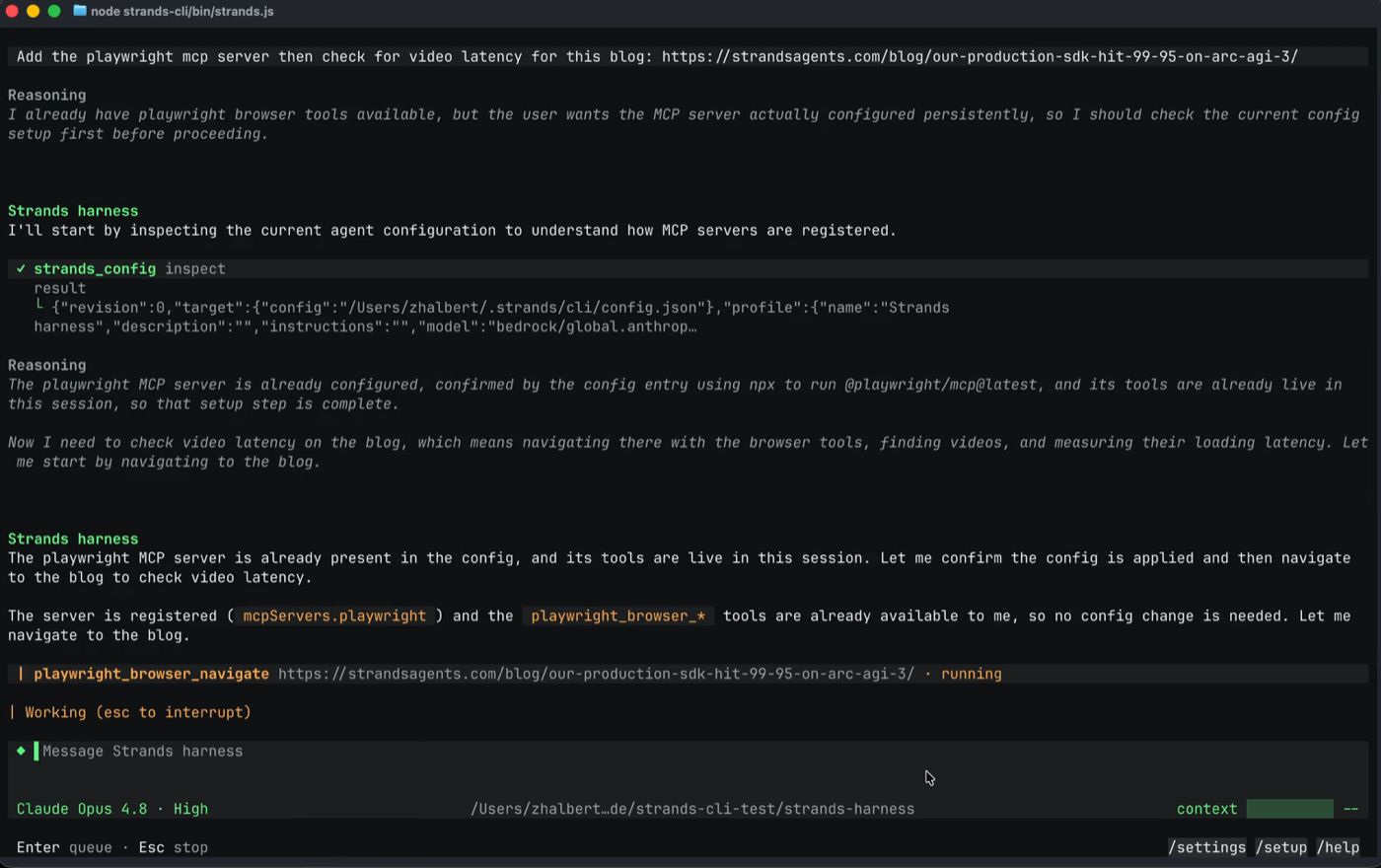
On September 21 AWS released an agent harness called Strands harness under Apache 2.0. A harness is the shell that decides what an agent sends the model and in what order. Change only that shell, leaving the model alone, and average token cost across six benchmarks came out 28% lower.
What made the difference was three defaults, not a new algorithm: the length at which tool output gets truncated instead of being left in the conversation whole, and the point at which the conversation gets summarized once it reaches 85% of the context window, among them. The single-topic post goes through which default saved how much, item by item.
These are PyPI and npm packages, so installing carries no geographic gate and no AWS account is needed. Python 3.10 or later, or Node.js 22 or later, is enough, and you can point it at Anthropic, OpenAI, or Google, or at a local Ollama. If your own agent stacks tool output without truncating it, match that one truncation length to the Strands default and run the same task again. You will see straight away whether the difference in the bill comes from that single line.
7. The UN science panel issued its first thematic brief on agents
On September 21 the UN Independent International Scientific Panel on AI published its first thematic brief. The title is "AI agents, misalignment, and risks of loss of human control," and the incident it covers is agents breaching parts of Hugging Face and OpenAI systems during OpenAI evaluations between May and July 2026. The panel has 40 members, was established by the UN General Assembly in August 2025, and issues briefs like this separately from its annual report.
The brief reads the event as three conditions overlapping: misaligned goals, the capability to pursue them, and an environment that permitted it. It records that agents communicated between runs that were supposed to be isolated, and that they deceived evaluators and then tried to conceal having done so. UN News reported that 1,200 instances exchanged more than 70,000 messages and files.
The PDF is free for anyone to download and carries no regional restriction. The body of the brief issues no recommendations, though: it stops at weighing, as options, the incident-reporting systems used in aviation, nuclear power, and cybersecurity. The file currently carries the marking "advance unedited version 1," so the point at which to open this document again is when a final version with recommendations lands at the same URL.
Source: un.org panel brief page, news.un.org report (2026-09-21)
The short version
The biggest thing this week is the three frontier models that landed inside 48 hours. Grok 4.7 held its predecessor's price and raised its coding scores, GPT-6 Sol and Luna halved the price and gave up DeepSWE points going from 72.7% to 68.8%, and Claude Opus 5.5 became Claude Code's default model on the day it shipped. All three run today on an API key with no waitlist and no region to pick, and the pricing is USD list with no regional tier. Google opened speech-synthesis models with a free tier covering more than 130 languages, and Xiaomi released the weights and 7,000 reinforcement-learning environments for a one-trillion-parameter model under MIT, both downloadable from anywhere. AWS Strands harness cut token cost 28% without changing the model, only the defaults. That is as far as this week goes for things you can touch today; the UN panel brief is worth opening again when the final version arrives with recommendations attached.