This Week in AI: GPT-6 Astra opens to the API, Nvidia buys Hugging Face
OpenAI opened GPT-6 Astra to the API and upper ChatGPT tiers on September 3, and the day before Nvidia signed a $12.93B deal to acquire Hugging Face. Meta launched a tier at $0.10 per million tokens if you let it train on your prompts.
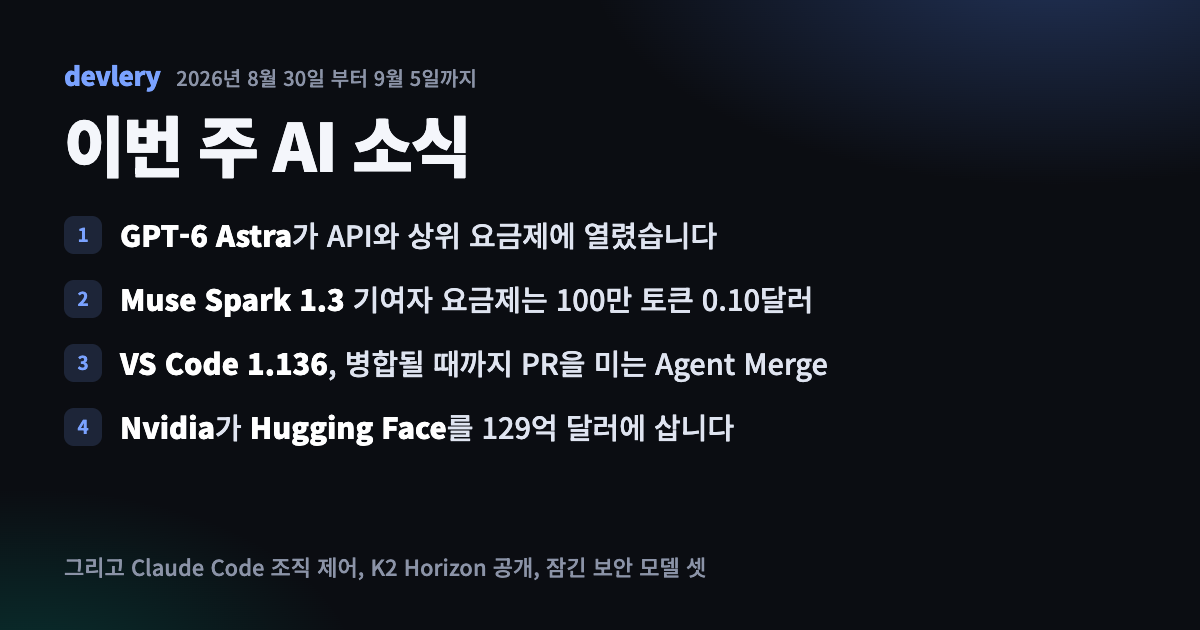
Four new models landed inside four days: Claude Fable 5.1 on September 1, Gemini 3.8 Flash and Meta Muse Spark 1.3 on September 2, and GPT-6 Astra on September 3. Astra was limited to approved companies on announcement day and is now open on the API and the upper ChatGPT tiers. In the same week, on September 2, Nvidia signed a deal to acquire Hugging Face for $12.93B.
Here are seven items from August 30 through September 5.
1. GPT-6 Astra opened to the API and upper tiers
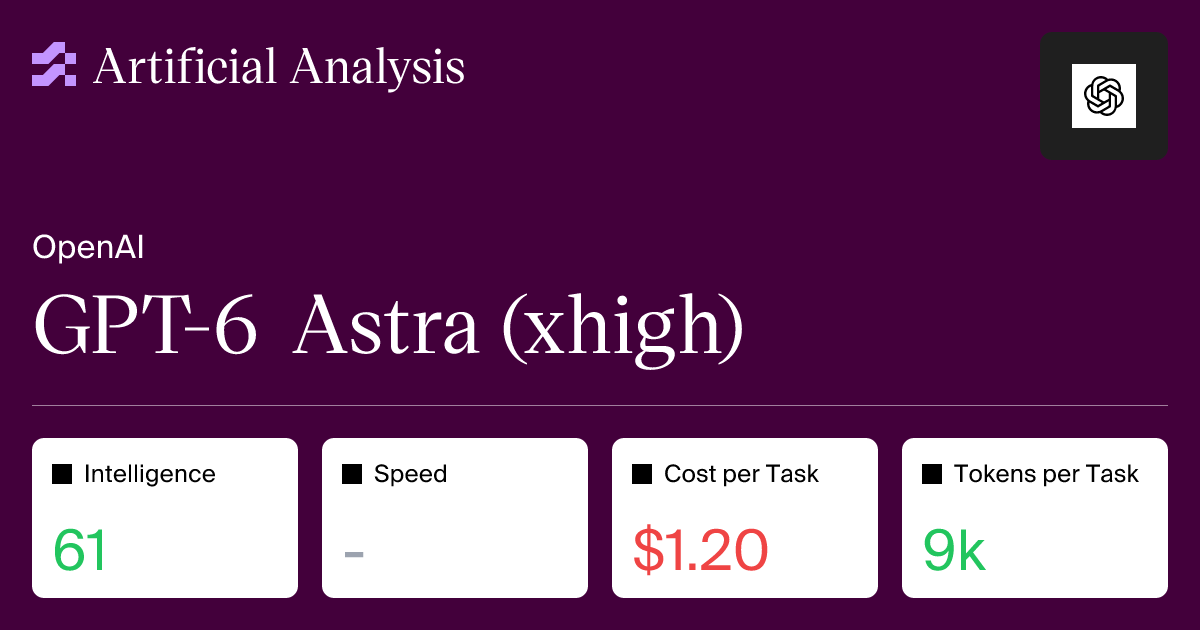
On September 3 OpenAI released GPT-6 Astra. The largest gain over its predecessor is in work where the model looks at a screen and drives the mouse and keyboard to operate a spreadsheet or an internal system on your behalf. OSWorld 2.0, a desktop-operation benchmark, went from 65.7% on GPT-5.6 Sol to 72.6%, and ScreenSpot-Pro, which measures whether the model points at the right screen element, went from 76.9% to 92.7%.
On announcement day only companies in Daybreak, OpenAI's security early-access program, could use it. Since then it has opened on the API and in ChatGPT Work and Codex on the Pro, Enterprise, and Business Premium tiers. OpenAI says Plus and Business are rolling out progressively. No country restriction is listed, and the API model string is gpt-6-astra. Pricing is $10 input and $50 output per million tokens, 2.5x Sol, but it spends about a third of the tokens on the same coding task, so cost per job actually falls. If you have a paid API key, the fastest way to check that ratio is to take one job you ran on Sol last month, run it on Astra, and put the token counts and totals side by side.
2. Meta Muse Spark 1.3 costs $0.10 per million tokens if you let it train on you
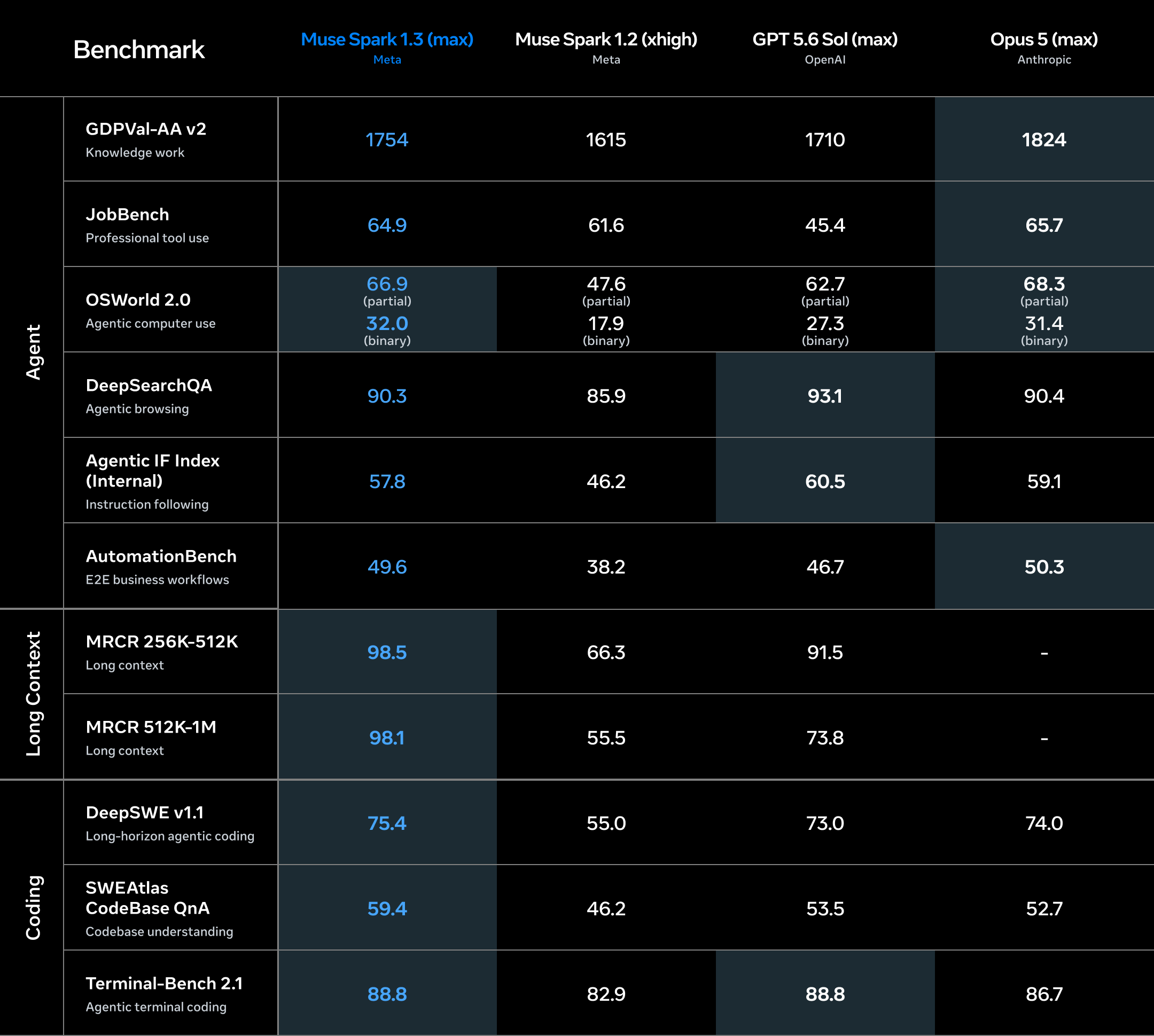
On September 2 Meta released Muse Spark 1.3 with two tiers at different prices. Standard is $1.25 input and $4.25 output per million tokens. The contributor tier is $0.10 input and $0.20 output, one twelfth the input price and one twenty-first the output price, in exchange for agreeing that Meta may use your prompts and the responses you receive to train its next model. Rate limits are lower too. Both tiers have a 1M-token context window.
The announcement said only that it is available through Muse Code and the Meta Model API (dev.meta.ai), and gave no country conditions. meta/muse-spark-1.3-contributor went up on OpenRouter the same day at the same pricing, which is the route to it from anywhere Meta's own API is not offered, and that model card carries the same notice that prompts and outputs may be used to improve Meta products. Keep it away from any path customer data travels. Point it at one experiment running on public-repository code and measure quality first.
One caveat about the official scorecard below. The Muse Spark 1.3 numbers in that table are for the max reasoning configuration, which is still in safety testing and not broadly available; what is deployed now is the faster xhigh.
3. VS Code 1.136 ships Agent Merge, which pushes a PR until it merges
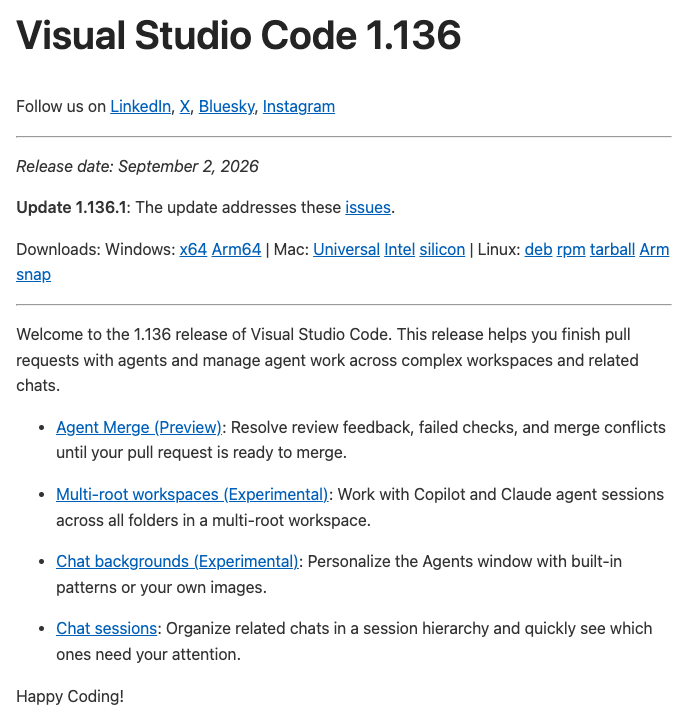
On September 2 Microsoft shipped VS Code 1.136 with Agent Merge in preview. It applies review comments, fixes failing checks, resolves merge conflicts, and reruns workflows, repeating until the pull request is mergeable. Until now you could have an agent write the fix, but a person had to come back to handle review feedback and rerun CI.
The same release adds experimental multi-root workspace support, so a Copilot or Claude agent session that was pinned to one folder can move across every folder in the workspace. Hooks still apply to the primary folder only.
You need VS Code 1.136 or later, with nothing to buy and no country conditions. Because it is in preview you enable it per session, either by running Enable Agent Merge for Active Session in the Agents view or by clicking the Agent Merge button in the title bar (the setting key is chat.agentMerge.enabled). A good first trial is one neglected PR with two or three review comments piled up: run it and watch where a human becomes necessary again.
4. Claude Code lets an org deploy MCP servers, and shows what unused skills cost you
Claude Code 2.1.259, shipped by Anthropic on September 2, added the managedMcpServers managed setting. An organization can push HTTP and SSE MCP servers to every user at once. Until now each team member wrote their own .mcp.json to connect external tools, which meant the organization had no idea who had connected what. The entry format matches .mcp.json, and entries that execute a command are excluded from deployment. The same version added --permission-prompts none for running on an unattended server: anything that would require asking is denied automatically and the run continues.
Two days later, 2.1.261 added /skill-doctor. It shows which loaded skills you have never actually used and how much context they are consuming. No plan tier is required and no country restriction applies; you need 2.1.259 or later, or 2.1.261 for /skill-doctor. If you have accumulated a pile of skills, running /skill-doctor once and pruning the ones that only take up room is the cheapest improvement in this release.
| Version | Released (UTC) | Notable additions |
|---|---|---|
| 2.1.259 | September 2 |
|
| 2.1.260 | September 3 | Full-screen |
| 2.1.261 | September 4 |
|
Source: anthropics/claude-code CHANGELOG; release times from npm registry publish records
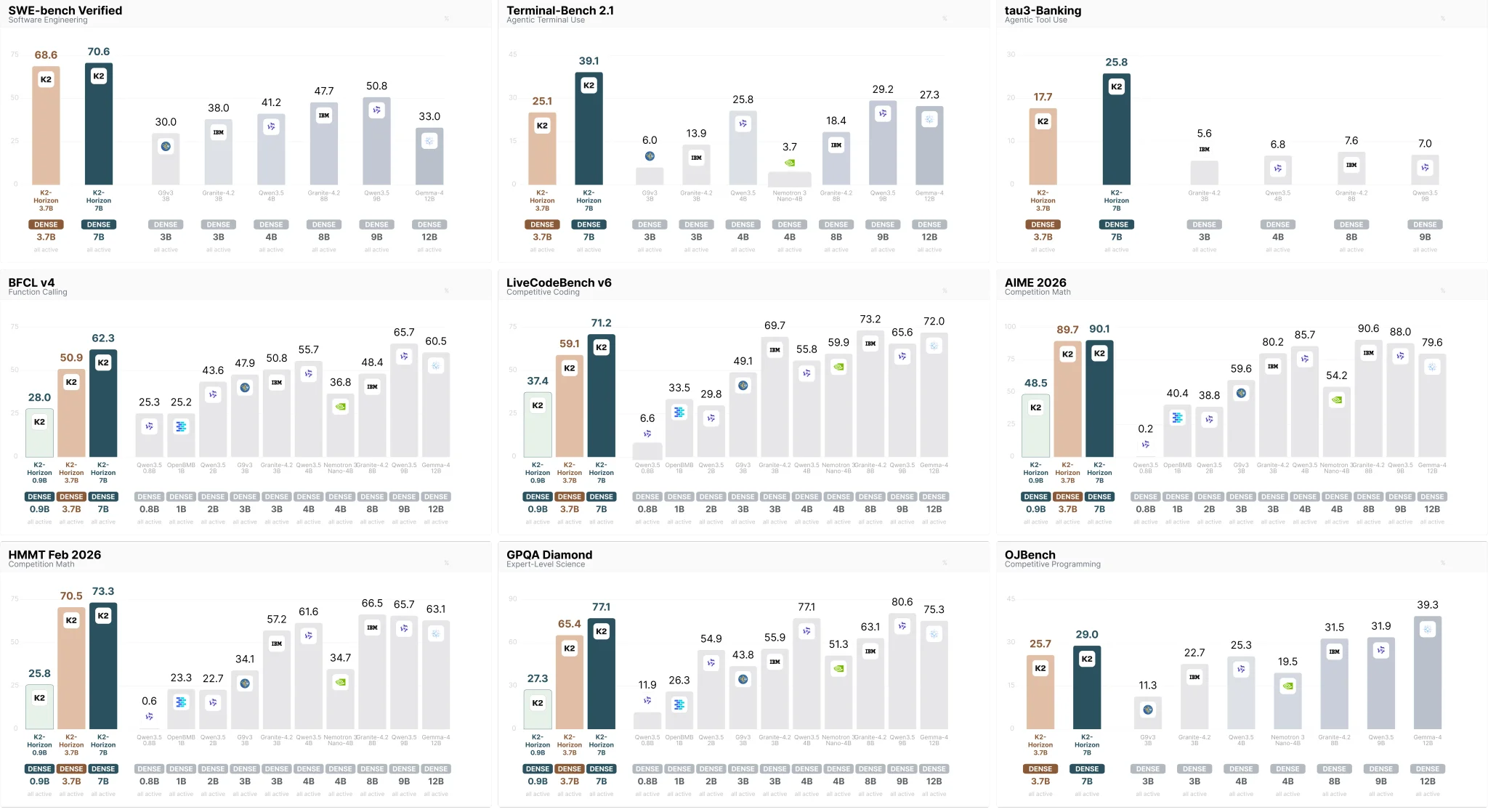
5. K2 Horizon 7B hits 70.6 on SWE-bench under Apache 2.0
On September 3 IFM, part of MBZUAI, released six K2 Horizon models under Apache 2.0. They run from 0.9B to 7B, small enough for a laptop or a single GPU, and the 7B scored 70.6% on SWE-bench Verified, which measures fixing real repository issues, against 50.8% for the larger Qwen3.5-9B.
Neither the license nor the repository attaches conditions, so you can download it today. It is not on OpenRouter or in Ollama's official library yet, so you pull it from Hugging Face and serve it yourself. The limit of this release is that the training code repository and dataset links are still closed. If you have a GPU, grab the 7B and run it against one issue from your own repository. If you need to reproduce the training run, the moment to look again is when that repository opens.
6. Three security-specialized models shipped in three days, all gated
Between September 1 and 3, Anthropic, Google, and OpenAI each released a security-specialized model, and all three restricted access to approved organizations. These models find vulnerabilities in code and produce a deployable patch, and the same capability works just as well for attack. Google, launching the Fairwind Program, requires participating organizations to "restrict access to staff in internal security, incident response, and penetration testing teams and deploy protections such as multi-factor authentication."
What an ordinary developer can get right now is the standard models only. If you work in defensive security, the three programs have different eligibility criteria, so the first step is working out which one you actually qualify for.
| Model | Released | Channel | Who qualifies |
|---|---|---|---|
| Claude Mythos 5.1 | September 1 | Project Glasswing | Program participants, US organizations |
| Gemini 3.8 Flash Cyber | September 2 | Fairwind Program | Government and national cyber agencies, critical infrastructure operators, core technology platforms. Access must be limited to security staff with multi-factor authentication deployed. More than 650 partners |
| GPT-6 Astra cyber configuration | September 3 | Daybreak, Daybreak Blue | Daybreak member companies. The guardrail-free Daybreak Blue configuration requires separate approval |
Source: each company's announcement. Details in devlery's single-topic posts on Gemini 3.8 Flash and Claude Fable 5.1
7. Nvidia is buying Hugging Face for $12.93B
On September 2 Nvidia signed the acquisition agreement and announced it the next day. Per the 8-K filed with the SEC, the total is $12.93B, split into $11.9B to shareholders and up to $1B in equity awards to retain joining employees. The repository where 18 million developers publish and pull models and datasets changes hands to a company that sells GPUs. The amount and structure that were unconfirmed in the August 25 report that a sale was being explored are now settled.
Nothing changes right now. The 8-K states the deal is expected to close in the first half of 2027, subject to customary conditions including regulatory approval. Jensen Huang said in the announcement that "Hugging Face remains an open platform for the entire AI ecosystem," and Nvidia stated it will not require Nvidia hardware and will continue supporting multiple clouds and accelerators.
If your internal deployment pipeline pulls weights from Hugging Face and nowhere else, the preparation this news calls for is lining up one alternative path before close. The moment to look again is when the regulatory review lands.
The short version
The biggest item this week is GPT-6 Astra reaching the API and the upper ChatGPT tiers three days after its announcement. Meta opened a $0.10 per million token tier in exchange for your prompts becoming training data, and VS Code 1.136 and Claude Code 2.1.259 took over PR cleanup and org-wide tool deployment respectively, which makes four things you can touch today. K2 Horizon 7B is downloadable and runnable, but reproducing it waits on the training code repository opening. The three security models are open only to organizations that meet the eligibility criteria, and Nvidia's Hugging Face acquisition is a regulatory-review story now.