This Week in AI: OpenAI Cuts Output Price 80%, DeepSeek Lands in Codex, EU Enforcement Starts
OpenAI cut GPT-5.6 Luna output pricing from $6 to $1.20 per million tokens on July 30, and DeepSeek opened V4-Flash in public beta with official Codex integration docs the next day. EU AI Act GPAI enforcement began August 2.
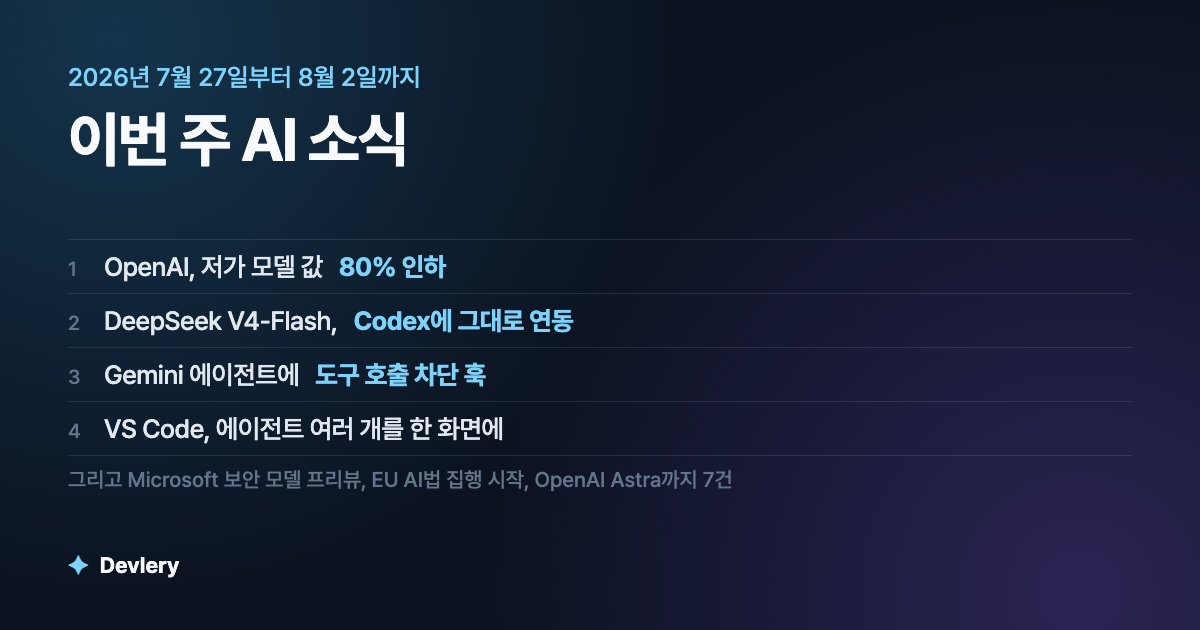
Inference pricing dropped twice in two days. On July 30 OpenAI cut GPT-5.6 Luna output from $6 to $1.20 per million tokens. The next day DeepSeek moved V4-Flash, priced at $0.28 output, into public beta and shipped documentation for running it inside Codex.
Here are seven items from July 27 through August 2.
1. OpenAI cut its cheap tier by 80%
OpenAI revised the GPT-5.6 pricing card on July 30. Luna went from $1 to $0.20 per million input tokens and from $6 to $1.20 on output. Terra went from $2.50 to $2 on input and $15 to $12 on output. The top-end Sol is unchanged at $5 and $30.
Model capability did not change. Only the price card did. Work already running on Luna gets a 5x cut in output cost with no code change. Work moved off Sol onto Luna goes from $30 to $1.20 per million output tokens, a 25x difference.
The new rates apply automatically to existing API keys, with no regional gating. The one exception is a 10% surcharge for models released after March 5, 2026 when called through a data-residency endpoint. A practical move: pull last month's bill, find one Sol workload that is really classification, extraction, or summarization, and rerun it on Luna to see whether quality holds.
Budget-tier pricing that moved in two days (USD per million tokens)
| Model | Input | Output | Change |
|---|---|---|---|
| GPT-5.6 Luna | 1 → 0.20 | 6 → 1.20 | output −80% |
| GPT-5.6 Terra | 2.50 → 2 | 15 → 12 | output −20% |
| GPT-5.6 Sol | 5 | 30 | unchanged |
| DeepSeek V4-Flash | 0.14 | 0.28 | moved to public beta |
Sources: OpenAI pricing card (updated July 30), DeepSeek official docs (July 31). Add-on rates such as cache-hit input are excluded.
2. Codex can now run DeepSeek models
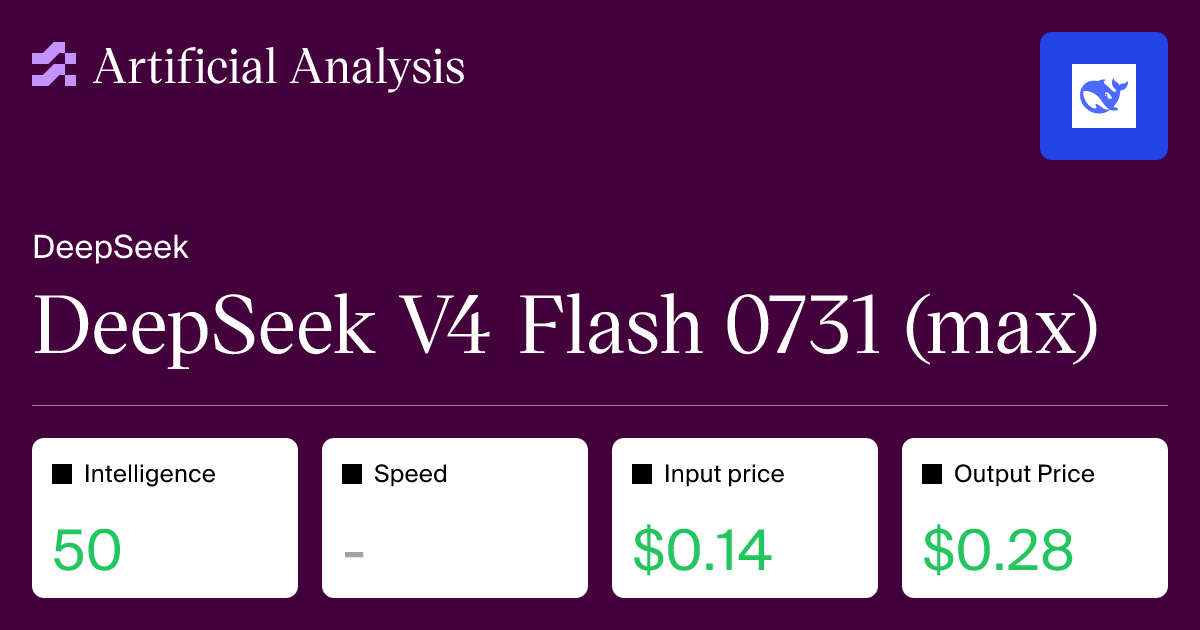
A day later, on July 31, DeepSeek moved V4-Flash-0731 into public beta at $0.14 input and $0.28 output per million tokens. It is a Mixture-of-Experts model with 284B total parameters and 13B active, a 1M-token context window, and weights on Hugging Face under the MIT license.
The integration matters more than the price here. Codex is OpenAI's coding tool and until now it only ran OpenAI models. Adding one line, wire_api = "responses", to the config file switches it to a DeepSeek model. That works because DeepSeek chose to support OpenAI's Responses API format directly, and the setup is documented in DeepSeek's official integration guide. We covered the model architecture and benchmark position last week.
The reason to switch is cost. Codex defaults to GPT-5.6 Sol at $30 per million output tokens; V4-Flash is $0.28. All you need is an API key, and there is no regional gating. The limits: deepseek-v4-flash is currently the only DeepSeek model selectable in Codex, and deepseek-v4-pro is slated for early August. If you already use Codex, add the one config line and run a single session to see whether response quality holds up.
3. Gemini agents got a safety hook
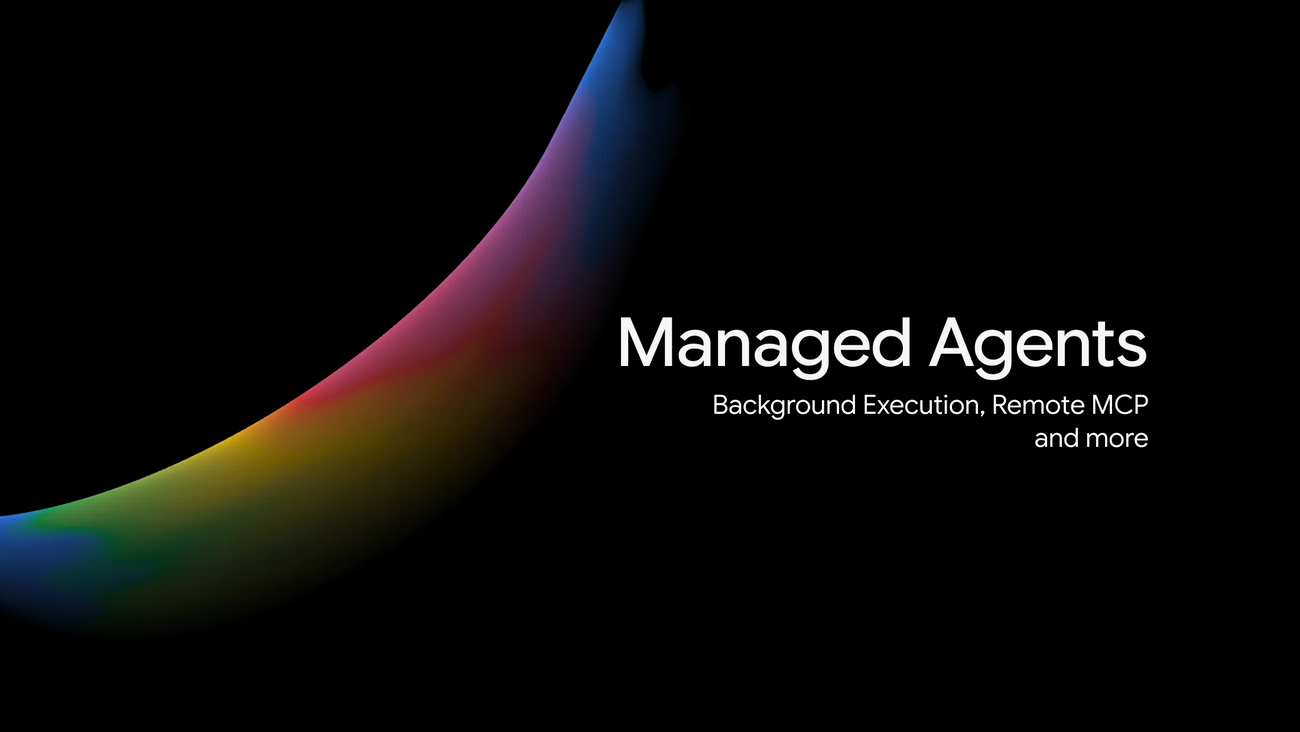
On July 28 Google DeepMind added environment hooks to Gemini API managed agents. A script you register runs immediately before and after the agent calls a tool in the remote sandbox, so you can intercept a dangerous command before it executes. Register a handler in .agents/hooks.json, and when the pre-hook returns {"decision": "deny"} the call is skipped and the refusal reason is fed back into model context.
This works on a free-tier API key with no billing enabled. During preview, environment compute is not billed; only model tokens and tool usage are. The token caps and cron triggers that shipped alongside it are covered in last week's post.
The constraints are real. A single interaction typically burns 100K to 3M tokens. Preview lacks subagent delegation and version rollback, and a sandbox is deleted after seven days of inactivity. The cheapest way in is a free key and one pre_tool_execution hook, to confirm that deny actually blocks the tool call.
4. VS Code shows multiple agents on one screen
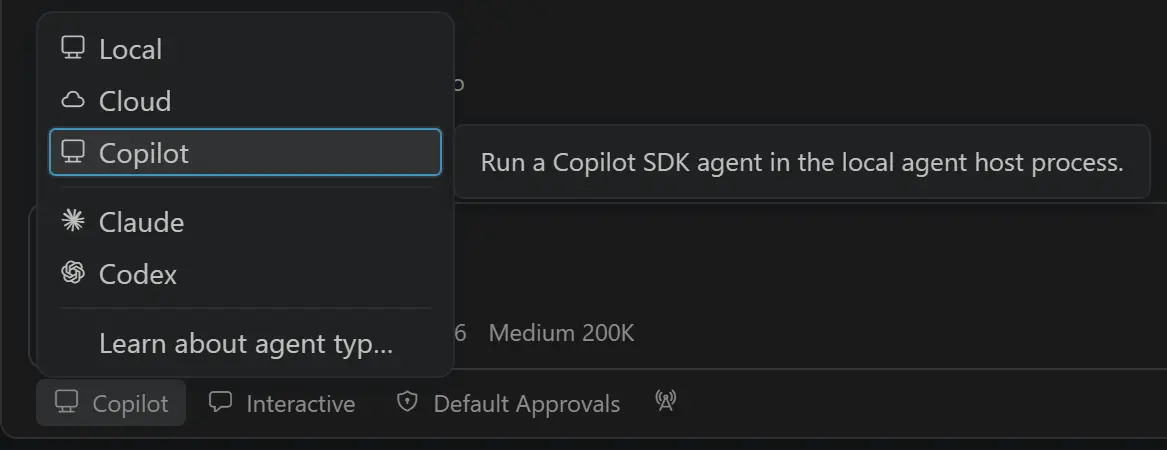
On July 30 GitHub bundled its VS Code July releases into a single changelog covering v1.127 through v1.131. The agent window was reworked so that when several agents run at once you can see what each is doing in one view. Per-subagent model and elapsed time are displayed, and sessions can be grouped or reordered.
Worktrees are supported too. Copilot, Claude, and Codex sessions can each start in a separate worktree, so agents work without touching your own working tree.
Anyone can take the VS Code update, but the agent window requires a Copilot subscription, and credit usage reporting is limited to Business and Enterprise. The changelog says nothing about regional restrictions. With a subscription, split one branch you are already working on into a worktree session and let it run without disturbing your existing tree.
5. Microsoft's security model, preview opening August 3
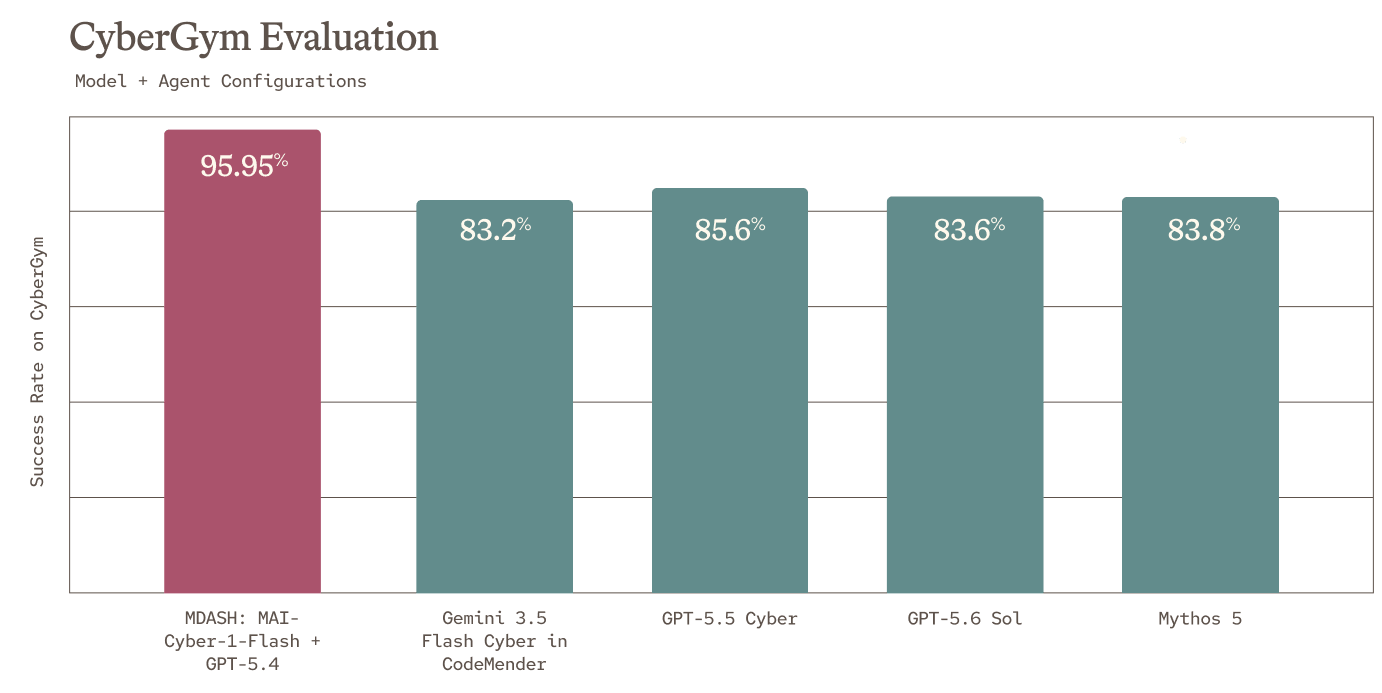
On July 27 Microsoft released its first cybersecurity model, MAI-Cyber-1-Flash. The design routes most security checks through a cheap dedicated model and escalates only the hard ones to an expensive model. Roughly 90% of the work stays on the small model and the remaining 10% goes to GPT-5.4, halving cost while scoring 95.95% on CyberGym. What makes this notable is that the routing rule is baked into a product with numbers attached, which we covered last week.
Project Perception, the product this model sits inside, opens its public preview on August 3. It runs red, blue, and green agents together.
Access is limited to organizations already using the Microsoft Security product family. Pricing was not published, and the announcement says nothing about country availability. This one is aimed at organizations that have both a development team and a security function, so if that describes yours, check whether you qualify for the preview opening today.
6. EU AI Act enforcement began
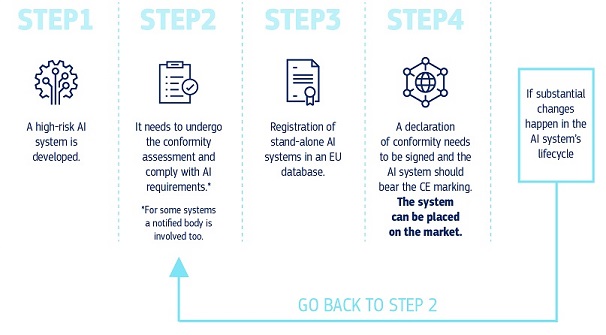
As of August 2, enforcement powers over general-purpose AI (GPAI) providers and the chatbot disclosure obligation under the EU AI Act are live. The Commission page states that from this date the AI Office and member-state authorities take on implementation, supervision, and enforcement. The fine ceiling is 3% of turnover or €15 million.
High-risk system obligations were pushed to December 2027, and much of the coverage focused only on that delay. The distinction between the two dates is laid out in last week's post.
What triggers the obligation is placing a model or capability on the EU market, not where your company is headquartered. If you ship to EU users, August 2 is the date enforcement actually starts, and the GPAI provider documentation requirements are the first thing to check.
7. OpenAI's Astra closed ten open math problems
On August 1 OpenAI said an internal build of its unreleased Astra model produced proofs for ten open problems in mathematics and theoretical computer science, several open for more than a decade. A 249-page paper and Lean 4 certificates went up in the openai/ten-proofs repository, with token cost reported at roughly $2,000.
Astra is not released, so it is available neither through the API nor in any product. The repository's review status reads agent-reviewed: machine verification passed, human review has not happened yet. The content of the ten proofs and the review procedure are covered in yesterday's post.
The moment that status flips to human-reviewed is when this result is worth revisiting. Until then, treating it as machine-verified only is the safer read.
The short version
Price is the biggest story of the week. OpenAI Luna output fell from $6 to $1.20 per million tokens, and Codex can now select DeepSeek models whose output price is roughly 1/100th of Sol, the Codex default. Gemini agent hooks can be tested on a free key. The VS Code agent window needs a Copilot subscription, and Microsoft's Project Perception preview opens August 3. The EU AI Act only matters to teams shipping into the EU market, and Astra is a story to revisit when the model ships. Back next week with another roundup.