This Week in AI: Gemini 4 Argon Doubles on December 1, Claude Code Fixes Five Permission Bypasses
Google's pricing page now lists Gemini 4 Argon at $4.00 per million input tokens from December 1, double the $2.00 it charges through November 30, and Claude Code 2.1.319 fixed five cases where a Bash command ran past the permission check.
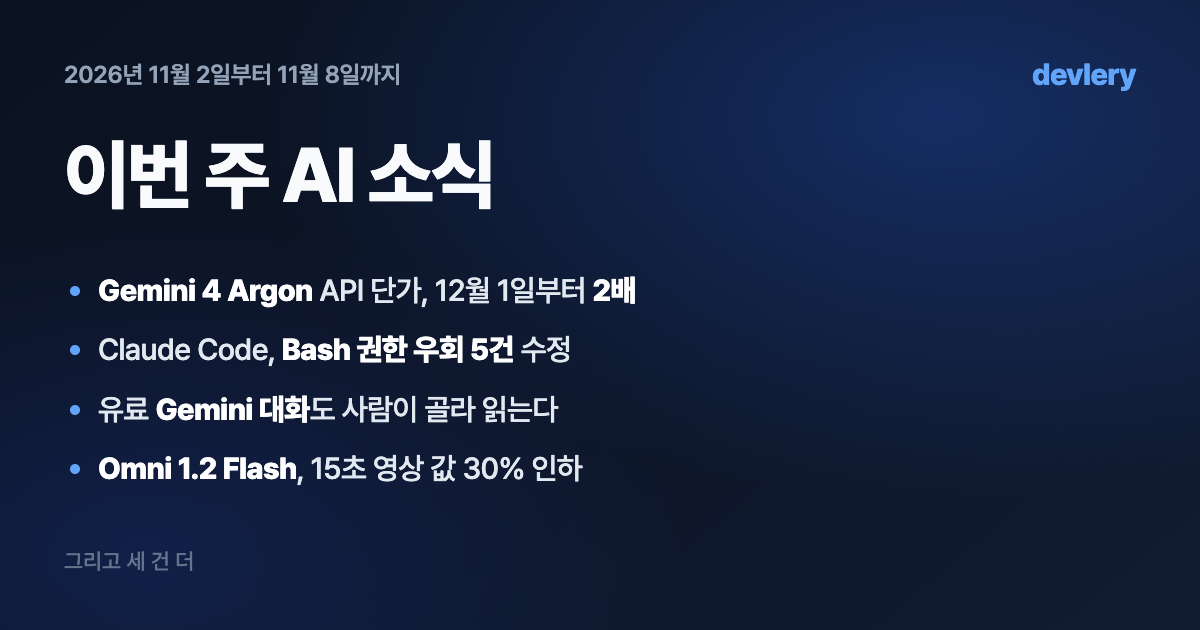
Calling Gemini 4 Argon, Google's strongest reasoning model, through the API costs twice as much from December 1. Input goes from $2.00 to $4.00 per million tokens and output from $10.00 to $20.00, with the date written into the pricing page itself. On November 6, Claude Code closed five cases where a Bash command skipped the approval prompt and ran anyway.
Here are seven items from November 2 through November 8.
1. Claude Code fixed five ways a Bash command got past the permission check
Anthropic shipped Claude Code 2.1.319 on November 6, and the changelog lists five fixes for Bash commands that evaded the permission check. These were commands that should have stopped at an approval prompt and instead ran straight through. The five: a crafted environment-variable prefix that hid part of a command from the check, a sandbox escape while creating a worktree, a sed command that skipped the check in accept-edits and auto mode, Bash deny and ask rules that missed commands written with quoted words, and /rewind restoring or deleting a file through a directory symlink.
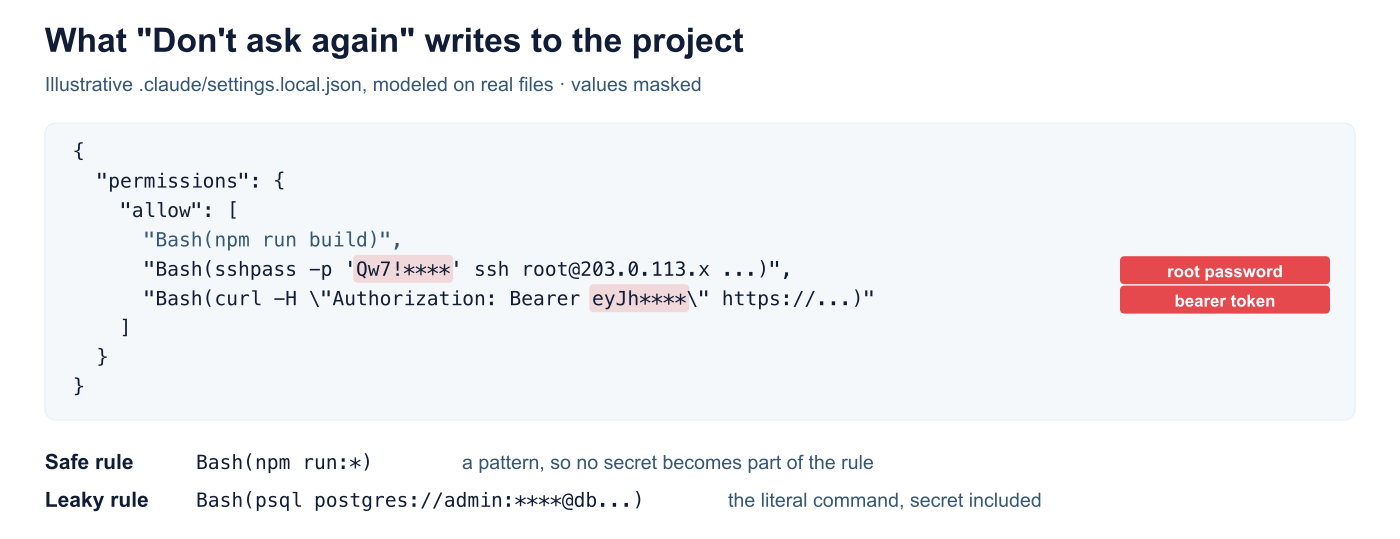
In the same week, security firm Apiiro reported finding 2,539 plaintext secrets in the Claude Code approval files of 1,994 public GitHub repositories. The behavior underneath that report, a password landing in a permission rule in clear text, is not touched by this release. Nothing between 2.1.314 and 2.1.319 masks secrets in approval rules. The 2.1.317 build from November 2 did add a check that asks before a web or shell tool call sends your account email address to the network.
No plan tier or region condition applies, and none of it costs extra. Run claude update to get to 2.1.319 or later.
2. Paid Gemini chats reach human reviewers too, and the reviewed copies last three years
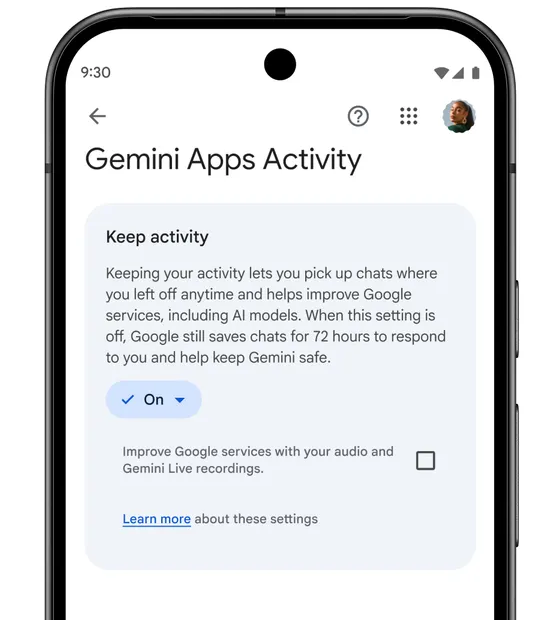
Conversations from paying personal Gemini subscribers feed model training on the same terms as free accounts, and a sample is read by people working for outside service providers. That fact spread on November 4 when it reached 560 points on Hacker News. The Gemini Apps Privacy Hub draws the line at one setting, Keep Activity, rather than at the plan you pay for. This is not a new policy; it has read this way since August 2025.
Retention is the sharper part. Activity auto-deletes after 18 months by default, but the page states that chats reviewed by human reviewers "are not deleted when you delete your activity. Instead, they are retained for up to three years." We covered why paid and free accounts share the same training terms, and what turning the setting off costs you separately.
There is no regional carve-out. Where EU or UK data protection law applies, Google names legitimate interests as its basis for using chats to improve models, with consent reserved for Voice Match, Memory, and audio recordings. The one exception is a work or school Google account, which falls under separate Workspace data-handling terms. If work has been going into a personal account, turn Keep Activity off, knowing that future chats are then kept only 72 hours and that Google still uses them to respond to you and protect its services, human reviewers included.
3. Gemini 4 Argon API pricing doubles on December 1
The Gemini 4 Argon row on Google's Gemini API pricing page currently carries two numbers side by side. Input per million tokens reads "$2.00 through November 30, 2026. $4.00 starting December 1, 2026," and output reads "$10.00 through November 30, 2026. $20.00 starting December 1, 2026." Thinking tokens bill as output, and context caching rises by the same multiple. Argon is the top reasoning model Google launched on October 13.
The Batch and Priority tiers move on the same date by the same factor. Google has not called the current number a discount or a launch price. The only announcement is the date printed inside the pricing table.
Argon is not offered on the free tier. On paid tiers, Singapore is on the list of countries where the Gemini API is available, along with Japan, India, Australia, Indonesia, Malaysia, the Philippines, Thailand, and Vietnam; Hong Kong, Macau, and mainland China do not appear. Before November ends, measure the real input and output tokens of whatever you run on Argon and price the December invoice at twice the figure.
| Gemini 4 Argon, per 1M tokens | Through November 30 | From December 1 |
|---|---|---|
| Standard input | $2.00 | $4.00 |
| Standard output (thinking tokens included) | $10.00 | $20.00 |
| Context caching | $0.10 | $0.20 |
| Batch input / output | $1.00 / $5.00 | $2.00 / $10.00 |
| Priority input / output | $3.60 / $18.00 | $7.20 / $36.00 |
4. Codex got one screen for every task you left running
OpenAI shipped Codex 0.167.0 on November 6, adding an agent command center that opens with codex agents --no-daemon. Until now, running several tasks at once meant opening sessions one by one to find out which had finished; the command center puts them on a single screen and marks results you have not read yet. Switching between connected backends from the session picker now keeps the draft you were typing, and patch details expand inside the transcript while an approval prompt is open.
Approvals changed too. A managed-command checkpoint requires fresh human approval for commands an administrator designates, and an experimental Guardian review inspects commands injected into a thread separately. MCP approval prompts now show tool names alongside their annotation hints.
This is a public repository release with no plan or region condition, though model calls still need a ChatGPT plan or an API key as before. If you work with several sessions open at once, open codex agents --no-daemon once and clear the unread results first.
| New in Codex 0.167.0 | What it does for you |
|---|---|
codex agents --no-daemon | Collects running tasks on one screen and marks unread results |
| Backend switching in the session picker | Keeps your draft instead of making you retype it |
| Managed command checkpoints | Commands an administrator designates need fresh human approval |
| Guardian review (experimental) | Reviews commands injected into a thread separately |
gcp_setup_wizard | Walks through Google Cloud Vertex AI credential setup |
5. Gemini Omni 1.2 Flash makes a 15-second video for 30% less
Google made its video generation and editing model Gemini Omni 1.2 Flash generally available on November 5. Hand it a product photo or a single sentence and it produces video, and you then revise that video through conversation. Length is "up to 15 seconds long, up from 10 seconds with Omni 1.1," selectable in one-second increments from 3 to 15. Google wrote that it "dropped the price 30% from Gemini Omni 1.1 making it available at $0.07 per second for 720p video."
On the pricing page, that shows up as output video tokens falling from $17.50 per million on 1.1 to $12.00 on 1.2. One second of 720p costs 5,792 tokens, which puts a 15-second clip at roughly $1.04. From December 3, every API request sent to gemini-omni-1.1-flash routes automatically to 1.2 and bills at 1.2 rates.
The API is paid-tier only, with no free tier, and reaches the same Gemini API countries listed above, Singapore included. Neither Google blog post names a country restriction. In Google Vids, a Google account or a Workspace subscription makes 15-second clips at no additional cost; in the Gemini app, rollout is staged for Google AI Ultra subscribers, and audio references are gated behind allowlisting. If you are generating video on 1.1, run the same prompt through 1.2 yourself and compare before the December 3 switch happens on its own.
| Item | Omni 1.1 Flash | Omni 1.2 Flash |
|---|---|---|
| Video length | 10 seconds | 3 to 15 seconds |
| Output video, per 1M tokens | $17.50 | $12.00 |
| One second of 720p | About $0.10 | $0.07 |
| Free tier | None | None |
6. GPT-6 Cyber wrote 948 working Linux root exploits
On November 4 OpenAI disclosed that a pre-release cyber model had made a single pass over the Linux kernel and produced 948 working privilege-escalation exploits, counted by unique patch. A privilege-escalation exploit is attack code that takes administrator rights on a server you have already entered as an ordinary user. The next day OpenAI released that model as GPT-6 Cyber. The run cost $1,213,430 in API spend, $1,279 per exploit. The same harness on GPT-5.6 Sol in July returned 166.
OpenAI wrote that for a well-resourced attacker holding a low-privileged account on an unpatched operating system, root access is effectively already in hand. We covered the gap between that per-exploit cost and bug-bounty rates, plus the 20 zero-days the model found without being asked separately.
The model is limited to a subset of customers cleared through Daybreak Red review, reachable via the API and Codex. Organizations must have SSO, multi-factor authentication, managed devices, and API IP allowlisting; individuals need identity and biometric verification plus a FIDO2 hardware security key. No country restriction appears in the announcement, the system card, or the application form. If you run Linux servers, start with the ones that execute outside code at low privilege, CI runners and coding-agent sandboxes, and check their kernel versions against your distribution's advisories.
7. Claude reads your bank accounts, on US Pro, Max, and Ultra only
Anthropic opened a Personal Finance beta on November 5. Link your bank, credit card, loan, and investment accounts to Claude and it reads your transactions directly and answers questions about your spending. It does the part where you copy numbers into a budgeting app. The release notes say it "is available on Pro, Max, and Ultra plans, and is available in the US only."
The same day, Claude Enterprise gained a security center, reasoning hooks, and central administration, and on November 6 a beta opened that lets enterprise organizations attach internal cost codes to projects and see spend by tag. Both are limited to organizations on an Enterprise contract.
An account in Singapore, or anywhere else outside the United States, cannot use Personal Finance today, and the release notes carry no schedule for widening it beyond the US. The moment to look at this feature again is when a region other than the US appears in those notes.
| Item | Condition |
|---|---|
| Plan | Pro, Max, Ultra |
| Region | US only, no expansion schedule |
| Status | Beta, staged rollout |
| Accounts you can link | Bank, credit card, loan, investment |
The short version
The biggest item this week is two lines on a pricing page: Gemini 4 Argon costs twice as much from December 1, so measure your real token use in November and double the number. Claude Code 2.1.319 closed five Bash permission bypasses, but the behavior that writes secrets into approval rules in clear text is untouched. Paid Gemini subscribers are in the same training and human-review pool as free users, and reviewed chats survive activity deletion for three years, so check Keep Activity today if work has been going into a personal account. Codex 0.167.0 collects your running tasks on one screen, and Gemini Omni 1.2 Flash brought 15-second video to $0.07 per second. GPT-6 Cyber is restricted to customers cleared through Daybreak Red, and Claude Personal Finance is worth revisiting when a region outside the US shows up in the release notes.