The pope's first encyclical turns to AI, and Olah is going to Rome
Pope Leo XIV’s first encyclical, Magnifica humanitas, will focus on AI and human dignity. Christopher Olah’s role makes it a signal for AI builders.
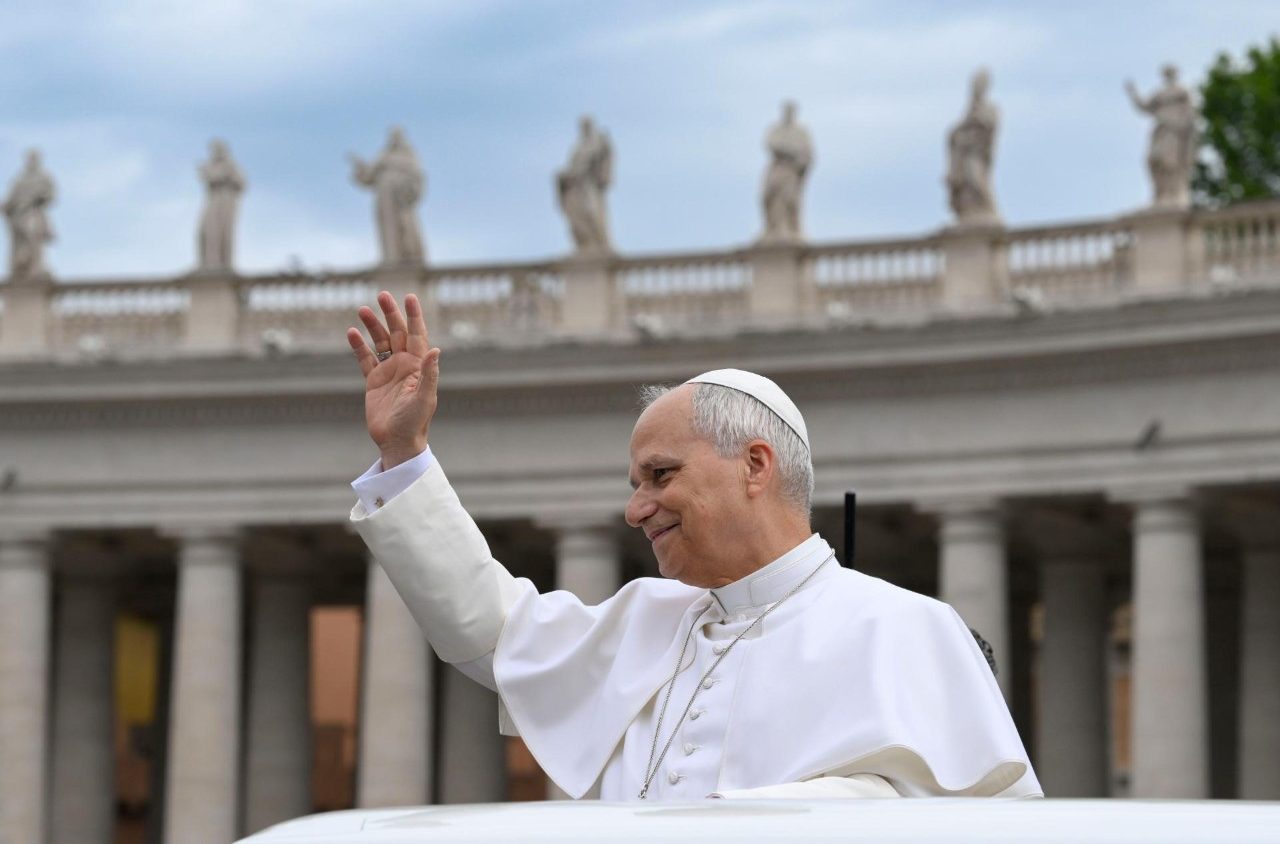
- What happened: The Vatican says Pope Leo XIV's first encyclical,
Magnifica humanitas, will be published on May 25, 2026.- Its theme is human dignity in the age of artificial intelligence, and Anthropic co-founder Christopher Olah will speak at the launch.
- Why it matters: AI ethics is moving beyond internal product-safety principles into the language of religion, labor, war, and public policy.
- Builder impact: AI teams will need to explain not only performance and cost, but also
human dignity, labor displacement, surveillance, and accountability boundaries. - Watch: The encyclical text is not public yet. What is confirmed today is the publication date, theme, speakers, and the Vatican's new AI commission.
Vatican News announced on May 18, 2026 that Pope Leo XIV's first encyclical, Magnifica humanitas, will be published on May 25, 2026. The subject is the preservation of human dignity in the age of artificial intelligence. That would already be a major AI governance story. But for AI builders, one name in the launch lineup stands out: Christopher Olah, Anthropic co-founder and head of AI interpretability research.
This is not just another instance of "the Vatican talks about AI." The AI debate in 2026 is moving through model benchmarks, agent products, data-center power, coding automation, copyright lawsuits, and public-sector procurement at the same time. A pope choosing AI as the subject of his first encyclical is a sign that AI is no longer only a product-launch issue inside the technology industry. The Vatican is putting the subject into the language of labor, justice, peace, and human dignity. That is a less familiar frame for developers and AI product teams, but it is becoming harder to avoid.
What the launch announcement confirms
According to Vatican News, Magnifica humanitas will be presented at 11:30 local time on May 25 in the Vatican Synod Hall. The document was signed on May 15, 2026. That date marks the 135th anniversary of Rerum novarum, Leo XIII's encyclical on labor in the industrial age. It is difficult to read Leo XIV's timing as accidental.
The speaker list also carries a message. The pope himself is scheduled to attend, joined by Cardinal Victor Manuel Fernandez, Cardinal Michael Czerny, theologian Anna Rowlands of Durham University, Leocadie Lushombo of the Jesuit School of Theology, and Christopher Olah. Vatican News introduced Olah as an Anthropic co-founder and head of interpretability research. In other words, the Vatican is not treating AI only as an abstract ethical topic. It is putting a researcher associated with understanding what happens inside models on the same stage.
Magnifica humanitas is signed on the 135th anniversary of Rerum novarum.The point of this timeline is that the Vatican is placing AI beside the social questions created by the industrial revolution. Rerum novarum addressed workers' rights, limits on capital, and the responsibility of the state and employers. AP reports that the new encyclical is expected to place AI inside the Catholic social teaching tradition, especially labor, justice, and peace. The full text has not yet been published, but the structure of the announcement already points in a clear direction.
Why Christopher Olah matters here
Christopher Olah is a familiar name to readers who have followed AI safety research. His work is associated with interpretability: attempts to visualize and understand internal representations in neural networks. Anthropic is the company behind Claude, but it has also made model interpretability and early risk detection part of its public research identity. Olah's presence at the launch suggests that the Vatican does not want to frame AI ethics only as a question of good intentions.
AI ethics has a long-running weakness. The principles are often right, but it remains hard to explain why a model produced a particular answer, where it will fail, and how far a safety mechanism really reaches. Companies publish policy documents. Governments draft rules. Civil-society groups name risks. Yet the model itself remains opaque. Interpretability is one technical attempt to narrow that gap. The argument is that if we want to test safety, we need better ways to understand circuits, features, representations, and goal generalization inside models.
That does not mean the Vatican is endorsing Anthropic's product strategy. The Vatican News announcement identifies Olah's role and research area; it does not make a product claim. The symbolism is still strong. AI safety is becoming a discussion where religious institutions, policy organizations, researchers, and companies share a stage. An encyclical may feel distant from daily engineering work, but the questions become very practical when AI systems substitute for human labor, extend surveillance, or enter military decision-making.
The Vatican already created an AI commission
Two days before the encyclical announcement, Vatican News reported that the pope had approved an Interdicasterial Commission on Artificial Intelligence. The approval date was May 12. The commission includes the Dicastery for Promoting Integral Human Development, the Dicastery for the Doctrine of the Faith, the Dicastery for Culture and Education, the Dicastery for Communication, the Pontifical Academy for Life, the Pontifical Academy of Sciences, and the Pontifical Academy of Social Sciences. For the first year, coordination sits with the Dicastery for Promoting Integral Human Development.
That may sound like internal Vatican administration, but from an AI governance perspective it is realistic. AI is not a one-department issue. It cannot be handled only by a product team, or only by lawyers. Education, communications, science, social policy, bioethics, theology, and international affairs all touch the problem. By gathering seven Vatican bodies, the commission treats AI as a cross-cutting issue rather than a narrow technology policy.
Companies face the same pattern. Shipping one AI feature can require model evaluation, security, privacy, legal, user research, operations, and customer support to move together. Once agents begin taking actions in real systems, the boundary gets even more complicated. Who approved the action? What data did the agent read? Which external tool did it call? What alternatives did it present to the user? Could the action be reversed after failure? These are no longer afterthoughts. They are product-design requirements.
| Question | Common AI product language | Language the encyclical brings in |
|---|---|---|
| Model performance | Accuracy, latency, cost, benchmarks | Does it support human judgment or replace it? |
| Automation | Productivity, workflows, agent execution | Dignity of work, responsibility, alienation |
| Safety | Policy violations, jailbreaks, eval pass rates | Peace, surveillance, harm to human life |
| Governance | Admin consoles, logs, permissions, audits | Common good, participation, social responsibility |
The labor question is back
The AI industry often avoids the sentence "this replaces work." It prefers productivity, augmentation, assistance, and removing repetitive tasks. Many AI tools do help people work better. But it is also hard to hide that labor-cost reduction is one reason organizations adopt AI. The same question now appears in customer support, coding, legal review, accounting, content production, research, and sales operations: when AI finishes a task, do people move to higher-value work, or does the organization simply do the same work with fewer people?
That is why Leo XIV's reference point matters. The industrial revolution raised productivity dramatically, but it also created new problems around workers' lives, rights, urban poverty, and concentration of capital. AI has a similar double edge. It can expand medical research, accessibility, education, scientific discovery, and software productivity. It can also expand surveillance, misinformation, labor displacement, bias, militarization, and concentration of power. The encyclical is likely to ask not "should technology stop?" but "for whom is this technology deployed, and under what responsibility?"
For developers, that is not an abstract ethics seminar. If you build an AI hiring tool, model accuracy is not enough. Candidates need to understand the basis of evaluation and have a path to contest it. If you build AI financial advice, optimization cannot push vulnerable users into excessive risk. If you build medical, legal, or education tools, the system needs to preserve context for human judgment. If an agent can make payments, file documents, or change security settings, approval boundaries and logs become core features.
War, surveillance, and synthetic presence
AP also reads the launch in the context of tension between Anthropic and the U.S. government over restrictions on the use of Anthropic technology and conditions around military use. That is AP's framing, not part of the Vatican's official announcement, so it should be kept separate. Still, it is natural for the Vatican to pay attention once AI is tied to war, surveillance, and national security.
Leo XIV has already spoken repeatedly about AI and human dignity. In Vatican News coverage of his 2026 World Communications Day message, he argued that technology must serve the human person rather than replace the person or shrink human dignity. He paid particular attention to AI systems that imitate faces, voices, and emotions, because they can change core dimensions of human communication. He also said AI governance cannot be solved by one sector alone; industry, lawmakers, creators, academics, artists, journalists, and educators all need to build safeguards.
The same logic applies inside AI product teams. A voice-cloning feature is not adequately described by saying users may find it fun or useful. Teams have to decide whose voice can be cloned, under what consent, how the voices of deceased people and public figures are handled, how fraud and defamation risks are reduced, and whether watermarking or detection is provided. Face generation and emotion simulation raise similar questions. A face or voice is not just a data point. It is a medium of relationship and trust.
What we cannot know yet
There is an important limit: the text of Magnifica humanitas is not public yet. We should not claim specific provisions, regulatory proposals, or positions on particular companies. The confirmed facts are the publication date, theme, signing date, launch structure, Olah's participation, and the separate AI commission. Anything beyond that is interpretation based on context.
Another limit is that the Vatican's influence is not the same as direct regulatory power. It does not write AI law like the EU or the U.S. government. It does not fine companies. But it does shape social agendas. On the environment, poverty, war, and labor, Vatican documents have influenced discussions across governments, civil society, universities, and international organizations. AI could follow a similar pattern. Catholic hospitals, schools, NGOs, development agencies, media organizations, and public-policy networks may translate the encyclical's language into actual AI adoption principles.
What AI teams should watch now
AI product teams probably will not change code immediately because of this announcement. But they should revisit product documents and decision criteria. First, teams need to describe how an AI feature supports human judgment. "It automates the workflow" is not enough. Some cases require human review, some require the system to stop, and some require the user to see broader context before an action happens.
Second, teams need labor-impact assessment. When an AI tool reduces repetitive work inside a role, what happens to responsibility and skill? A good AI tool should not turn people into passive rubber stamps. Users should be able to understand, correct, and learn from the result. Otherwise, a productivity product becomes an accountability-avoidance mechanism inside an organization.
Third, explainability and interpretability should be treated as part of product safety. No team can fully explain every model internals. But it is possible to show users why an answer was produced, what data was used, which tools were called, and where uncertainty remains. In the agent era, this is more important. Users are no longer reviewing only an answer; they are reviewing a path of action.
Fourth, AI governance cannot end as one team's checklist. Just as the Vatican gathered multiple bodies, companies need to connect product, security, legal, policy, design, customer support, and data governance. Admin consoles and logs matter, but they are not enough. The product also needs to expose meaningful choices and explanations to users, protect vulnerable users, and recover from failure.
Questions arriving from outside the tech industry
AI news moves fast. A new model ships, a coding agent updates, an enterprise agent studio launches, and a data-center power deal lands. In that flow, performance and deployment speed can swallow everything else. Magnifica humanitas brings a slower set of questions. What work should AI be allowed to take over? Which decisions must remain under human responsibility? Can the meaning of labor be reduced to productivity metrics? Can faces, voices, and relationships be treated as data?
These questions do not reject technological progress. They arise because AI is becoming social infrastructure. If AI were a toy, it would not be the subject of an encyclical. It enters the language of human dignity because it is entering search, education, labor, war, medicine, finance, administration, and creative work. If developers and AI companies find that language uncomfortable, the discomfort is useful. It signals that the domain their products touch has expanded.
The full text on May 25 will be necessary for a precise assessment. But one thing is already clear: the stage for AI governance is wider now. This is no longer only a conversation among model companies, governments, venture investors, and cloud providers. Religious institutions, labor ethics, social teaching, interpretability research, and civil society are entering the same sentence. That is why Christopher Olah's trip to Rome is interesting. The next AI debate is becoming less about whether a model is smarter, and more about what language human society will use to understand and govern it.
Sources
- Vatican News: Pope Leo XIV's first encyclical Magnifica humanitas to be published May 25
- Vatican News: Pope approves creation of Interdicasterial Commission on Artificial Intelligence
- AP News: Pope and co-founder of Anthropic to launch pontiff's AI encyclical on May 25
- Vatican News: Pope Leo: Technology must serve the human person, not replace it