Asana Dash puts AI teammates on the same project plan
Asana is packaging Dash, AI Teammates, StackAI, and Command by Asana as an operating system for human-agent teams.
- What happened: Asana announced an operating system for
human-agent teamsat its London Work Innovation Summit on June 4, 2026.- Agentic Work Management, AI Teammates, and AI Studio are available now; Dash, Command by Asana, and two other packaged apps are planned for phased rollout.
- Builder angle: Command by Asana is positioned as a product development app that pulls context from tickets, PRs, meetings, and notes to draft specs and release plans.
- Why it matters: Asana is not pitching another private chatbot. It is trying to put agents inside shared work records with owners, deadlines, permissions, and audit trails.
- The StackAI acquisition extends that plan into CRM, ERP, ITSM, contract, document, database, and custom infrastructure workflows.
- Watch: The beta metrics and customer examples come from Asana materials, so adoption decisions still depend on permission design, rollback paths, and integration quality.
Asana used its London Work Innovation Summit on June 4, 2026 to announce what it calls an operating system for "human-agent teams." The official release frames the product family around a simple workplace problem: people and AI agents need to operate from the same plan, the same context, and the same governance model if agents are going to handle core work rather than sit beside it.
The announcement has four main pieces. Asana Dash is a personal AI Chief of Staff. AI Teammates are specialized agents that work inside shared team projects. StackAI, acquired by Asana in May 2026, extends execution across external systems. Asana is also packaging new applications for service management, product development, and client management, including Command by Asana for engineering and product teams. Asana says Agentic Work Management, AI Teammates, and AI Studio are available immediately, while Dash and the three new apps will roll out over the next few months.
The developer relevance is not that another collaboration tool added an AI summary button. Asana is aiming at the place where work becomes a source of truth. Meetings, Slack threads, emails, tickets, PRs, design files, customer requests, contracts, and databases already contain the material agents need. The difficult part is deciding what an agent can read, what it can change, who approved the change, and which record remains authoritative after the agent acts.
Asana Dash is the individual entry point. The launch materials describe Dash as a system that understands a user's goals, priorities, and open loops, then turns follow-up work from meetings, Slack threads, and email into structured work inside the Asana Work Graph. Instead of asking every employee to write prompts that describe their work context, Dash is supposed to route the right task to an appropriate AI Teammate and push the project forward from inside the existing work system.
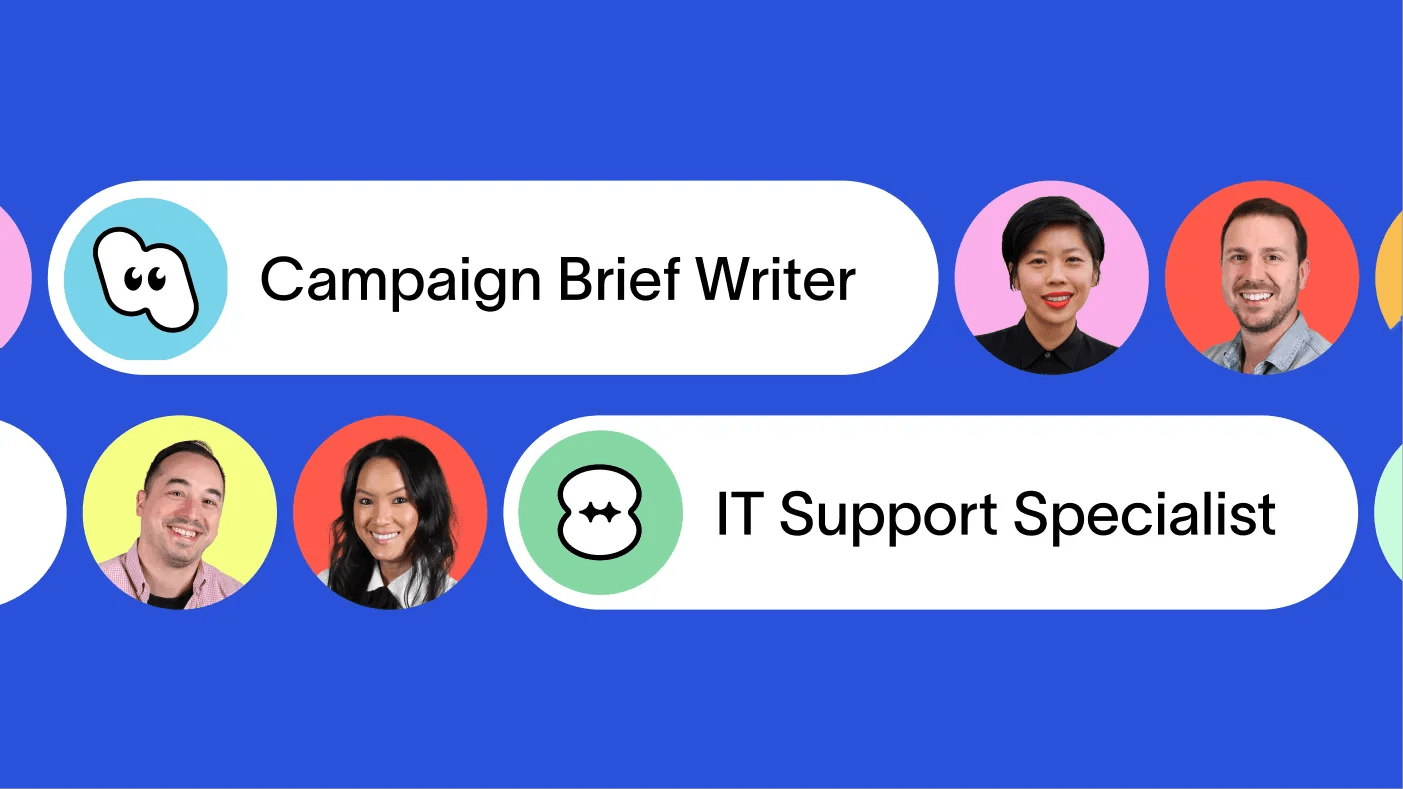
The team-level product is AI Teammates. Asana's AI Teammates resource describes them as specialized agents that live in the flow of work rather than in a side tab. The March 2026 resource lists 21 out-of-the-box agents for marketing, IT, and operations, along with a no-code builder. Examples include Campaign Brief Writer, Workflow Optimizer, Compliance Specialist, Launch Planner, Bug Investigator, and Sprint Coach.
Asana's beta metrics are deliberately aggressive. The company says more than 200 organizations tested AI Teammates, 93% of those teammates received full edit access rather than only view or comment access, teams completed work twice as fast, AI-managed tasks were 3.2 times more likely to have a clear owner, and they were 2.6 times more likely to have a defined deadline. Those numbers are Asana-provided figures, not an independent benchmark. They are useful as a signal of the company's intended permission model, but security and platform teams still need to inspect approval gates, audit logs, and failed-action handling before treating the metrics as deployment evidence.
| Layer | What Asana announced | What teams should verify |
|---|---|---|
| Individual | Dash converts meeting, Slack, and email follow-ups into Work Graph tasks | Permission boundaries between a personal inbox and shared projects |
| Team | AI Teammates manage owners, deadlines, and handoffs inside shared projects | Agent edit rights, approval steps, and rollback records after failures |
| System | StackAI extends execution to CRM, ERP, ITSM, contracts, databases, and custom infrastructure | Audit trails and data residency for write actions in external systems |
| Development | Command by Asana drafts specs from past tickets, PRs, meetings, and notes | Overlap with Jira, Linear, GitHub Projects, and the chosen system of record |
StackAI is the execution layer behind the broader claim. Asana completed its StackAI acquisition on May 28, 2026. The acquisition release describes StackAI as a no-code AI workflow platform that can read from and act across ERP, CRM, ITSM, Salesforce, AWS, Docusign, Oracle, document systems, databases, and custom infrastructure. Asana's intended loop is that AI Teammates use Work Graph context, trigger StackAI workflows, and return actions and results back to Asana.
That loop targets a real gap in the agent market. Individual developers can use Claude Code, Codex, ChatGPT, Gemini CLI, or Cursor to coordinate a repo, terminal session, issue description, and test output. Team work adds a second problem: one person's agent output becomes another person's input, and the organization still needs to know who approved the handoff, which priority changed, and what the current plan says. Reddit discussions in EngineeringManagers and aiToolForBusiness on June 4 raised the same practical question: when agents span multiple people, is a human still the glue between outputs?
Asana's answer is to put agents inside the work record. AI Teammates are described as living in projects rather than private chats, and a change in priority can update the roadmap seen by the rest of the team. For that design to work, agent memory cannot be just a transcript in one user's chat account. It has to be permissioned organizational work data with shared state, role-based access, and an audit trail that survives beyond a single conversation.
Command by Asana is the clearest developer-tools signal in the announcement. The press release calls it a "planning and product development system for humans and agents." It is meant to draft specs from past tickets, PRs, meetings, and notes. Engineering managers can simulate backlog plans against release dates, capacity, and velocity, while leaders inspect live dashboards for hidden dependencies.
That overlaps directly with Jira Product Discovery, Linear, GitHub Projects, Aha!, and the planning features already attached to source hosting and issue trackers. To win space in a development organization, Command by Asana has to do more than draft a tidy spec. It needs to detect when a PR's actual diff conflicts with a ticket's business objective, show who can change a release date when a customer commitment is at risk, and connect agent-generated plans with code review, incident response, and release gates.
Asana Service Management follows the same pattern for IT, HR, and facilities teams. Asana says the app combines ticketing with project execution so that a request can move from a service queue into cross-functional project work without losing context. Existing ITSM products are strong at queues, SLAs, and request routing. Project management systems are strong at multi-team execution. Asana is trying to package the handoff itself as something an agent can own.
Asana Client Management is aimed at agencies and professional services teams. The announcement mentions branded client portals, communication from intake to delivery, statement-of-work creation, asset production, status drafting, and capacity planning. In that setting, agent performance depends less on a model leaderboard and more on client-level permissions, change history, approval ownership, asset versioning, and the boundary between what a client sees in a portal and what an internal agent can read in the work graph.
The customer evidence Asana cites is useful but narrow. The AI Teammates resource says Morningstar reduced complex historical data analysis from weeks to hours, while Human-I-T cut manual review of RAM, CPU, and storage information across hundreds of devices from two hours to 30 minutes per day. The Human-I-T example also says an AI Teammate ran autonomously for more than 14 hours per day and eliminated error categories that were breaking downstream reporting.
Those examples are selected by Asana, so buyers should treat them as case-study evidence rather than a general productivity guarantee. The harder evaluation questions are specific: what data did the agent see, when could it write, which approval gate applied to the write action, what happened when it failed, and where did the log live? Once an AI teammate enters the work system, productivity and security metrics need to appear on the same operational dashboard.
Community reaction to the June 4 launch is still limited. The original Korean research note did not find a large Hacker News or GeekNews thread dedicated to the announcement. GeekNews did, however, summarize a Code w/ Claude session where Asana AI Teammates were described as entering systems like coworkers with shared configuration, role-based access control, and auditability. That lines up with the developer question that matters here: not which model name sits behind the feature, but which system grants the agent authority and records its actions.
The competitive field is crowded. Microsoft Copilot is expanding across Microsoft 365 data and workplace apps. Atlassian Rovo connects agents to Jira and Confluence knowledge. Salesforce Agentforce and ServiceNow's agent products are closer to enterprise workflow and ticketing. Zapier Agents, Workato, and Retool Workflows attack cross-app automation from the execution side. Asana's differentiator is the Work Graph and project ownership model: who owns what, by when, with which dependency, and under which goal.
Development teams do not need to start with the question "should we use Asana?" A better first question is what shared state a team agent needs in order to work responsibly. A personal coding agent can operate with a local repo, a terminal, an issue, and test results. A team agent also needs priority, owner, approval status, customer commitments, incident risk, release dates, and compliance labels. Asana's announcement is a product argument that agents without that extra work data will move faster while creating more handoff and audit cost.
The second question is system overlap. A development organization may keep Jira or Linear, continue using GitHub Projects, and still use Asana for cross-functional planning. In that case, Command by Asana has to be either the system of record or a clearly bounded orchestration layer above several systems of record. If StackAI writes back into external systems, the team also has to decide where failed actions, retries, and human reversals are stored.
The third question is pricing and permissions. The June 4 release does not disclose specific pricing for Dash or the new apps. The AI Teammates resource says new AI Teammates are available as add-ons for Starter, Advanced, Enterprise, and Enterprise+ plans. The beta claim that 93% of AI Teammates received full edit access can be read as a strong trust signal, but it also expands the operational risk surface. Once an agent has edit rights, permission boundaries and audit trails become more important than prompt quality.
Asana's announcement leaves a narrower and more practical question than "will AI manage projects?" When multiple people and multiple agents work toward the same goal, where is the plan, who can change it, and which execution record survives? Private chatbot competition is still about model quality and interface speed. Team-agent competition will be decided by permissions, shared memory, cross-system execution, and the quality of the audit log.