Vera CPU ships first, and the agent bottleneck moves beyond GPUs
NVIDIA Vera CPU systems have reached OpenAI, Anthropic, SpaceXAI, and OCI. Agent infrastructure is becoming a CPU runtime problem, not just a GPU race.
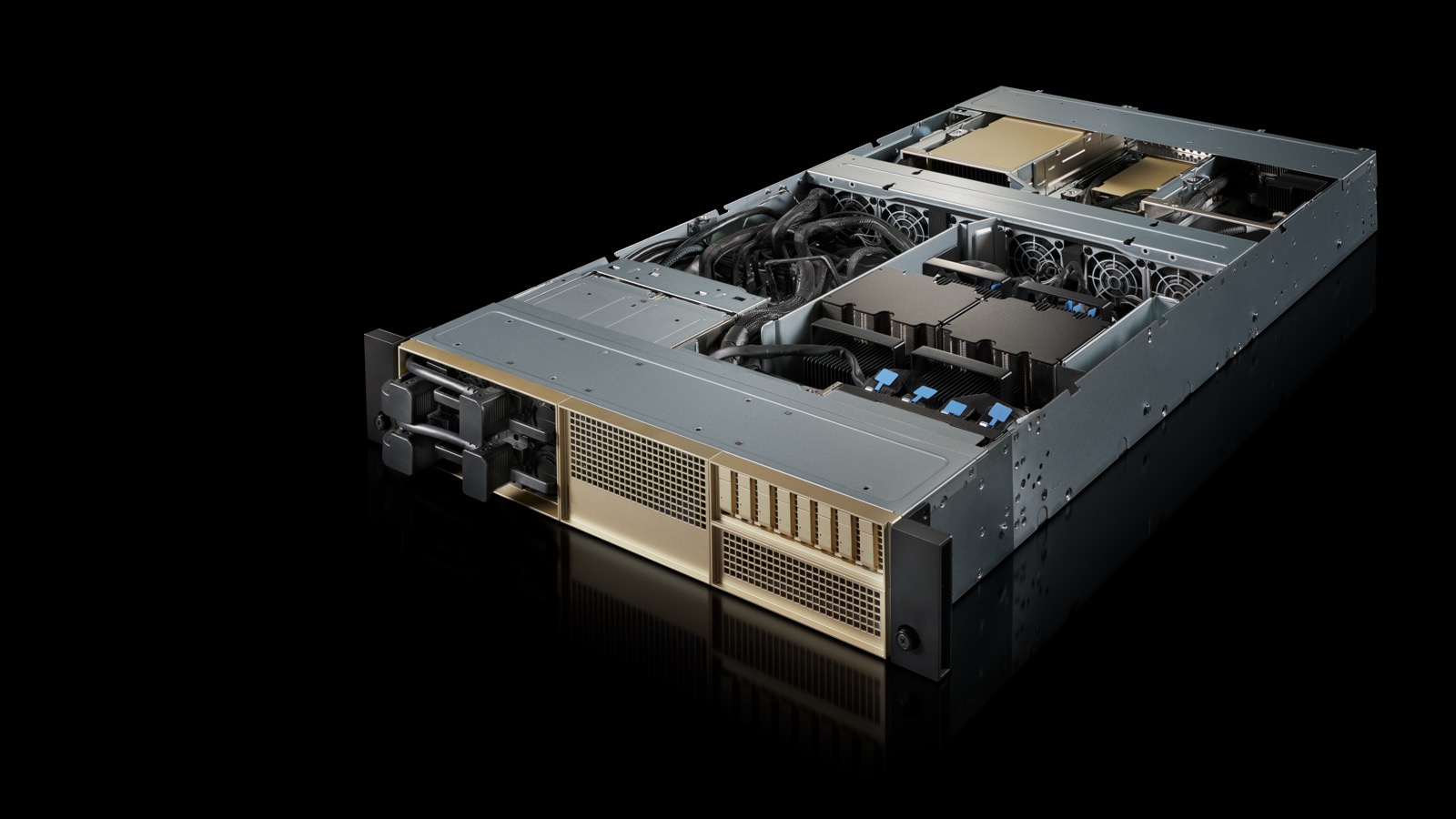
- What happened: NVIDIA delivered its first
Vera CPUsystems to Anthropic, OpenAI, SpaceXAI, and Oracle Cloud Infrastructure.- NVIDIA says the first three received systems on Friday and OCI received one on Monday, turning the March GTC announcement into an early customer evaluation phase.
- Why it matters: The bottleneck for agentic AI is expanding beyond inference GPUs into the CPU layer that runs sandboxes, tool calls, code execution, and orchestration.
- The numbers: NVIDIA positions Vera around 88 Olympus cores, 1.2TB/s of memory bandwidth, and more than 22,500 CPU environments per rack.
- Watch: This is an early shipment signal, not proof of production deployment. Real cost gains depend on each lab's workload and software stack.
NVIDIA has delivered its first Vera CPU systems directly to frontier AI labs. In a May 18, 2026 official blog post, NVIDIA said Ian Buck delivered the first Vera CPU systems to Anthropic, OpenAI, SpaceXAI, and Oracle Cloud Infrastructure. At first glance, it can read like a photo-heavy shipping update. The more interesting part is not the box itself. It is where the box landed, and how NVIDIA is reframing the bottleneck of agentic AI as a CPU problem.
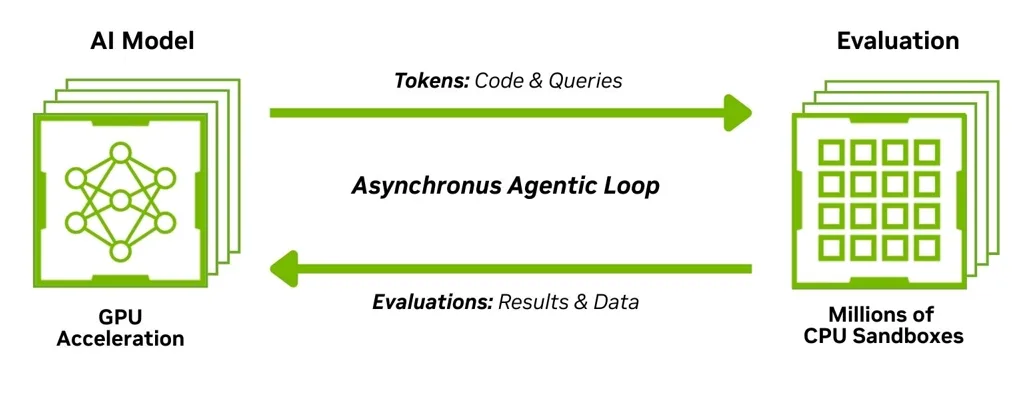
For the past several years, AI infrastructure competition has mostly been narrated through GPUs. Larger models, longer context windows, more tokens, and faster inference were almost always tied to accelerator supply. But once agents move beyond answering prompts and start opening browsers, running code, searching files, executing tests, and coordinating tool calls, the shape of the compute graph changes. Model calls still run on GPUs. Many of the small actions around those calls spread across CPUs, memory, networking, storage, and sandbox runtimes.
That is why Vera's first shipment is more interesting than a simple "NVIDIA also built a CPU" product story. It is a signal that, as agentic AI enters real work loops, bottlenecks are leaking out of the GPU layer. Labs such as OpenAI and Anthropic are no longer operating only large-scale training and inference. They also have to run coding agents, long-context reasoning, tool execution, evaluation sandboxes, and reinforcement-learning post-training systems. If the CPU layer is slow in that loop, a fast GPU does not guarantee a fast user-facing workflow.
Why the CPU is back in the foreground
NVIDIA's technical blog explains the issue through Amdahl's law. Even as GPUs get faster generation after generation, the serial CPU work left inside an agent loop can limit total throughput. The more an agent uses web browsers, databases, code interpreters, sandboxes, and file systems, the more these CPU-bound sections matter.
A coding agent makes the structure easy to see. The model generates the next action. That action becomes a shell command, test run, file read, browser check, package installation, or static analysis pass. The result goes back into the model context, and the model decides what to do next. Each task may be short, but the state is rich, the environments are numerous, and latency matters. This is less like one giant matrix operation and more like rapidly spinning up and coordinating thousands of small execution contexts.
NVIDIA says Vera is aimed at that class of workload. The official blog describes Vera as having 88 NVIDIA-designed Olympus cores and 1.2TB/s of memory bandwidth, with 50% faster per-core performance. The March newsroom announcement framed Vera as twice as efficient and 50% faster than a traditional rack-scale CPU. Those numbers still need independent benchmarks and workload details, but the direction of NVIDIA's argument is clear: the company sees the agent runtime itself as a bottleneck.
What the delivery list says
The recipient list does not look like a random set of early customers. Anthropic and OpenAI are frontier model companies, but they also operate coding agents and long-running AI products. SpaceXAI appears in NVIDIA's blog as an organization evaluating reinforcement-learning workloads and agent-based simulation pipelines. OCI is a cloud provider that has to turn new infrastructure into customer-facing capacity. Together, the list covers model research, productized agents, simulation, and a cloud distribution channel.
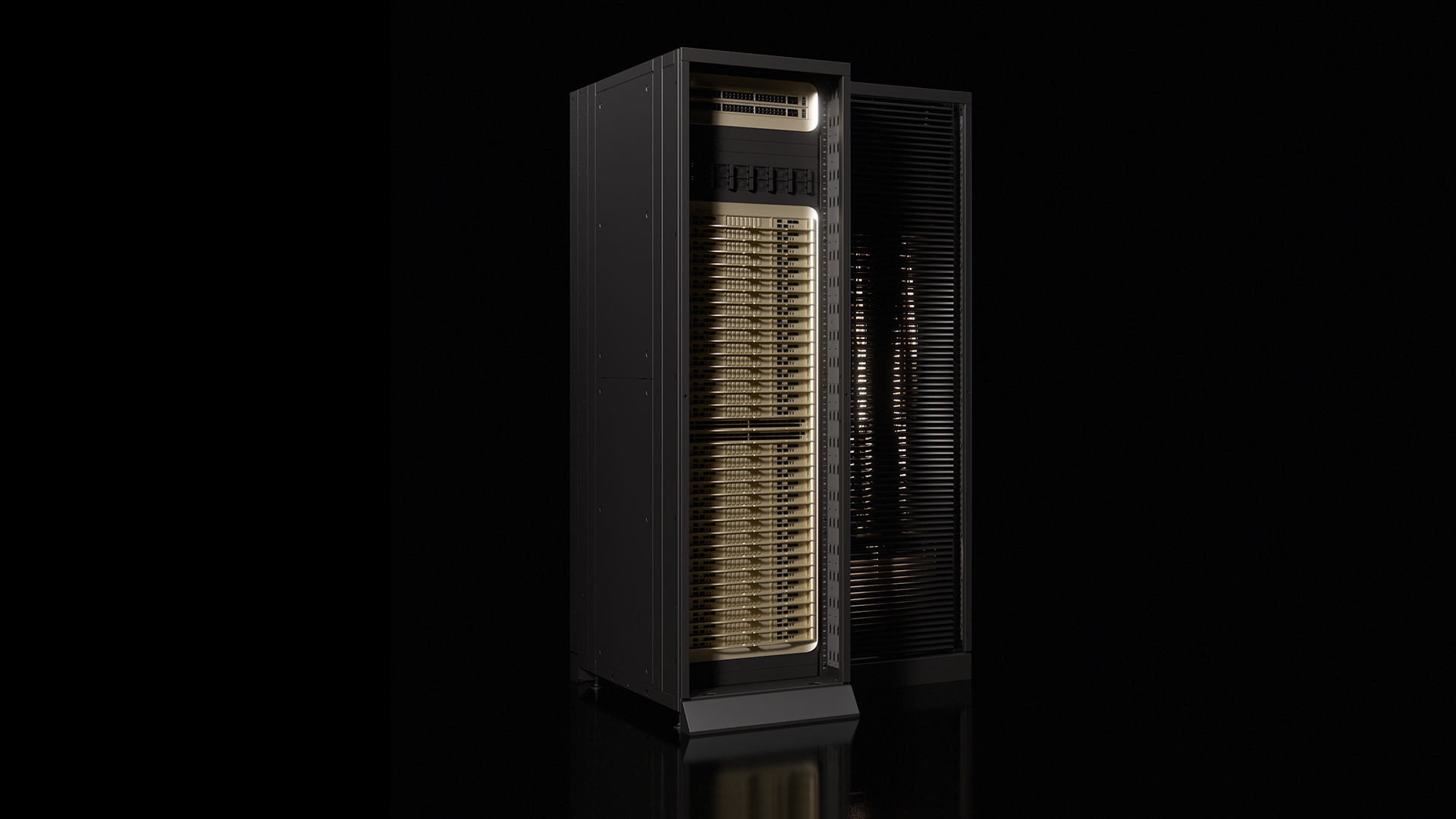
That mix lines up with NVIDIA's message that Vera is not merely a host CPU sitting next to a GPU. Vera can serve as the host CPU in the Vera Rubin NVL72 platform, connected to GPUs over NVLink-C2C, and NVIDIA also presents it as a standalone liquid-cooled CPU rack. According to the newsroom announcement, a Vera CPU rack is designed around 256 liquid-cooled Vera CPUs and more than 22,500 concurrently running CPU environments. That language directly targets workloads where many small sandboxes run at once, such as coding agents and reinforcement-learning environments.
The important shift is the widening meaning of an "AI factory." Early AI factory discussions mostly meant GPU clusters, power, cooling, and networking. But for agents to do real work, model servers are not enough. The system has to isolate execution environments, control tool permissions, track many short tasks, and return failed executions in a form the model can read. An AI factory becomes both a token factory and a sandbox operations factory.
Vera can be read as NVIDIA moving deeper into that second factory. If a customer buys GPU, networking, DPU, CPU, and rack design as one platform, performance tuning and procurement can become simpler. The other side is deeper dependence on the NVIDIA stack. That is why this delivery matters beyond one chip's specs. It shows where control points in agentic AI infrastructure may be shifting.
The practical impact for coding agents
Most developers will not buy a Vera CPU directly. The news still matters because it helps explain the cost structure of coding agents. The longer an agent works, the more the bill is not just model tokens. Execution costs rise as well. During repeated test runs, browser launches, builds, log reads, and file-system searches, CPU, memory, storage, and networking are constantly doing work.
Many teams still approach agent adoption as a model-selection problem. They compare which LLM writes better code, which context window is enough, and which prompt strategy is stable. In production, "where does the agent run?" becomes just as important. Whether containers are recreated every time, whether caches survive, how quickly test environments recover, and how browser execution and file access are isolated all shape perceived speed.
That is why NVIDIA is packaging Vera as an agent CPU. If the competitive center of agents moves from answer quality to time-to-completion, the accumulated latency of small tool executions becomes product quality. Users care not only whether the code was good, but when the pull request appeared, whether tests ran reliably, and how quickly the system recovered after failure. Those questions live at the boundary between model and runtime.
How to read the numbers
NVIDIA's numbers are assertive: 88 custom cores, 1.2TB/s of memory bandwidth, 50% faster per-core performance, more than 22,500 CPU environments per rack, and twice the efficiency of a traditional rack-scale CPU. It is too early to generalize those claims. The comparison targets and workload conditions come from NVIDIA's own announcements, and the recipient companies have not published production results.
Still, the direction is legible. Vera emphasizes not just a high count of general-purpose cores, but single-thread performance and memory bandwidth that keep each agent environment from stalling. In Reddit discussions on r/NVDA_Stock, some users asked what "purpose-built for agentic AI" concretely meant, while others interpreted the focus as less about raw core count and more about single-thread performance plus memory bandwidth. That is not a scientific technical assessment, but it does show that the market is reading Vera less as "another CPU" and more as a sign that the workload definition is changing.
Reinforcement-learning post-training and agent evaluation are useful examples. A model chooses an action, the environment executes it, a reward is computed, failures are logged, and the policy is updated. GPU training and CPU execution are tightly interleaved. Coding benchmarks show the same pattern. The time required to prepare test environments and collect execution results can outweigh the time the model spends proposing a patch. In that setting, CPU environment density and consistent latency become part of model quality in practice.
The competitive map gets more complicated
It is only half right to frame Vera's competitors as Intel Xeon and AMD EPYC. Those are obvious comparisons in the data-center CPU market, alongside Arm server CPUs. But for AI labs, this is not just a standalone CPU purchase. GPU supply, networking, DPUs, rack design, software, cloud procurement, power density, and operations tooling all come bundled into the real decision.
NVIDIA's advantage is that bundle. If Vera Rubin NVL72 is sold as a full AI factory unit with CPU, GPU, NVLink, and networking, customers may optimize around total throughput and operational simplicity rather than individual component benchmarks. That helps NVIDIA. It also leaves customers with supply-chain concentration risk. Frontier labs are already highly sensitive to NVIDIA GPU availability. If the CPU and sandbox execution layer move deeper into the same vendor stack, optimization and lock-in grow together.
Competitors still have openings. If the agent runtime is a real bottleneck, then CPUs, cloud sandboxes, fast file systems, test caches, browser automation infrastructure, and security isolation all become competitive surfaces. AMD and Intel can push server CPU performance and price. Cloud providers can push custom silicon and managed sandbox infrastructure. AI tooling companies can compete on execution-environment optimization. The winner is not necessarily the company with the best model alone, but the company that lets models act cheaply and quickly.
What still needs proof
The first caution is to separate delivery from deployment. NVIDIA says the first systems reached customers. That does not mean those systems are already running large production workloads. Evaluation, validation, porting, internal benchmarking, and supply planning still need to happen. NVIDIA's technical blog also points to availability from major OEMs in the second half of 2026.
The second question is software. Reducing agent bottlenecks is not only a hardware problem. Sandbox schedulers, container image caches, permission models, log collection, network isolation, file-system performance, and queuing between model servers and execution environments all need to be tuned. Even if Vera is a strong CPU, users may not feel the difference if agent platforms fail to use it well.
The final question is cost. Agentic AI performs long-running work rather than one-shot answers. Long-running work means more tokens, more tool calls, and more execution environments. If Vera increases throughput and lowers the unit cost of an agent task, that is meaningful. But better infrastructure can also make more automation economically viable, which may increase total usage faster. Infrastructure efficiency does not automatically translate into lower total spend.
The next battleground is outside the model
Vera's first shipment is not just a photo event. It shows that as agentic AI enters real work systems, the execution environment around the model becomes part of the product. GPUs remain central. But once an agent acts, verifies, and repeats, CPU, memory, sandboxing, and networking decide how long users wait.
NVIDIA is paying attention to that point. Instead of remaining only a GPU supplier, it is trying to bundle the CPU, rack, networking, and software stack of the agentic AI factory. The Vera systems that reached OpenAI and Anthropic are an early scene in that strategy. The next evidence to watch is not another delivery photo. It is workload results: faster coding-agent test loops, higher reinforcement-learning environment throughput, and cheaper managed agent sandboxes from cloud providers.
The infrastructure race for agents will not end with the question of which model is smartest. When a smart model has to move thousands of tools and environments at once, the system around it has to keep those actions moving. Vera is NVIDIA's signal that the CPU front of that race is now open.