Notion Workers turn the workspace into an agent runtime
Notion introduced a Developer Platform with Workers, External Agents API, Agent SDK, and CLI, moving its workspace toward AI agent runtime infrastructure.
- What happened: Notion introduced a Developer Platform built around
Workers,External Agents API,Agent SDK, and thentnCLI.- The official announcement landed on May 13, 2026, and Notion says customers have already created more than 1 million Custom Agents.
- Why it matters: Notion is moving from a document app with AI features toward a workspace runtime where agents can use data, code, and external tools together.
- Builder impact: Teams can pull internal APIs, CRM data, support systems, and coding agents into Notion, but they also need to design around credits, permissions, and review flows.
- Workers is in free beta through August 2026, then begins consuming Notion credits on August 11, 2026.
- Watch: The runtime story is promising, but the harder tests will be observability, rollback, secrets, audit trails, and how open the external-agent surface becomes.
Notion introduced its Developer Platform on May 13, 2026. Read casually, the announcement can sound like a standard developer-platform release. Underneath, the shift is larger. Notion is trying to become more than the place where teams write documents and maintain databases. It wants to be the workspace where AI agents read context, execute code, connect to outside systems, and hand work back to humans for review.
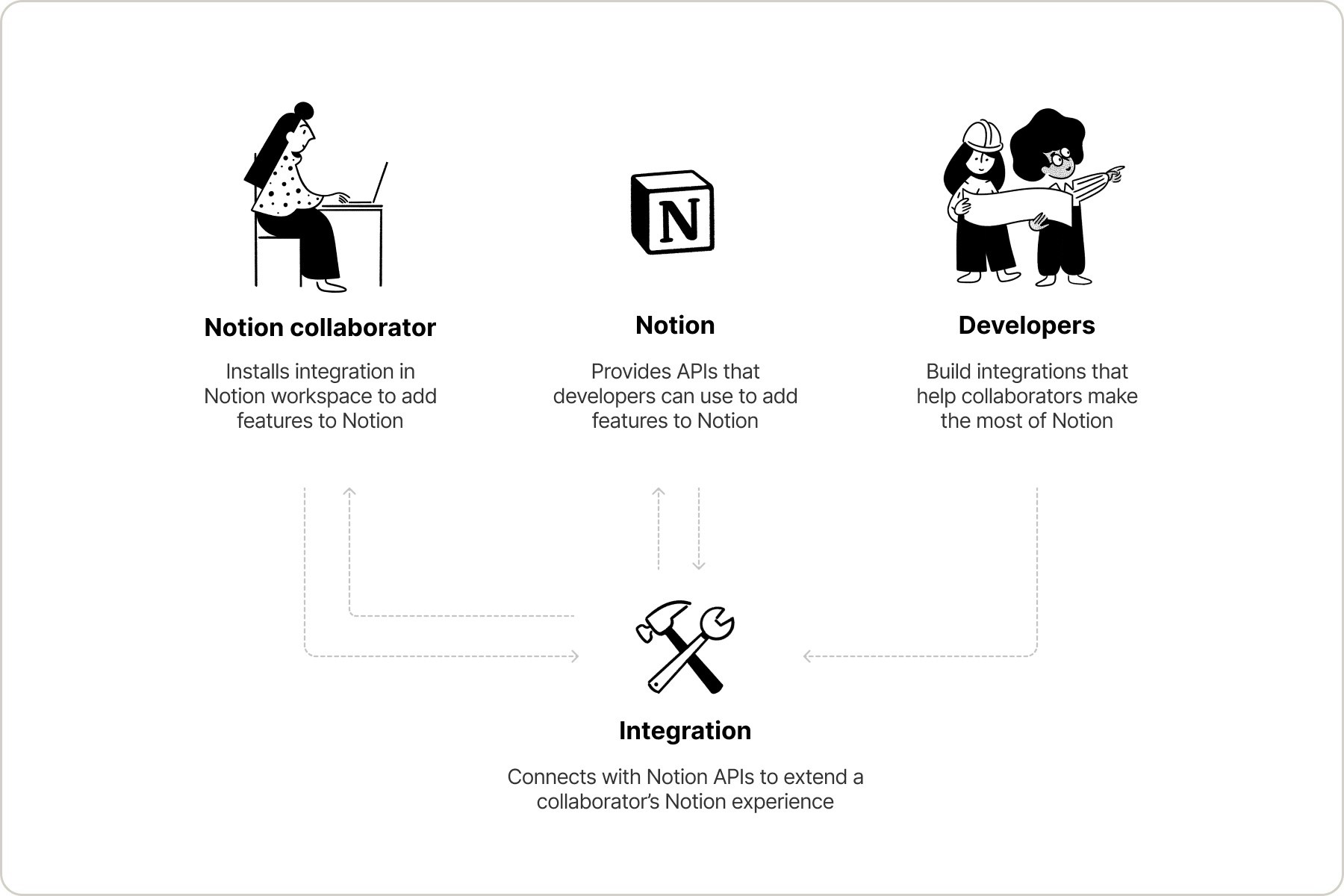
The platform has four core pieces. Notion Workers is a hosted environment for custom code. The External Agents API is the path for outside agents such as Claude Code, Cursor, Codex, and Decagon to appear inside Notion as work participants. The Agent SDK lets external systems trigger Notion Custom Agents programmatically. The ntn CLI gives both human developers and coding agents a command-line interface for reading, writing, and deploying around Notion.
That mix matters because the bottleneck for production agents is rarely only model intelligence. Work data is spread across SaaS products and internal systems. Some logic should be deterministic code rather than fresh model reasoning on every run. External coding agents need a place where requirements, approvals, and status are visible to the rest of the team. Notion's answer is to pull those surfaces into the same workspace.
The Problem After 1 Million Custom Agents
Notion says customers have created more than 1 million Custom Agents. That number suggests the first layer of adoption is already happening. Teams are willing to create specialized agents for their own workflows. But once agents spread, the next limitation becomes clearer: creating an agent is easier than giving it reliable access to the right data and actions.
The official announcement frames the issue in practical terms. Company work does not live only in Notion. Customer records may sit in Salesforce. Support tickets may sit in Zendesk. Operational state may sit in Postgres. Product work may move through GitHub or Linear. Meeting notes and project documents can be in Notion, but if an agent cannot reach the surrounding systems, it remains a plausible assistant rather than a useful operator.
Workers is the center of Notion's response. It is described as a hosted runtime for custom code. Developers write logic, deploy it into Notion's secure sandbox, and use it for database sync, custom agent tools, and webhook triggers. Notion emphasizes that teams do not need to provision servers or configure containers. Small automations that might otherwise be scattered across Lambda functions, Cloudflare Workers, Zapier, Make, n8n, or cron scripts can move closer to Notion's workspace context.
This is not the same as launching a general-purpose compute platform. The interesting part is not raw execution. The interesting part is that the execution layer is attached to Notion data, Notion permissions, and Notion agents. A team could synchronize support tickets into a Notion database, let a Custom Agent draft responses or escalation summaries, send a coding agent to handle an implementation task, and keep the human approval trail on the same page.
In that flow, Workers is less "another serverless platform" and more a deterministic tool layer inside the workspace.
| Component | Status | Role | Developer angle |
|---|---|---|---|
| Workers | Public beta | Runs custom code, sync jobs, webhooks, and agent tools | Deployable on Business and Enterprise plans; free through August 2026 |
| External Agents API | Private beta | Connects outside agents as Notion work participants | Partner examples include Claude Code, Cursor, Codex, and Decagon |
| Agent SDK | Private alpha | Triggers Custom Agents from external systems | Useful for CRM, internal systems, and event-driven execution |
| ntn CLI | Public beta | Reads, writes, and manages Notion from the terminal | Available on all plans; Workers management has plan limits |
Code Where MCP Is Not Enough
One notable part of the announcement is that Notion is not positioning Workers against MCP. It says Custom Agents can use built-in tools and connect to third-party capabilities through MCP. The stronger claim is that broad tool connectivity does not remove the need for deterministic code.
That distinction matters in real workflows. Calculating a customer tier, normalizing a data field, validating an approval condition, or calling internal APIs in a precise order should not depend on an LLM making the same inference correctly every time. It is often better for code to do those jobs, then let the agent summarize, reason, and communicate around the result.
Notion argues that Workers-based agent tools can be deterministic and token efficient. That phrasing is product language, but the underlying issue is real. In an agent system, determinism is both a cost problem and a trust problem. If every step is mediated through model reasoning, teams pay more tokens and get more variance. If repeated checks and transforms are implemented as code, the model can focus on judgment and language.
Imagine a sales team asking a Custom Agent to find renewal-risk accounts for the week. The agent could try to inspect CRM records directly and infer every condition at runtime. A cleaner design would have a Worker sync Salesforce data into a Notion database, calculate renewal dates, usage changes, and support-ticket status, and expose the result as a focused tool. The agent then explains the accounts, proposes next actions, and flags uncertainty.
This fits the broader direction of agent platforms. In 2025 and early 2026, much of the conversation centered on which model could plan and call tools most effectively. The next question is where those tools run, what permission boundary they use, what each run costs, and who approved the action. Notion Workers is Notion's answer to that operating question.
External Agents Move Into The Workspace
The External Agents API shows the strategic ambition more clearly. Notion wants outside agents to become native participants in Notion work. The announcement names Claude Code, Cursor, Codex, and Decagon as partner examples. The pitch is that teams should be able to chat with those agents, assign work, and track progress from inside Notion.
That overlaps with several existing centers of gravity. GitHub organizes agents around repositories, issues, branches, and pull requests. Slack and Teams organize agents around conversation and organizational communication. Cursor organizes work around the IDE. Notion organizes it around documents, databases, project state, meeting notes, and knowledge bases. All of these vendors can call themselves agent hubs, but they are anchored in different work objects.
For product and engineering teams, Notion's anchor is meaningful. A coding agent can edit a repository, but it still needs to know which requirement is current, which customer context matters, who must approve the change, and where the status should be recorded. Those facts usually live outside the codebase. If Notion already holds that context, connecting Codex or Cursor to a Notion task is a natural extension.
The caveat is platform control. While the External Agents API remains in private beta, the set of agents, permissions, events, and UI patterns will be constrained. If Notion wants to become a shared canvas for agents, it will need an API surface, authentication model, audit trail, failure recovery story, and usage accounting that can support more than partner-logo demos.
The CLI Is For Humans And Agents
The ntn CLI also deserves attention. Notion's help documentation describes it as a command-line interface that lets developers and AI coding assistants read and update Notion without clicking through the browser. It is free on all plans, while deploying and managing Workers requires Business or Enterprise.
CLI access is important because coding agents are already comfortable in terminal-shaped environments. If a developer has to copy page content from a browser into an agent session, the workflow remains fragile. If the agent can use ntn to read a spec page, update a task, or deploy a Worker, Notion gains a usable interface for agent work.
This mirrors a wider pattern in AI development tools. Coding assistants moved from IDE autocomplete into terminal agents, background tasks, and GitHub workflows. Notion is approaching the same issue from the opposite side. It has the documents and work data, so it is exposing a command-line surface that agents can operate against.
The result is not just "Notion has a CLI." It is a sign that the boundary between workspace software and developer tooling is getting thinner. Coding-agent competition is no longer only about who has the best editor integration. It is increasingly about which business systems agents can enter safely and usefully.
The Cost Model Arrived Early
The attractive version of this story is simple: smaller teams can build lightweight automations inside the tool where their work already lives. But the cost model is already part of the release. Notion says Workers uses the same credit system as Custom Agents and is free through August 2026. Its release notes are more specific: Workers begins using Notion credits on August 11, 2026.
That implies two things. First, Notion is putting agents and automation into the same economic unit. The cost of a Custom Agent thinking and the cost of a Worker executing can both become part of a Notion credits budget. Teams will have to treat Notion less like a fixed document subscription and more like a usage-based automation platform.
Second, observability becomes necessary. If a workspace accumulates many Workers and agents, teams need to know which Worker runs often, which agent calls which tool, whether failed runs consume credits, and how usage maps to business value. During a free beta, these questions can be hidden. After August 2026, automation architecture becomes cost architecture.
This is the same direction visible in other enterprise agent products. Agent SDK credits, Copilot-style usage metrics, AI gateways, and model routers all reflect the same reality: agents are not unlimited chat boxes. They execute, fail, retry, read systems, write systems, and require operational controls.
Governance Becomes A Product Feature
Notion emphasizes that governance is present from day one. The announcement points to auth, permissions, sandboxing, progressive trust, and visibility. Workers run in an isolated environment. Agent work stays visible in the workspace where teams already collaborate. Notion also suggests a gradual pattern: start with human review, then expand autonomy as confidence increases.
This is more than a security checklist. Once agents can touch business systems, the first enterprise question is not only what they can do. It is how far they should be allowed to go. Can the agent read customer data? Change pricing? Close a support ticket? Merge a pull request and mark a Notion task complete? Those are product-experience questions as much as security questions.
Notion has an advantage here because it already hosts documents, comments, project databases, and approval context. If execution history and human approvals sit in the same workspace, non-developers can understand the flow without opening a separate control plane. That is valuable for cross-functional teams.
The same position also creates risk. A workspace that once stored documents can become the place where automations run and outside agents coordinate. A broad permission setting is no longer just a document-exposure issue. It can become an automation-execution issue. The more Notion succeeds at turning the workspace into a runtime, the more carefully teams need to model workspace permissions.
Somewhere Between Zapier And GitHub
Compared with existing tools, Notion's target position is becoming clearer. Zapier, Make, and n8n are strong at connecting events and actions across apps. Cloudflare Workers and AWS Lambda give developers general-purpose serverless execution. GitHub and Cursor are deeply tied to code work. Notion is not replacing each of those head-on. It is attaching a runtime to the workspace where knowledge, status, and agent collaboration already gather.
The best early use cases may not look like full backend systems. They are more likely to be Notion-centered flows: syncing selected external fields into a database, giving a Custom Agent a deterministic tool, reflecting PR merges or CRM updates into project state, or routing a support-ticket change into a review workflow.
That means the developer-platform questions are still open. Official announcements do not fully answer runtime limits, local development experience, deployment history, rollback, observability, secrets management, error handling, or testing. The more Notion says coding agents can write and deploy Workers quickly, the more production teams will need code review, permission review, staging, and recovery practices.
What Builders Should Evaluate Now
For developers and AI platform teams, the immediate question is not whether every automation should move into Notion. It is where Notion context makes an automation more useful. If the value comes from project status, meeting notes, product requirements, customer feedback, or internal knowledge, running the glue code close to Notion may make sense.
The second question is how to split work between agents and Workers. Summarization, classification, drafting, and ambiguous judgment remain natural agent tasks. Validation, transformation, scheduled sync, and external API actions are often better as code. That division can reduce token usage and make the system more predictable.
The third question is approval. If Codex proposes a bug fix, Cursor performs a refactor, or Decagon summarizes a support thread, the final record should still respect the team's authority model. Agent work should become easier to assign and inspect, not harder to audit.
Finally, teams should treat credits as an operational metric. The free beta may hide costs, but August 2026 gives the platform a clear line where experiments become recurring usage. A useful Notion-agent architecture will need both product value and cost visibility.
Notion's Developer Platform is therefore bigger than a developer feature bolted onto a notes app. It is Notion's proposal for what the AI-agent workspace should become. As models converge on similar tool-use abilities and MCP spreads as a connection layer, the next source of differentiation is where agents work, what data they can touch, what deterministic code supports them, and who approves the outcome. Notion Workers shows that the competition is moving into the workspace runtime.