Free Gemini CLI gets a deadline as terminal agents move to Antigravity
Google is moving the personal and free Gemini CLI path to Antigravity CLI. The June 18 cutoff marks a shift in the operating layer for coding agents.
- What happened: Google is moving the personal and free
Gemini CLIpath toAntigravity CLI.- Starting June 18, 2026, Gemini CLI, Code Assist IDE, and Code Assist for GitHub access will stop serving new requests for several individual and free paths.
- Why it matters: terminal AI tools are being absorbed into multi-agent development harnesses, not just renamed.
- Watch: enterprise and paid API key routes remain exceptions, but individual developers need to audit accounts, plugins, scripts, and workflow assumptions.
- Agent Skills, Hooks, Subagents, and Extensions continue in Antigravity CLI, while Extensions move into the Antigravity plugins model.
On May 19, 2026, a Google Developers Blog transition notice looked, at first glance, like a product rename. Gemini CLI is moving to Antigravity CLI. But the dates, target users, and exceptions make the announcement more consequential than a new binary name. Google is moving the individual developer path for a popular terminal coding agent into Antigravity, its broader agentic development platform.
The key date is June 18, 2026. From that date, Gemini CLI and the Gemini Code Assist IDE extension will stop serving requests for Google AI Pro and Ultra users, as well as free Gemini Code Assist for individuals users. Gemini Code Assist for GitHub follows the same date: new installations for GitHub organizations stop, and request serving will later stop as well. The exceptions are important. Gemini Code Assist Standard and Enterprise licenses, Gemini Code Assist for GitHub through Google Cloud, and paid Gemini or Gemini Enterprise Agent Platform API key routes can continue using Gemini CLI and the IDE extension.
That split is the real story. Gemini CLI is not simply disappearing. Instead, Google is relocating the free and individual subscription based terminal path toward Antigravity. Enterprise paths remain intact. Google is not abandoning the community CLI surface outright, but it is moving the default surface for agentic development to Antigravity 2.0 and Antigravity CLI. For developers, this is not just "install the new CLI." It is a prompt to check which account, backend, permission model, and operating surface their coding agent actually depends on.
When a 100K-star CLI becomes a platform entry point
Google says Gemini CLI reached millions of users, more than 100,000 GitHub stars, more than 6,000 merged pull requests, and hundreds of contributors. Those numbers matter because they show Gemini CLI was not a throwaway demo. A terminal interface that can read files, run shell commands, and patch code quickly became one of the most natural entry points for AI coding.
That success also explains the transition. Google argues that developer expectations have moved beyond the early-2025 idea of "put Gemini in the terminal." Users now want multiple agents to communicate with each other, split work across long running tasks, operate in the background, and share a harness across the IDE, terminal, and browser. In that framing, Gemini CLI's problem is not that nobody used it. The problem is that a single terminal tool is a poor center of gravity for the multi-agent development environment Google now wants to build.
This judgment lines up with the wider AI coding market. Claude Code, OpenAI Codex, Cursor, GitHub Copilot app, Windsurf, and similar tools are all moving beyond autocomplete or chat. They are building surfaces where developers assign work, inspect evidence, approve changes, and verify results. Diffs, test logs, browser screenshots, work plans, permission gates, and cost dashboards are becoming part of the product. The CLI remains powerful, but long running work and multi-agent state need an operating surface that plain text terminals struggle to provide.
Google's answer is Antigravity.
Antigravity CLI is not just a new name
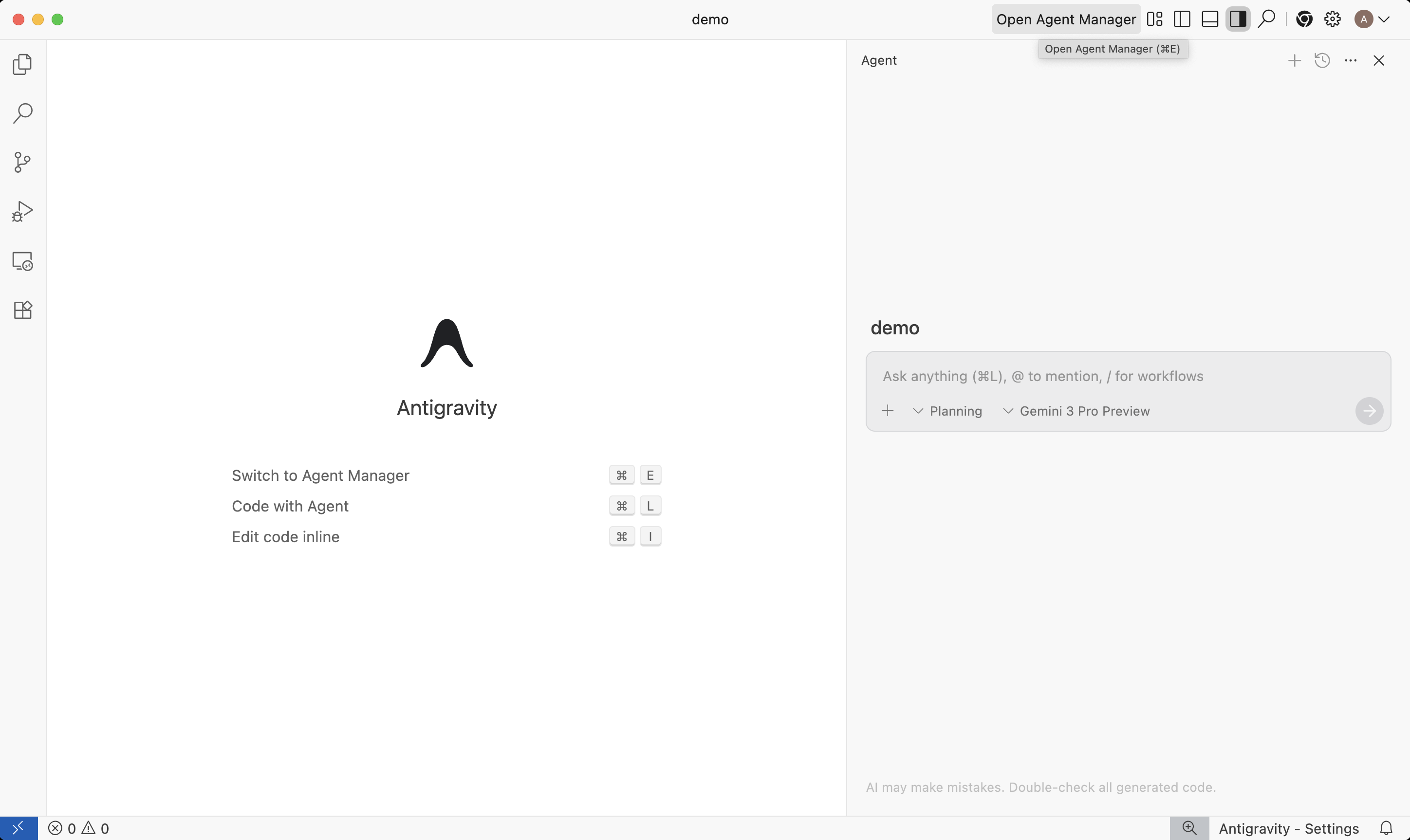
In its earlier Antigravity launch post, Google described Antigravity as an agent-first development platform. It has an Editor View for direct code work inside a familiar IDE, and a separate Manager Surface for assigning and observing multiple agents. Agents can move across the editor, terminal, and browser to plan, execute, and verify work. The output is not just a raw stream of tool calls. Google emphasizes Artifacts such as task lists, implementation plans, screenshots, and browser recordings.
Antigravity CLI is the terminal surface for that platform. Google lists Agent Skills, Hooks, Subagents, and Extensions as core Gemini CLI capabilities, and says Antigravity CLI preserves them. The naming change around Extensions is the tell: Extensions move to Antigravity plugins. That is a compatibility signal, but it is also a product ecosystem signal. The future extension point is not Gemini CLI as a standalone project. It is Antigravity.
There are implementation claims too. Google says Antigravity CLI is written in Go, making it faster and more responsive. It also supports asynchronous workflows, so large refactors or multiple investigations can run in the background without blocking the current terminal session. The most revealing phrase is "unified architecture." Antigravity CLI shares the same agent harness as the Antigravity 2.0 desktop app, so core agent improvements can be applied across surfaces.
That sentence almost states the product strategy directly. Google does not want to be only the company that attaches Gemini to a shell. It wants to bind the IDE, CLI, browser verification, and agent state into one execution layer. Gemini CLI was "ask Gemini from the terminal." Antigravity CLI is closer to "invoke the Antigravity harness from the terminal." The command line may feel similar, but the product center has moved.
What June 18 really changes
The most practical sentence in the transition notice comes after "Starting today, Antigravity CLI is available to everyone." Antigravity CLI is available now, but Gemini CLI access for the affected individual paths stops on June 18. That gives developers roughly one month to migrate. For an AI development tool embedded in local workflows, that is not a long runway.
Individual developers have three immediate checks. First, they need to know whether they are using Gemini CLI through free Gemini Code Assist for individuals, Google AI Pro, or Google AI Ultra. Second, they need to test whether automation scripts, local aliases, CI helper tasks, MCP connections, and extension settings translate cleanly to Antigravity CLI. Third, they need to see whether their existing one-shot Gemini CLI habits fit Antigravity CLI's session and harness model.
Enterprise teams face a different decision. According to Google's notice, Gemini Code Assist Standard and Enterprise licenses, Gemini Code Assist for GitHub through Google Cloud, and paid Gemini or Gemini Enterprise Agent Platform API key routes keep access to Gemini CLI and the IDE extension. That means organizations can choose whether to keep Gemini CLI for now, move to Antigravity CLI as the standard, or run both with different roles. The enterprise exception reduces near term breakage, but it does not erase the signal that product investment is flowing toward Antigravity.
| Access path | After June 18 | What to check |
|---|---|---|
| Google AI Pro or Ultra individual users | Gemini CLI and Code Assist IDE stop serving requests | Install Antigravity CLI, migrate plugins, replace local automation |
| Free Gemini Code Assist individual path | Gemini CLI and IDE extension stop serving requests | Re-check account path and quota policy |
| Gemini Code Assist for GitHub | New installations stop, then request serving stops | Audit GitHub organization installs and PR automation |
| Standard, Enterprise, and Google Cloud routes | Existing access remains available | Choose between keeping Gemini CLI and standardizing on Antigravity |
The important word in this table is not only "stop." It is "path." The same Gemini CLI has different outcomes depending on which authentication and product route sits behind it. This is a familiar stage in developer tooling. A tool spreads through personal credit cards and free quotas, then later gets reorganized around enterprise operations, policy, and a platform harness.
The CLI does not go away, but its role changes
The strengths of a terminal tool like Gemini CLI are obvious. It starts quickly, fits pipelines, and speaks the native language of files, standard input, standard output, shell commands, and logs. For log summaries, code search, small patches, documentation drafts, and one-off transformations, a developer does not want to open an entire IDE surface. That is why many developers have treated CLI agents and session based IDE agents as complementary tools.
This transition does not remove that distinction. Antigravity CLI still gives developers a terminal surface. But there is a major difference between a CLI as an independent product and a CLI as a thin entry point into a larger agent platform. An independent CLI naturally fits shell scripts, Makefiles, cron jobs, and CI helper tasks. A platform CLI can share a harness, account model, permission policy, plugin system, and state model, but it is also more directly tied to the platform's product decisions.
The tradeoff is real. The upside is consistency for long running and multi-agent work. If a job started in Antigravity's Manager Surface and a job started in the CLI share the same agent harness, Google can improve permission policy, artifacts, verification, model routing, and execution behavior in one place. That is what the company is pointing at when it says core agent improvements can apply everywhere.
The cost is simplicity and independence. The best terminal tools disappear into muscle memory. Sometimes the task is just "read this log in the current directory and summarize it in one line." If that path must enter a session oriented agent platform, some users will feel extra weight. And if quota, authentication, permission approvals, "no capacity" messages, or stuck thinking states appear, the CLI's usual advantage can disappear quickly.
The GitHub Discussions area for google-gemini/gemini-cli already shows that pressure. Discussion topics include MCP setup, automatic permission approval, capacity problems, Antigravity ban recovery, and request limit visibility. That tells us Gemini CLI users are not just casual chatbot users. Many have wired the tool into real development environments, where operations, permissions, quotas, and backend reliability matter. The transition is Google's way of saying that the place it wants to fix those issues is the Antigravity harness.
Why Google chose absorption
Google could have kept growing Gemini CLI as a separate product. In late 2025, it was still emphasizing terminal based work by bringing Gemini 3 Flash to Gemini CLI. Google described Gemini 3 Flash as a cheaper, faster model for frequent development tasks, and said it reached 78% on SWE-bench Verified for agentic coding. Gemini CLI was a natural surface for that kind of high frequency model.
But the coding agent race is not settled by fast models alone. Developers increasingly ask agents to reproduce issues, create tests, inspect browser behavior, write pull request notes, and respond to review feedback. In that workflow, the core product is not just model latency. It is execution state and verification evidence. Which files did the agent read? Which commands did it run? Which browser screen did it inspect? Where can the user interrupt, approve, or correct the plan?
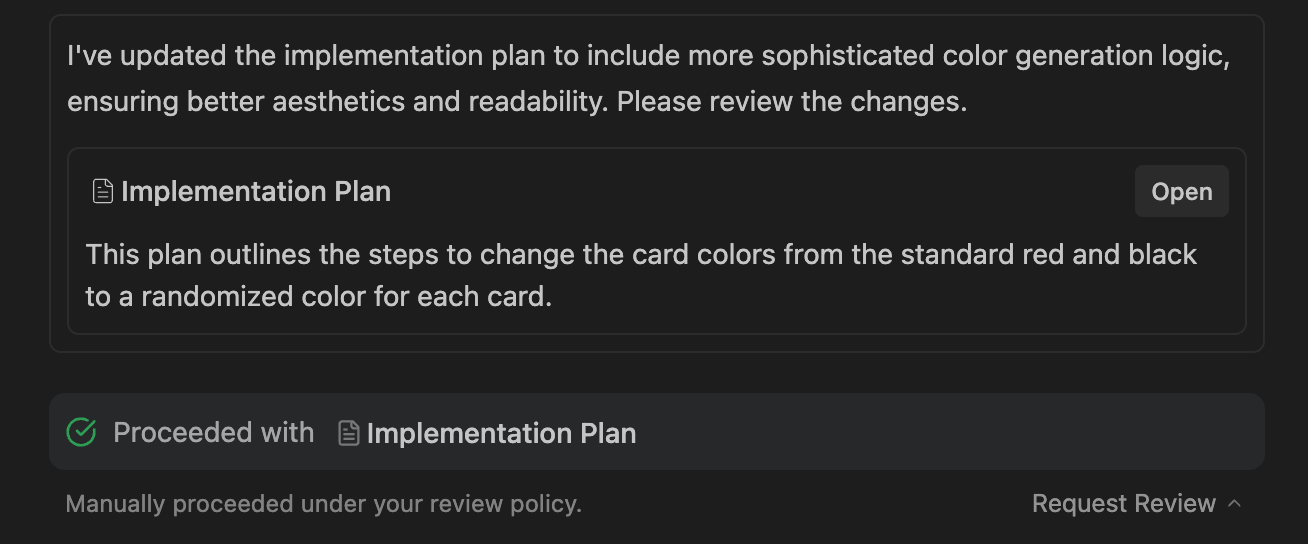
Antigravity's Artifacts idea targets that layer. Google wants developers to review an agent's reasoning through task lists, implementation plans, screenshots, and browser recordings instead of digging through raw tool call logs. This puts Antigravity in the same competitive frame as OpenAI Codex's diffs and work evidence, Claude Code's plans and tool traces, and GitHub Copilot app's pull request based verification.
Gemini CLI was strongest as an imperative terminal assistant. Google's bigger bet is an agent operating surface. If the two evolve separately, model routing, permissions, plugins, memory, harness behavior, and verification UI fragment. Antigravity CLI is the absorption path that reduces that fragmentation. It may be inconvenient for developers in the short term, but it is coherent as product strategy.
The signal to competitors
This announcement is not just internal product cleanup at Google. It sends a market signal. In 2026, the coding agent contest is shifting from "who attached the smartest model" to "who can let developers delegate work for longer, with more safety, more evidence, and better control." The terminal remains important, but terminal UX alone cannot explain the competition anymore.
Claude Code has established a strong CLI and agent experience, while Anthropic keeps expanding Claude Platform, MCP, Skills, and enterprise connections. OpenAI Codex is expanding through desktop surfaces, mobile approvals, enterprise deployment, and Goals as a more explicit completion contract. GitHub Copilot sits inside pull requests, issues, CI, and organization policy. Cursor and Windsurf are turning the IDE itself into the agent workbench.
Google's answer is Antigravity. The Antigravity CLI transition does not say, "we also have a CLI." It says, "our CLI is part of an agent-first platform." If Google can bind Gemini models, Gemini Code Assist, Google Cloud, browser verification, Android, Chrome, and Firebase developer workflows into one harness, it has a strong base. If users feel that the lightweight CLI experience has been lost, they have reasons to move toward Claude Code, Codex CLI, or other alternatives.
What developers should do now
First, check the access path before June 18. Even if Gemini CLI was installed through npm, the actual request path may be Google AI Pro, Google AI Ultra, free Code Assist for individuals, a paid API key, or an enterprise license. Those routes now matter. If local automation or team documentation simply says "run Gemini CLI," it may fail quietly when the cutoff arrives.
Second, teams using Extensions should test the Antigravity plugins path separately. Google says core capabilities continue, but it also notes that feature parity is not necessarily immediate. "Mostly supported" and "our workflow still works" are different claims. MCP servers, Hooks, Subagents, Skills, file access policy, and permission approval flows need to be tested in actual repositories.
Third, classify what the CLI is doing. Short tasks such as log summarization, quick code search, or one-off transformations may still fit another CLI tool or a paid key route better. Work that needs state and verification, such as long refactors, browser checks, UI iteration, and multiple background tasks, may fit Antigravity more naturally.
Fourth, enterprise teams should not stop at "we are exempt." Enterprise access remains, but the product narrative points toward Antigravity. Organizations need to decide whether Gemini CLI remains the default, Antigravity CLI becomes the new standard, or both are assigned to different job types. Security teams should also review what permissions the agent harness has and what logs it leaves behind.
Terminal agents are not ending, ownership is changing
The Gemini CLI transition is not the end of terminal AI tools. If anything, the terminal may become more important. Developers still live inside shells, Git, test runners, deployment CLIs, and log streams. Agents that want to operate in real development environments cannot avoid the terminal.
What is changing is ownership of the terminal surface. Earlier AI CLIs felt like relatively independent adapters that plugged a model into local development workflows. Now the largest AI companies are redefining the CLI as an entry point into an agent platform. In exchange for a richer execution layer, users inherit the platform's account model, permission system, plugin ecosystem, verification surface, and product transition schedule.
Google's June 18 transition shows that shift directly. Gemini CLI built a large developer base and crossed 100,000 GitHub stars. But Google's next investment target is not Gemini CLI as a standalone product. It is a shared agent harness across Antigravity CLI and Antigravity 2.0. The center of gravity in coding agents has moved from model invocation to work operation.
The question for developers is simple. Do you want an AI CLI as a lightweight tool, or do you want it as part of a longer running agent operating surface? The move from Gemini CLI to Antigravity CLI makes that question harder to postpone. June 18 is not only a support date. It is the deadline where terminal agents move more visibly into platform competition.