Antigravity 2.0, Google Turns the IDE Into an Agent Command Center
Google Antigravity 2.0 connects the IDE, CLI, SDK, Gemini API managed agents, and Android app generation into one agent operating surface.
- What happened: At I/O 2026, Google introduced
Antigravity 2.0as a standalone desktop app alongside Antigravity CLI, Antigravity SDK, Gemini API Managed Agents, and AI Studio's Android app flow.- The center of gravity is no longer an assistant inside an IDE. Google is proposing a command center for parallel agents that can run, monitor, schedule, and hand off work.
- Why it matters: Google is trying to connect AI Studio, Android, Firebase, Cloud, and Gemini API through the same Antigravity harness.
- Watch: Early user feedback focused on IDE migration, lost context, quota burn, model changes, and usage visibility.
- The bottleneck in agent platforms is shifting from raw model quality to workflow migration cost, operating control, and trust signals.
The loudest names at Google I/O 2026 were Gemini 3.5 Flash and Gemini Omni, but the announcement that may matter longer for developer workflows is Antigravity 2.0. In its May 19 developer highlights post, Google grouped the Antigravity 2.0 desktop app, Antigravity CLI, Antigravity SDK, Gemini API Managed Agents, and AI Studio's Android app generation flow into one larger story. On the surface it sounds like another coding tool launch. The more important move is broader: Google wants the place where agents start work, split work, execute work, save state, and resume work to sit on its own harness.
That distinction matters because the AI coding market has already moved beyond autocomplete. Developers are no longer only asking whether a model can predict the next line of a function. They are asking whether a system can decompose a long task, how much of the local filesystem and terminal it can touch, where sandbox and permission boundaries are drawn, when cost spikes, and how a human reviews what the agent produced. Cursor Cloud Agent, OpenAI Codex, Claude Code, GitHub Copilot, and Anthropic's managed-agent direction are all pushing on the same front. Antigravity 2.0 is Google's attempt to enter that fight with an operating surface, not just a smarter editor sidebar.
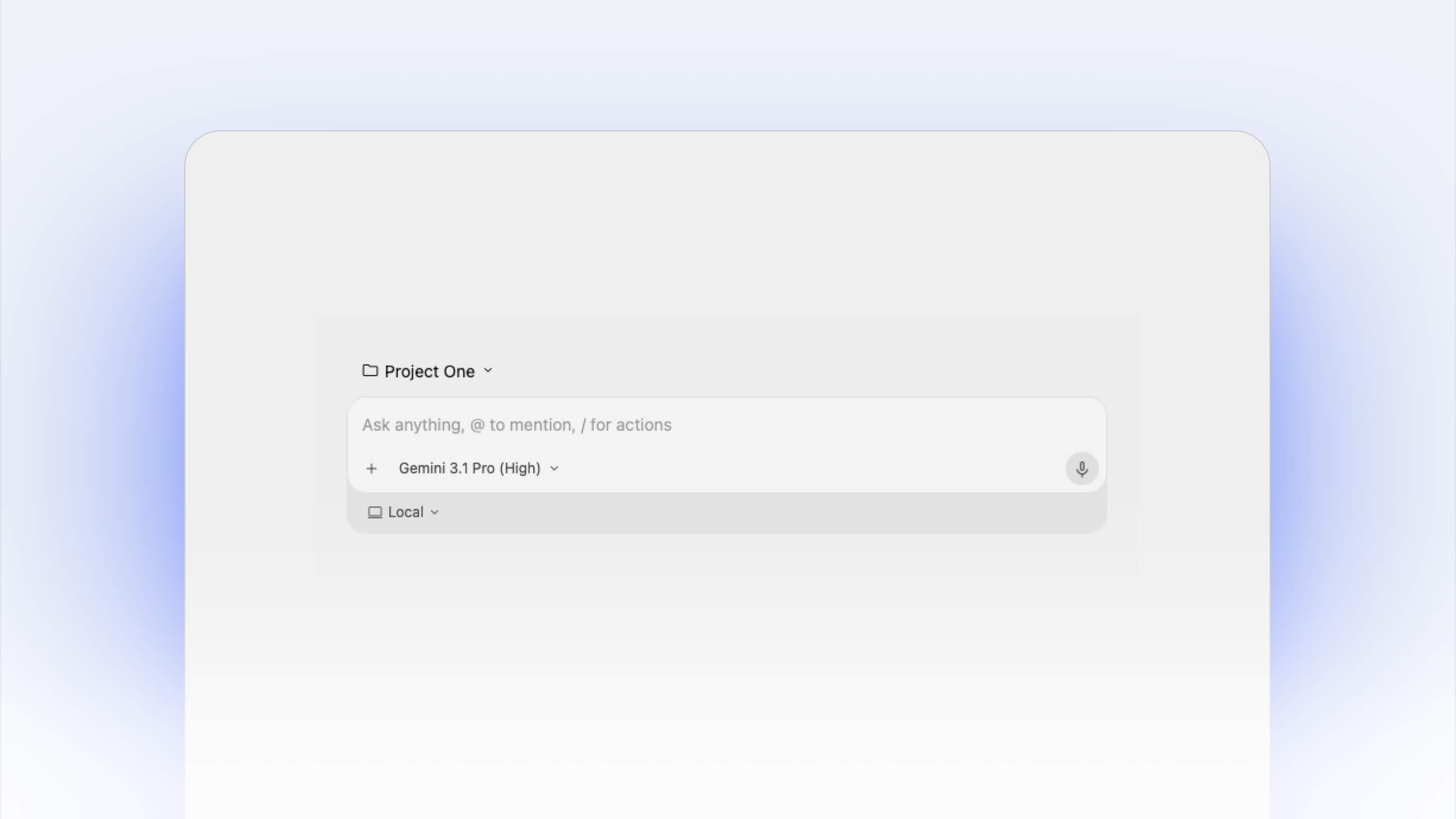
Google describes Antigravity 2.0 as a standalone desktop application. Its job is to become a central home where a developer can launch multiple agents, let them work independently, watch progress, and intervene. Dynamic subagents, scheduled tasks, AI Studio integration, Android integration, and Firebase integration sit around that center. This is not simply a plan to put a better chatbot into a VS Code-like editor. A developer's real workspace is split across an editor, terminal, browser, cloud console, mobile app test surface, and deployment dashboard. Google is trying to let agents cross those boundaries while the human shifts toward monitoring results, granting approvals, and deciding which artifacts are good enough to keep.
Antigravity CLI is the second leg of the strategy. Google says it is a lightweight surface for terminal-first users and has encouraged Gemini CLI users to move to Antigravity CLI. That sentence is easy to skim past, but it carries a heavy product signal. Google appears to be folding the command-line experience under the Antigravity brand instead of keeping a separate CLI identity in parallel. For developers, the CLI is not a side channel. It is where CI scripts, local automation, remote server work, code review habits, and one-off operational tasks collide. Bringing the CLI into the Antigravity harness means the execution unit, permissions model, logs, configuration, and quota feel can move toward one system.
The third leg is the SDK. Antigravity SDK is presented as programmatic access to the same agent harness that powers Google's own products. Product data shows a Python installation path and describes abstractions for agent loops, context management, file reads, command execution, and code edits. The audience here is not only individual developers. It also includes teams that want to embed agents into products, internal developer platform groups, and organizations that want domain-specific agents on top of their own infrastructure. An SDK means Antigravity is not just an app. It can become a runtime layer for building custom agents around Google's model and tool orchestration choices.
| Surface | Google's assigned role | Question for builders |
|---|---|---|
| Antigravity 2.0 | Central command center for multiple agents | Can teams move existing IDE context without losing too much? |
| Antigravity CLI | Terminal-first agent execution surface | Are scripts, permissions, and quotas governed like the GUI? |
| Antigravity SDK | Custom agent harness for products | Where is the balance between harness dependency and infra control? |
| Managed Agents | Gemini API agents in isolated Linux environments | Do state, files, and tool logs satisfy operational requirements? |
| AI Studio Android | Prompt-to-native-app flow with testing handoffs | How do teams verify the line between prototype and shippable app? |
The fourth leg is Gemini API Managed Agents. Google says developers can launch agents that reason, use tools, and execute code through a single API call, with isolated Linux environments and persistent state. This is where the comparison with OpenAI's sandboxed agent direction and Anthropic's managed agents becomes direct. A team is no longer only calling a model API. It is operating an agent instance with a working environment. That changes the mental model. Instead of receiving one text response, teams need to manage long-running sessions with files and state, resume or inspect failed work, and satisfy security teams that want to know what network and filesystem permissions the environment has.
Google's decision to connect this arc to AI Studio and Android is also worth watching. The Android Developers Blog describes an AI Studio flow that can create native Kotlin Android apps from prompts, preview them in an Android Emulator inside the browser, install them on a physical device through ADB, and upload them to a Google Play internal testing track. It can then hand work off to Android Studio, GitHub, or Antigravity when deeper tools are needed. That can sound like consumer-friendly "idea to app" language, but it has a specific meaning in the developer tools market. Google is trying to make generated code travel beyond a local IDE and into testing, device installation, Play Console, Firebase, and Cloud-connected workflows.
Seen this way, the real competitor for Antigravity 2.0 is not one editor. It is the whole shift toward long-running coding agents. Cursor is moving agent work into cloud VMs. OpenAI is pushing Codex and agent SDK workflows around sandboxed file work. Anthropic is connecting Claude Code and managed agents to enterprise workflows. Google can add Android, Firebase, AI Studio, Gemini API, and Google Cloud as its distribution surface. That is appealing for builders, but it also increases lock-in. The more an agent writes code, runs tests, adjusts deployment settings, and leaves context inside a harness, the harder it becomes to move that context, configuration, skills, and history to another tool.
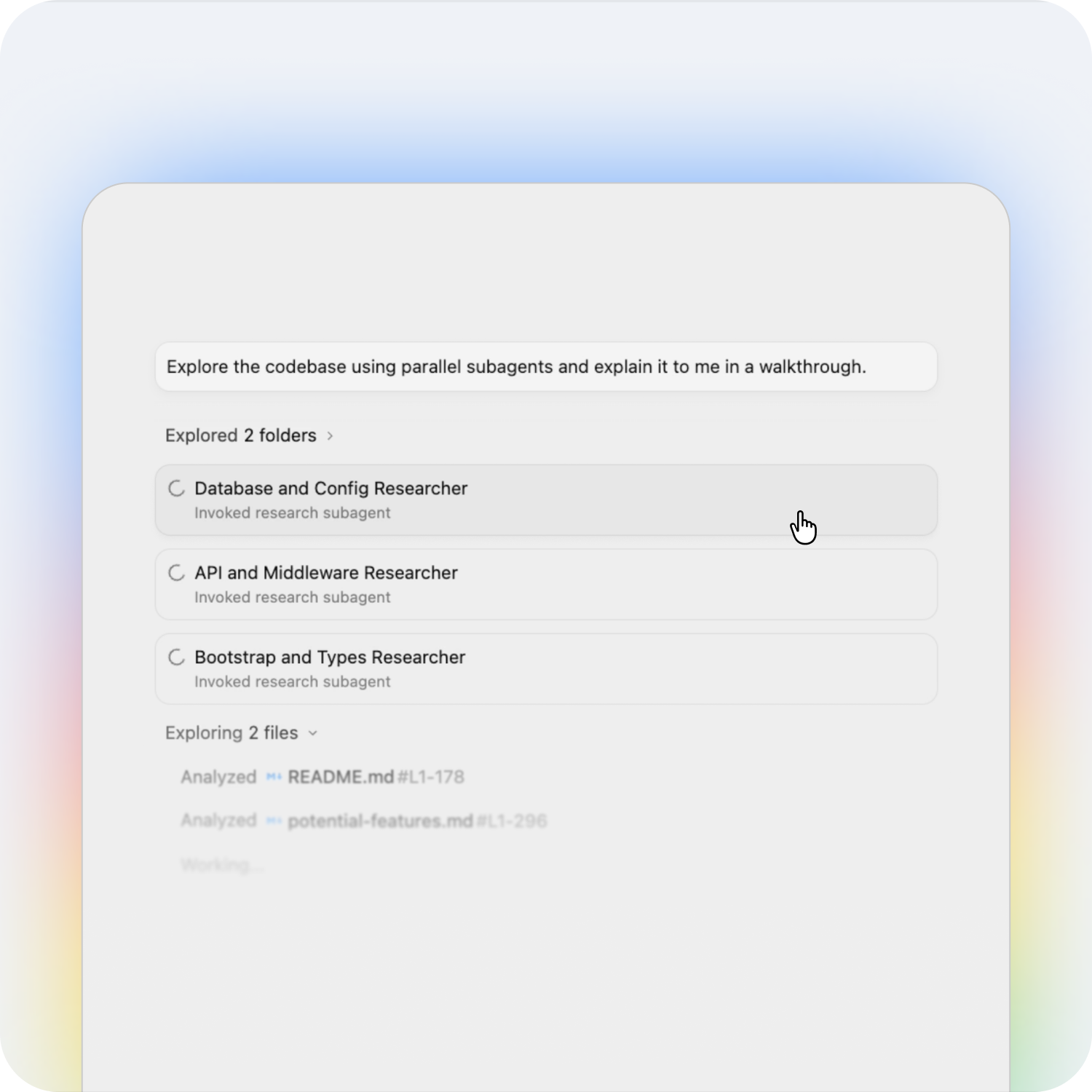
Dynamic subagents show the strategy clearly. Google's product data describes a system that can define and create subagents dynamically to split complex problems into parallel pieces. Previously, a developer might ask one chatbot in sequence to fix tests, update docs, and refactor a module. The platform now wants to break the job into specialized agents, let each one make progress in a separate session, and let the human steer through review, approval, and feedback. If it works, throughput on large changes rises. If it fails, teams get merge conflicts, duplicated edits, inconsistent assumptions across agents, and logs that do not make it obvious where cost or risk came from.
That is why the first wave of community reaction matters. On May 22, a post titled "Antigravity IDE Feedback" appeared in r/google_antigravity. An account that appeared to represent Google said the team had been reviewing IDE-related feedback over the prior few days and that removing IDE support had not been the intent. The post said 2.0 made the IDE connection path clearer, fixed a Windows issue around opening the IDE, added guidance for restoring IDE settings and extensions, and reset everyone's weekly Gemini usage. That statement says more than a feature page can. In an agent development platform, "move to the new app" is not a simple download prompt. It touches settings, keybindings, extensions, workspaces, chat history, mental models, and cost expectations.
The comments reflected the same tension. Some users responded positively to the fast correction and the message that IDE support would continue. Others complained about broken workspace-to-conversation connections, burning through a weekly limit on part of one task, wanting in-app spend limits, asking for older Flash model behavior, or seeing security tools warn about Antigravity signing. There is no need to overstate this. Major early updates often create migration pain. But in this case the pain is structural. The more surfaces an agent platform controls, the more users need clear boundaries and predictable cost signals.
Google's pricing language also reveals the transition. Around the announcement, Google said AI Ultra started at $100 per month and gave Antigravity users five times the usage limit of AI Pro. It also mentioned $100 in bonus credits claimable in the Antigravity app until May 25. Pricing is not an appendix for coding agents. A single long task can involve many model calls, file reads, tool runs, parallel subagents, and verification loops. Once developers think in terms of "one task" rather than "a few prompts," platforms need to explain cost and quota in task-shaped units, not just token-shaped units.
This is the useful question Antigravity 2.0 raises: what is the unit of a coding agent? Is it a chat message, an IDE session, a project, a ticket, or a resumable execution environment exposed through an API? Google's answer is drifting toward projects and agent runs. Antigravity product data describes projects spanning multiple folders, custom settings, and scoped permissions. It also presents skills, MCP, and JSON hooks as extension points for agent behavior. That is much closer to a developer platform than to a conversational assistant. The tradeoff is a larger configuration surface. Organizations will have to decide who can install skills, which MCP servers can touch which data, and what commands hooks are allowed to run.
Managed Agents pull the same question into the API layer. Isolated Linux environments and persistent state are powerful in practice. If an agent can check out a repository, run tests, create files, and continue from the same state on the next call, long-running background tasks become easier to embed into products. But the same features raise the bar for security, auditability, and reproducibility. Teams will ask which files the agent read, which commands it executed, what state remained after failure, and how sensitive tokens were handled. Google says the Antigravity harness is optimized with Gemini models, so developers will have to weigh convenience against dependency on that harness.
The Android AI Studio path has a similar shape. Generating a native app from a prompt is impressive, but real apps are judged after creation, not at creation. Once Kotlin, Jetpack Compose, hardware APIs, Firebase Auth, Firestore, and Play internal testing tracks enter the picture, the generated app starts to look like a real product surface rather than a demo. The question shifts from "can it make an app?" to "is the structure reviewable?", "does it follow team conventions?", "are tests and release permissions separated?", and "does this run under an organization account instead of a personal account?" Antigravity being presented as a local development handoff point shows that Google wants Android development inside the broader agent workflow.
The most interesting tension is that Google is moving the abstraction upward while users are reporting very concrete friction. Where is the Open IDE button? Will settings and extensions restore? How much weekly quota remains? Why did a Flash model change? Does the IDE open correctly on Windows? Why is a security product warning about the app? This gap will appear more often as AI development tools become daily production tools. The company vision is an agent operating platform. The user's day is keybindings, terminal sessions, build failures, review comments, and local habits. If the former cannot absorb the latter smoothly, even a strong model will not stop tool churn.
For teams evaluating Antigravity 2.0 now, three checks matter most. First, does it preserve enough of the existing IDE and CLI workflow? A command center can be useful, but if it breaks local development rules the adoption cost rises quickly. Second, does it expose usage and cost at the task level? In a platform where multiple subagents can run in parallel, remaining prompt count is less useful than estimated task cost and clear stop conditions. Third, can skills, MCP, hooks, and SDK usage be governed by organization policy? Once agents can touch files, commands, and external services, extensibility becomes a supply-chain and permission problem.
Even with those caveats, Antigravity 2.0 is not just Google arriving late with another coding assistant. Google owns models, Android, Chrome, Firebase, Cloud, Play, and Workspace. If those surfaces connect through the Antigravity harness and Gemini API Managed Agents, a developer could move from prompt to app draft, local edits, tests, internal distribution, and cloud resource wiring in one flow. Competitors may offer sharper IDE loops or faster coding experiences, but Google can compete on the breadth of its platform surface. The core of the announcement is not "Google shipped a coding agent." It is that Google has started to tie its scattered developer surfaces together through one agent execution harness.
The first week of Antigravity 2.0 shows two things at once. Coding agents are no longer confined to editor sidebars. Standalone apps, CLIs, SDKs, API execution environments, and Android generation tools are converging into command centers. At the same time, that shift can feel rough to users. The need to clarify IDE support and reset usage was not just a small launch hiccup. It exposed the next bottleneck in the agent platform race. The winner may not be the company with the single smartest model, but the company that lets agents work without making developers lose context, cost control, permissions, and verification.