Copilot remote control turns coding agents into an operations layer
GitHub’s May 18 Copilot updates link remote control, low-cost models, CI repair, and audit APIs into a control plane for coding agents.
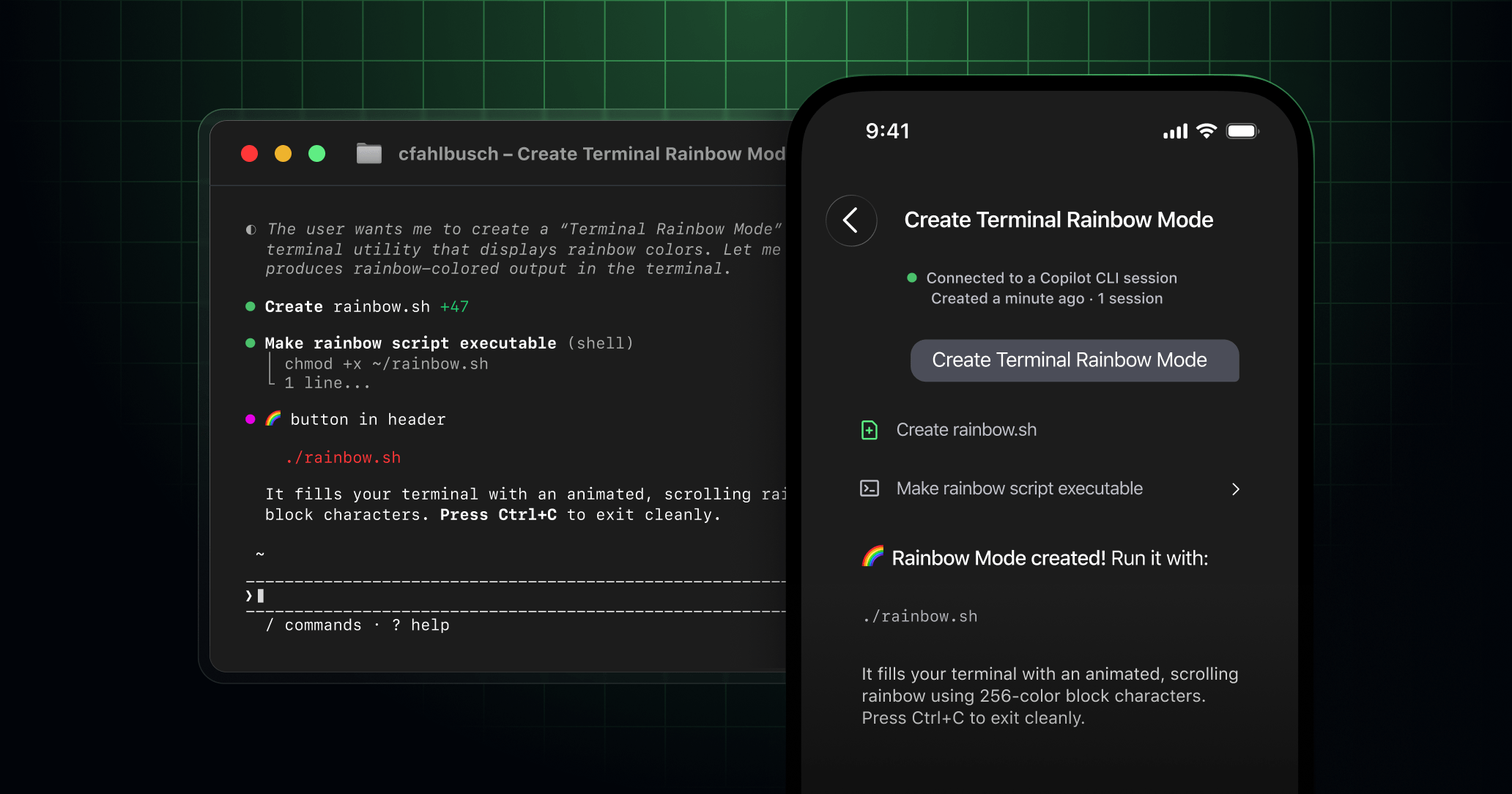
- What happened: GitHub shipped general availability for Copilot CLI remote control on May 18, 2026, alongside several Copilot cloud agent updates.
- The same release wave added
0.33xmodel options, one-click fixes for failed Actions, and a REST API for auditing cloud agent settings.
- The same release wave added
- Why it matters: The coding-agent race is moving from code generation inside an IDE toward cost, permissions, logs, and remote supervision.
- Watch: GitHub’s June 1 shift to AI Credits makes model choice, team budgets, and repository-level auditability part of Copilot operations.
GitHub's Copilot updates on May 18, 2026 look small if each announcement is read alone. Copilot CLI sessions can now be monitored and controlled from a phone or the web. Copilot cloud agent gained faster and cheaper model options. Failed GitHub Actions runs can expose a Fix with Copilot button. Repository-level cloud agent settings can be audited through a REST API. Copilot on GitHub web can open as an in-context panel over the repository, issue, or pull request the developer is already reading.
Read together, the updates point to a larger product direction. GitHub is no longer presenting coding agents only as tools that write code. It is turning them into an operations layer: where agents run, who supervises them, which tools they can reach, how much they cost, and how their configuration can be inspected across repositories.
That matters because GitHub has also documented a June 1, 2026 transition toward usage-based Copilot billing through GitHub AI Credits. Once coding-agent sessions can run longer, inspect logs, execute commands, and push branches, teams need more than a good model. They need a way to route work by cost, constrain permissions, and audit the agent surface before it spreads across every repository.
Five pieces from the same release wave
The most visible update is general availability for remote control of Copilot CLI sessions. GitHub says developers can monitor and steer local Copilot CLI sessions from GitHub Mobile, github.com, VS Code, and JetBrains IDEs. The product example is familiar to anyone who has tried to run multiple agent sessions at once: one agent is refactoring in VS Code, another is debugging tests in the terminal, and a third is scaffolding a feature in the background. Before remote control, stepping away from the desk also meant losing visibility. GitHub is trying to keep the session visible as the developer moves between surfaces.
The changelog is more specific than the headline. Remote control works in GitHub repositories, repositories not connected to GitHub, and even directories that are not repositories. After starting a session, the user can enable it with /remote on. Copilot then streams session activity in real time. From mobile or web, the user can check progress, send follow-up instructions, queue the next message after the current step finishes, review or revise a plan before implementation, approve or deny permission requests, stop the session, and answer questions from Copilot.
The second piece is model choice for Copilot cloud agent. GitHub added Claude Haiku 4.5 and GPT-5.4-mini as faster, lower-cost options. Both are shown with a 0.33x multiplier. The message is not just "there are more models." It is "use smaller models for simpler work and reserve stronger models for harder work." That turns model selection into a cost-control surface for agentic engineering tasks.
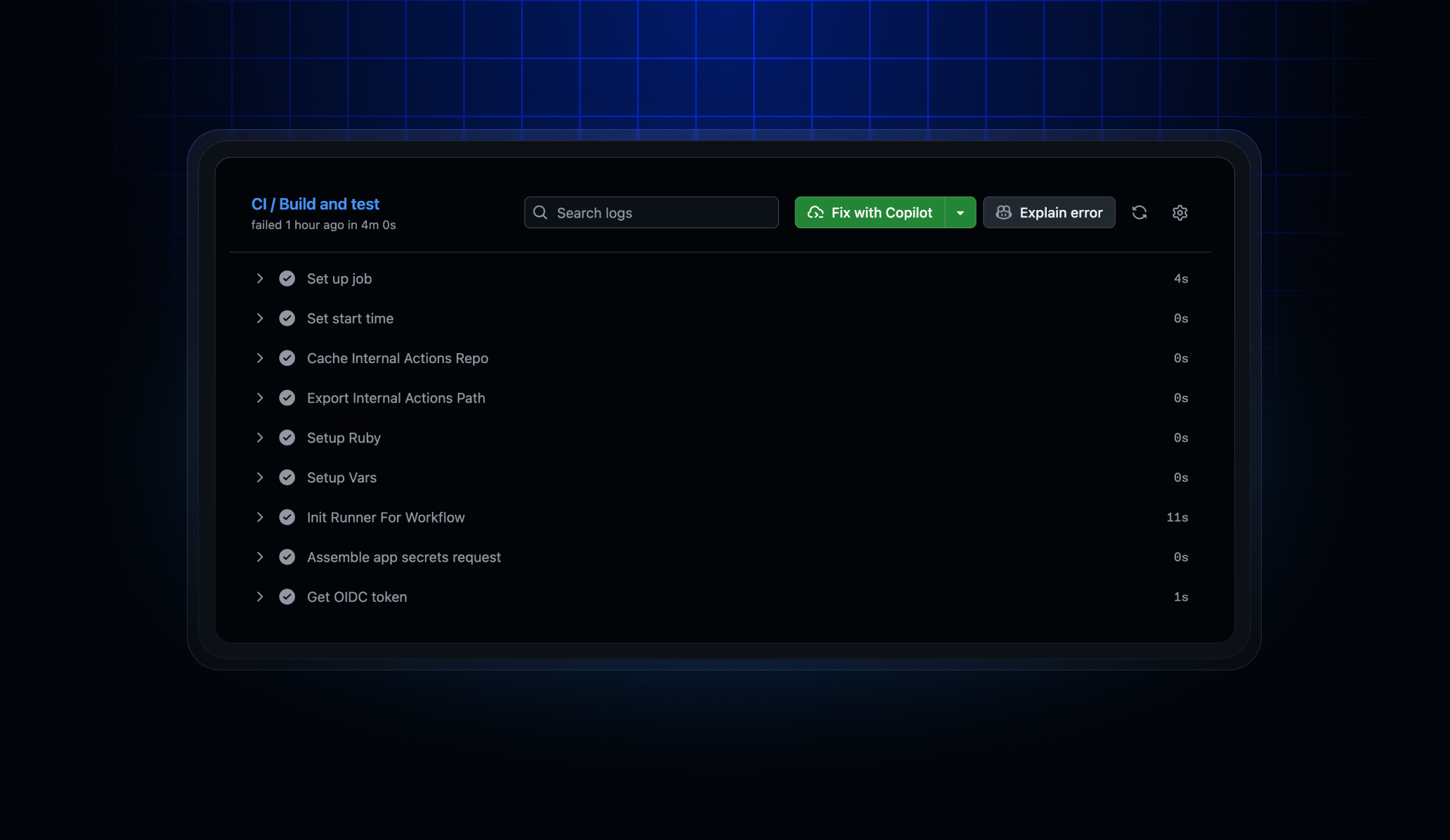
The third piece is one-click repair for failed Actions. Copilot Business and Enterprise users can press Fix with Copilot from workflow run logs. GitHub says Copilot cloud agent investigates the failure, pushes changes to a branch, and tags the user as reviewer when it is done. The execution happens in a cloud-based development environment. In other words, a repeated workflow that used to start with reading logs locally can now start by issuing an agent session directly from the failure page.
The fourth piece is the audit API. GitHub's new REST API can return repository-level Copilot cloud agent configuration, including MCP server settings, enabled tools, GitHub Actions workflow policy, and firewall configuration. Those fields are the interesting part. If an agent can inspect a repository, run workflows, call tools, and open pull requests, the organization has to know which repositories allow which agent capabilities. GitHub is starting to expose that answer as a programmable control surface.
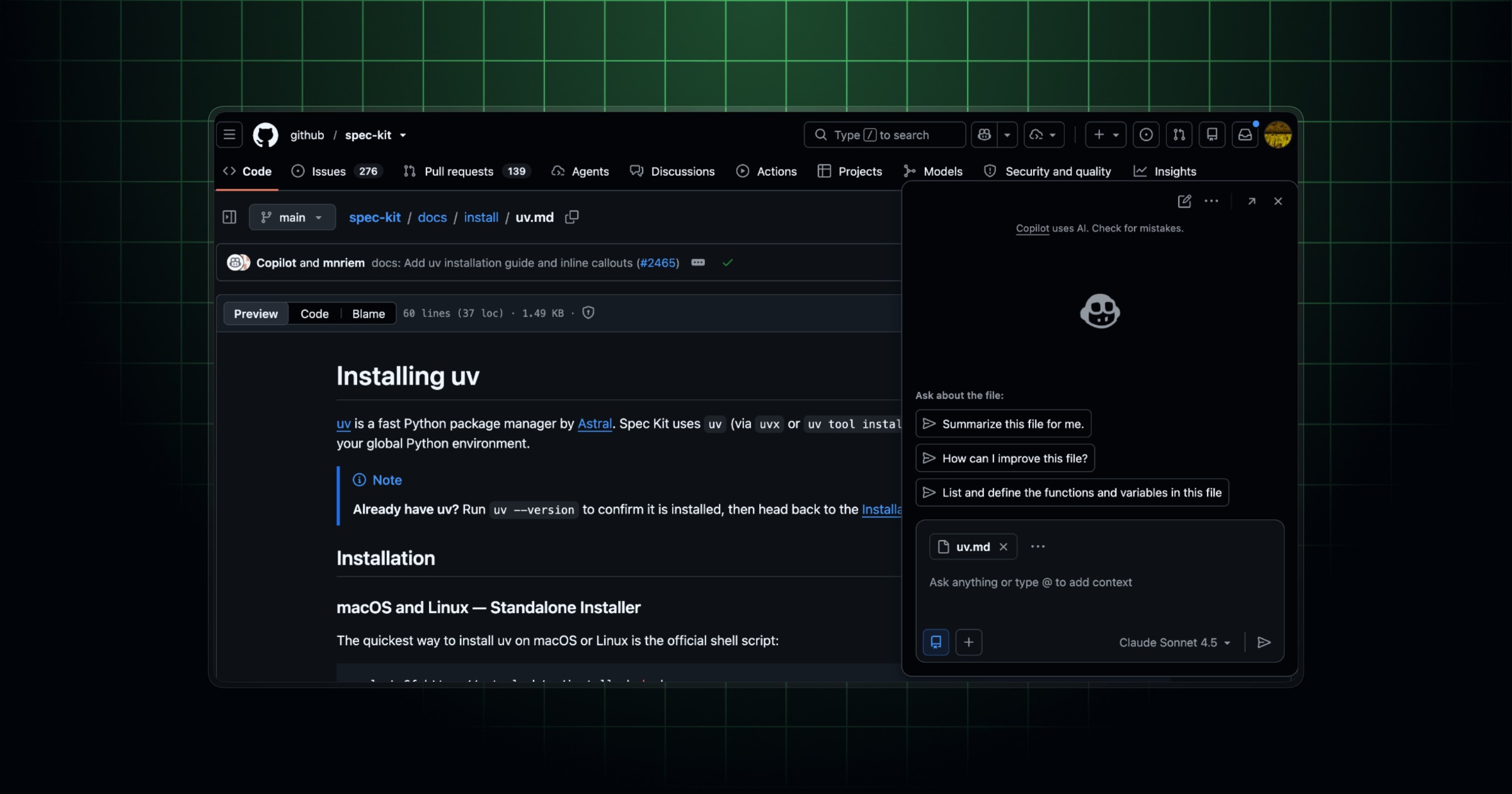
The fifth piece is contextual Copilot on the GitHub web UI. Instead of leaving the current page, a developer can open a Copilot panel over the repository, pull request, or issue they are viewing. As the developer navigates, GitHub can keep adding references to the conversation. GitHub says this chat can also become an agent session, such as creating a pull request or doing deeper research. The line between asking a question and starting a task is getting thinner.
Why remote control is also a cost story
Remote control is easy to frame as a convenience feature: now you can check a CLI session from your phone. The deeper shift is that the unit of work has changed. A coding agent session is no longer a single answer in a chat box. It can be a long-running process that plans, reads files, runs commands, asks for permission, waits for user direction, and leaves reviewable changes behind.
Long-running work carries cost. GitHub's documentation for usage-based billing says Copilot is moving to GitHub AI Credits on June 1, 2026. The preparation guide describes CSV exports that include fields such as aic_quantity and aic_gross_amount. Under the older premium-request framing, usage could feel abstract. Under AI Credits, model choice and execution volume become easier to connect to budget impact.
That makes the 0.33x multiplier models more important than they first appear. When GitHub tells teams to choose smaller, faster models for simple work, it is pushing teams toward task classification. Documentation edits, lint failures, small test fixes, and straightforward CI repairs may be routed to lower-cost models. Architecture changes, security-sensitive work, and large refactors may justify stronger models with stricter review. This is less a prompt-writing habit than an internal platform policy.
Remote control also affects cost because it reduces the supervision burden of longer sessions. If an agent blocks on a permission request or a plan review while the developer is away, the session stalls. If the developer can approve, redirect, or stop it from mobile or the web, the agent runtime becomes more practical for real work. But the same feature also makes it easier to approve work outside the normal review context, so teams will need rules for when mobile approval is acceptable.
Where the cloud agent works
GitHub Docs describe Copilot cloud agent as running in an ephemeral development environment powered by GitHub Actions. In that environment, the agent can explore code, make changes, and run tests or linters. It can be assigned work from a GitHub issue or Copilot Chat prompt, investigate the repository, create a plan, modify code on a branch, and optionally open a pull request.
That is a different operating model from an IDE agent mode. An IDE agent changes files in the developer's local environment. Copilot cloud agent runs in GitHub's cloud execution surface, backed by Actions. The difference matters because local assistance is mostly an individual productivity issue, while cloud execution becomes organizational infrastructure. It consumes Actions minutes and AI Credits. It can reach MCP servers and enabled tools. It may be governed by workflow policy and firewall configuration. It leaves branches and pull requests in shared repositories.
That is why the Fix with Copilot button is more symbolic than it looks. Failed CI is one of the most common moments of repetitive engineering work. GitHub has turned that moment into an agent delegation point. Instead of reading logs, reproducing locally, editing code, pushing a branch, and asking for review, the developer can ask the cloud agent to investigate and propose a fix. The human role shifts toward reviewing the branch the agent produced.
This will only work well if the operational layer is strong. CI failures can be simple, such as a lint rule or a broken snapshot. They can also be misleading, flaky, environment-dependent, or security-sensitive. Teams will need to decide which classes of failures are safe to send to an agent, which repositories allow automatic branches, and which changes require a human to reproduce the failure before merging.
The audit API reveals the real customer
The repository audit API is aimed less at an individual developer than at platform teams, security teams, and enterprise administrators. The returned fields are a giveaway: MCP server configuration, enabled tools, GitHub Actions workflow policy, and firewall configuration. The risk in agentic tooling is not only that a model writes the wrong code. The larger risk is that agents with tool access spread through an organization faster than the organization can understand their authority.
One repository may need only package installation and test execution. Another may need access to an internal MCP server that exposes deployment logs or ticket metadata. A security-sensitive repository may need tighter firewall settings and narrower workflow policies. Treating all of these as one "Copilot enabled" switch is too coarse. A programmable audit surface lets organizations scan repositories, detect policy drift, record exceptions, and prepare evidence for internal governance.
This is where GitHub's direction becomes clear. Copilot cannot remain only a tool that individual developers turn on. Once it becomes a cloud agent that can receive tasks, call tools, execute workflows, and create branches, it becomes a configurable asset. It has cost settings, security settings, and review implications. Developers start sessions; platform teams define the boundaries inside which sessions can run.
Web context chat becomes the front door
GitHub's in-context web chat was a smaller announcement, but it matters because it is the front door to agent work. Developers already discover problems inside repositories, pull requests, issues, and workflow logs. If Copilot can open directly over those surfaces and inherit the page context, fewer tasks need to start from a blank prompt.
This is especially relevant for investigation work. A developer may inspect a failing pull request, open a related issue, check a workflow run, and compare files across a repository. If those references accumulate in one conversation, the chat can become a working memory for the investigation. GitHub says the conversation can then become an agent session, such as asking Copilot to create a pull request.
That product flow is powerful: find the problem on GitHub web, delegate it to Copilot cloud agent, supervise from mobile, approve a permission request, and review the resulting pull request. It is also exactly why measurement and audit matter. Each step needs to answer operational questions. Which model was used? Which tools were called? Who approved the session? How much did it cost? Which repository policy allowed it? Which branch did it modify?
The more GitHub adds convenient buttons, the more important the machinery behind those buttons becomes.
Community anxiety is about predictability
GitHub Community discussions around usage-based billing show that user concern is not only "this may be expensive." It is also "I do not know how fast credits will disappear." Some users worry that a monthly credit allocation could be consumed in a day or by one large request. Others argue that removing free model access would reduce the value of individual plans. There is also demand for billing preview tools that show historical usage as if AI Credits had already applied.
Those reactions connect directly to the May 18 updates. If agent sessions become longer and more autonomous, developers need to know the price of a task before delegating it. Teams need to decide whether it is economical to send every CI failure to an agent, whether only certain repositories should use cloud agent, and which model should be the default for routine work.
The new features do not remove that uncertainty, but they show GitHub's answer taking shape. Low-cost models reduce unit cost for simple tasks. Remote control lowers the coordination cost of long sessions. The audit API lowers governance cost for enterprise rollout. One-click Actions repair gives teams a recurring workflow where the return on agent cost can be measured. AI Credits make all of those controls more consequential.
What teams should check now
The first checkpoint is task classification. Teams should not leave "simple" and "complex" as product copy. They need internal examples. Documentation cleanup, small lint fixes, and straightforward test failures may be candidates for low-cost models. Data migrations, security patches, auth changes, and broad refactors probably need stronger models, tighter plans, and more explicit review.
The second checkpoint is repository-level agent configuration. Even while the audit API is in public preview, its fields are a useful checklist. Which MCP servers are reachable? Which tools are enabled? What Actions policy applies? What firewall configuration constrains execution? If a team cannot answer those questions, the security problem may arrive before the budget problem.
The third checkpoint is remote approval policy. Approving a permission request from a phone is useful. It is also easier to do casually. Teams should decide which requests can be approved from mobile, which require desktop review, and when a long-running session should be stopped rather than nudged forward.
The fourth checkpoint is CI repair scope. Failed Actions are a natural entry point because the work is repetitive and measurable. Start with small, deterministic failures. Be more cautious with flaky tests, environment-dependent failures, and failures related to security or deployment. The value of Fix with Copilot is strongest when the resulting change is narrow and reviewable.
The next coding-agent competition is operational
Over the last year, coding-agent competition has expanded from model quality to IDE integration, terminal workflows, desktop apps, mobile approval loops, and cloud execution. GitHub's May 18 release wave suggests the next layer: operations. A useful agent still has to write good code, but an organization also needs predictable cost, scoped authority, controllable sessions, and auditable configuration.
In that sense, Copilot CLI remote control is more than a phone feature. It says agent work no longer ends at the desk. If an agent session continues across surfaces and time, it needs a dashboard, a price signal, a permission model, and a way to inspect its configuration. GitHub shipped those pieces together for a reason.
The market question may shift from "which model is smartest?" to "which platform can make agent work repeatable and governable inside a real engineering organization?" GitHub starts with a strong advantage because it already owns repositories, issues, pull requests, Actions, and mobile notifications. This update ties those surfaces into Copilot as both an entry point and a control plane.
For development teams, the practical question is no longer whether Copilot should be on or off. It is which tasks should go to which model, under which repository policy, with which review requirement, and with which budget expectation. That is what coding-agent adoption looks like once it moves from individual productivity into platform operations.
Sources
- Remote control for Copilot CLI sessions now generally available on mobile, web, and VS Code
- Take your local GitHub sessions anywhere
- Copilot cloud agent: Fast, cost-efficient models for simple tasks
- One-click fixes for failing Actions with Copilot cloud agent
- Audit repository Copilot cloud agent configuration via the REST API
- Preparing your organization for usage-based billing
- About GitHub Copilot cloud agent