Gemini Omni brings video editing into the chat window
Gemini Omni ties conversational video editing, YouTube distribution, SynthID, and C2PA into one workflow for AI-generated media.
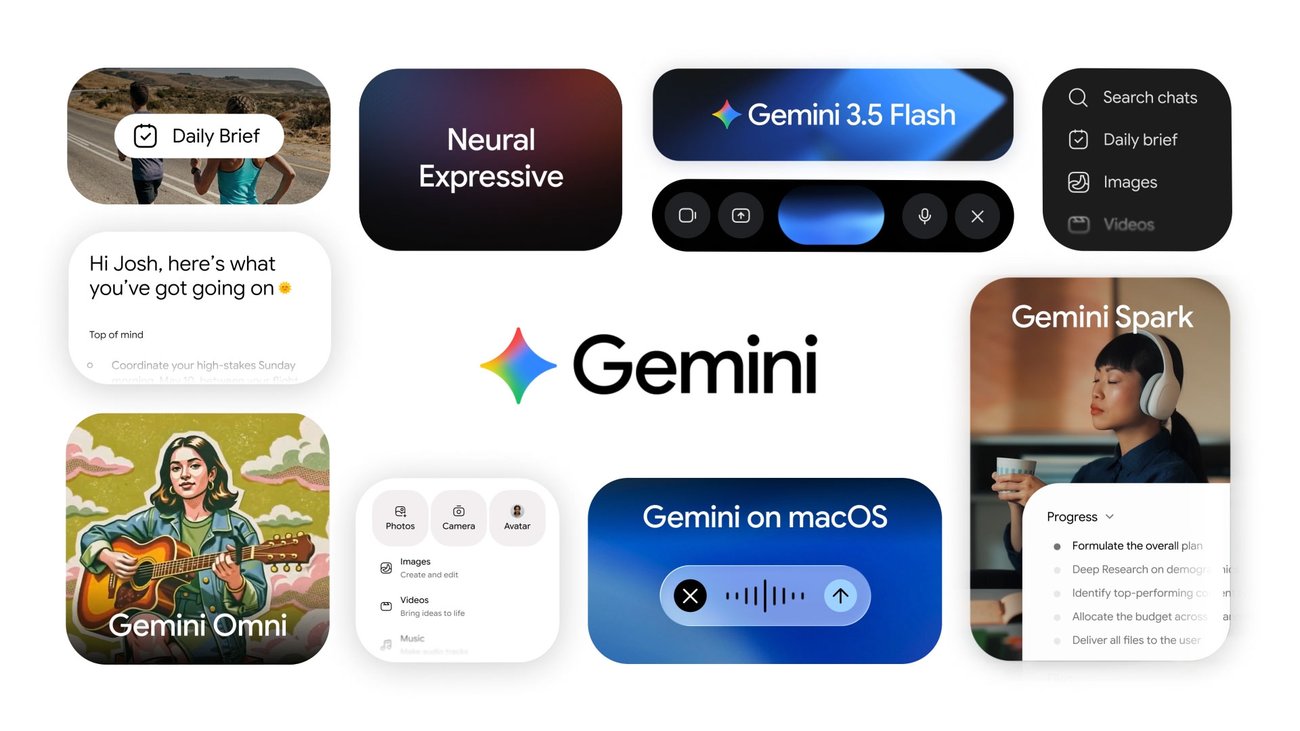
- What happened: Google DeepMind introduced
Gemini Omniat I/O 2026 and began rolling out its first product, Omni Flash, across the Gemini app, Flow, and YouTube Shorts.- The important shift is not text-to-video alone, but a workflow where images, video, audio, and text can be mixed and then edited through conversation.
- Why it matters: Google is placing generative video inside everyday creation surfaces instead of treating it as a standalone demo.
- Gemini, Flow, YouTube, Search, and Chrome give Google a distribution layer that most video-model startups cannot easily reproduce.
- Builder impact: AI video products now need to design for reference assets, stateful edits, approval flows, watermarking, and provenance.
- Watch: Omni content carries SynthID and C2PA signals, but early users are also noticing policy filters, usage limits, and prompt-style differences.
The loudest category at Google I/O 2026 was agents. Gemini Spark, Antigravity, Managed Agents, and AI Search information agents all carried the same message: AI is moving from tools that answer into systems that act. A similar shift appeared in generative media. Google DeepMind's Gemini Omni is not simply another model for prettier video. It is a product direction where video can be revised in chat, pushed through Flow and YouTube, and marked with SynthID and C2PA so the output can be traced.
Google's official language is ambitious. It describes Omni as a model for making anything from any input. The first shipped surface, however, is video. The DeepMind model page says Gemini Omni can take video, images, text, and audio as references, combine them into a result, and keep editing through natural-language conversation rather than ending at one generation. Google's I/O 2026 announcement roundup points in the same direction: video output comes first, but the longer-term model family is meant to expand toward any output from any input.
That is why this launch is more interesting than "one more AI video model." The last two years of AI video competition have mostly been consumed as prompt-to-clip demos. The demos were strong, but the real production loop was awkward. If the first result was wrong, the user prompted again. If a character changed between shots, the user regenerated. If only the background needed to change, the entire scene could drift. Moving into a conventional editing tool often broke the AI model's context, while staying inside the AI tool limited precise production control. Gemini Omni is aimed at that editing bottleneck.
DeepMind frames Omni almost like "Nano Banana, but for video." Nano Banana pushed Google's image-generation and editing stack toward object, text, and layout control inside products. Omni tries to move that pattern into video. A user can upload a video, ask for a new background, add a camera zoom, change the material behavior of a scene, or attach a reference image and ask the system to preserve style or identity. The meaningful claim is that edits build on previous edits. In video production, that changes the unit of work. The product is no longer just a clip generator. It becomes a stateful editing conversation.

The official demos make that direction visible. DeepMind shows examples where a structure appears on a person's palm based on a reference image, or where a character is moved into a different environment and the camera angle is then changed again. Google also emphasizes physical understanding. It says Gemini Omni better understands forces such as gravity, kinetic energy, and fluid dynamics, and can use historical, scientific, and cultural context to support more meaningful storytelling rather than mere photorealism. That language is broad, but it reveals the competitive axis Google wants to own. The next fight is not only pixel quality. It is editable scene understanding.
The product placement matters as much as the model. According to Google's Gemini app announcement, Gemini Omni is rolling out globally to Google AI Plus, Pro, and Ultra subscribers. Users can upload videos from their camera roll, apply templates, or ask in natural language for background replacement, cinematic zooms, and other edits. The same post also mentions personal AI avatar creation. For developers, this is a signal that video generation is becoming an input and output mode inside a daily AI assistant, not a novelty app sitting off to the side.
Flow is the more creator-oriented surface. In its Flow update, Google said Flow is available in more than 140 countries and that Omni Flash lets users mix real video with generated content while iterating conversationally. Character consistency is a major theme. That means the identity and voice of a person or character staying coherent across scenes is now a core competition point. Google also announced Flow Agent, which pushes the product from a one-prompt tool toward a creative partner that can help ideate, generate variants, batch-edit, and organize assets.
YouTube integration raises the stakes. Google's I/O roundup says Gemini Omni Flash is also coming to YouTube Shorts Remix and the YouTube Create app for users 18 and older, with a free access path on those surfaces. In Shorts Remix, a user can choose an existing Short, add themselves or a visual reference, describe what should change, and create a new version. This is where a platform company has leverage. A video startup can ship an impressive model, but Google can place the model directly inside the creation, remixing, publishing, labeling, and consumption loop. If AI video happens inside YouTube, it stops feeling like a separate file and starts looking like a platform feature.
That means Gemini Omni's competitors are not only Sora or Runway. The relevant comparison includes Adobe Firefly Video, CapCut, TikTok-style editing flows, YouTube Shorts creation, and the asset-management and collaboration tools creators already use. The moment a model creates a clip is less important than whether a person can revise it in a few conversational turns, publish it in the right place, and keep a usable history of what changed. For AI product teams, that is the lesson. Adding generative media is not just a prompt box and a result pane. It requires reference assets, edit steps, approvals, watermarks, reuse rights, and provenance.
Google's emphasis on provenance is not incidental. The DeepMind model page says content generated or edited by Omni in the Gemini app, Google Flow, and YouTube includes SynthID digital watermarks and C2PA Content Credentials. On the same day, Google published a separate content provenance announcement. It said SynthID has been applied to more than 100 billion images and videos and to 60,000 years of audio. It also said SynthID verification in the Gemini app has been used more than 50 million times globally, and that Google is expanding verification into Search and Chrome.
Those numbers change how to read Gemini Omni. As AI video quality rises, trust costs rise with it. Users, platforms, advertisers, journalists, educators, and regulators will want to know whether a video was captured by a camera, generated by a model, edited by AI, or passed through several tools. Google is trying to cover both invisible watermarking through SynthID and visible, standards-based history through C2PA. Neither is a perfect solution. But when a company controls YouTube, Search, Chrome, and major AI creation tools, the verification UI itself becomes a distribution advantage.
For developers, this may become more practical than the model API. Teams adding AI video to products will need to record more than "this asset was generated." They will need to track which inputs were used, which edits the user requested, which model and product generated the result, and how outside platforms will label the output. That is especially important in user-generated content, advertising, education, news, insurance, commerce, and any domain where video provenance is directly tied to trust. Google placing Gemini Omni and provenance announcements in the same I/O cycle suggests a clear judgment: generation and verification cannot be separated.
The early user response is not uniformly smooth. As of May 22, 2026, there was no large, single Hacker News discussion dedicated to Gemini Omni. Reddit communities around video generation and Gemini showed a mix of excitement and frustration. Some users in r/VEO3 pointed to physical scenes and reference-input combinations as strengths, while also saying that prompts written for older Veo-style workflows did not always transfer well. Some users in r/GeminiAI complained that policy filters were triggered too often. These are small, informal samples, so they should not be generalized. They do show that as models become more powerful, prompting style, limits, and safety filters become part of the product experience.
Safety filters are especially sensitive in video. Text models also need restrictions, but video combines faces, voices, bodies, places, brands, copyrighted material, minors, and political context in a single output. If Google is promoting personal AI avatars and YouTube Shorts Remix at the same time, the safety layer is likely to be conservative. A user may ask, "Why is my own video blocked?" A platform may answer, "One loose policy can scale into mass misuse." Gemini Omni's early friction is therefore not only a model-quality issue. It is an operating problem that any generative video product will have to face.
Another practical variable is generation count and cost. Google says Gemini Omni Flash is available to Google AI Plus, Pro, and Ultra subscribers, but actual usage can vary by region, subscription tier, and product surface. YouTube Shorts access also comes with conditions such as age eligibility and supported features. Video generation is much more compute-heavy than text generation. Conversational editing encourages repeated attempts rather than one-and-done generation. If the chat-editing experience is going to work, generation limits, wait times, failed retries, and cost cues need to be predictable.
For AI product teams, Gemini Omni raises three concrete design questions. First, how far does the input boundary expand? A feature that once accepted text prompts may now need to accept images, videos, audio, sketches, and existing project files. Second, how stateful should editing become? Users do not say, "Please generate a new unrelated scene." They say, "In the earlier shot, only change the background." The product therefore needs to remember references, previous outputs, and edit steps. Third, how is provenance preserved after export? AI-generated media needs traces that survive outside the original app.
These questions resemble the shift in coding agents. Coding agents moved from answers to file edits, tests, review, and deployment, which made permissions, logs, and sandboxes central product requirements. Video agents are moving from one-shot generation toward multi-step editing, asset management, publishing, and verification. Flow Agent, Gemini Omni, and YouTube together point toward an agentic media workflow. "Agentic" here does not have to mean full autonomy. It means the product decomposes user intent into steps, keeps state and assets in context, and verifies the result.
The competitive map is clearer from that angle. OpenAI Sora has a powerful video model and consumer app. Google has Gemini, Flow, YouTube, Search, and Chrome. Adobe has professional creative tools and existing production workflows. ByteDance-linked tools have short-form creation and distribution instincts. The winner will not necessarily be the system that makes the most photorealistic single clip. It may be the system that edits scenes reliably, preserves identity and voice, respects existing assets, publishes to the right surface, and keeps the output trustworthy.
That is why the original Korean headline used the word "conditions." For AI video to enter the chat window, a model must do more than generate impressive footage. It has to combine inputs, revise the same scene repeatedly, preserve characters and voices, apply understandable policies, and carry provenance with the result. Google's announcement puts these conditions into one product bundle. The real usage limits, quality, and policy behavior still need to be watched. But the direction is clear: AI video competition is moving from one-shot impressive clips toward editable, traceable creation workflows.
Developers and AI product teams should therefore look past the flashiest demo frame and inspect the shape of the workflow. Does Gemini Omni stay stable across real edits? Does Flow Agent reduce production time? How does YouTube Remix handle the line between creation, remixing, and copyright? Do SynthID and C2PA remain meaningful once media leaves Google's surfaces? If those answers improve over time, Gemini Omni may be remembered less as a video-model launch and more as a template for how generative media products are built.