Why Dell moved agents back beside the desk
Dell Deskside Agentic AI turns agent runtime cost, data boundaries, and governance into a local infrastructure question.
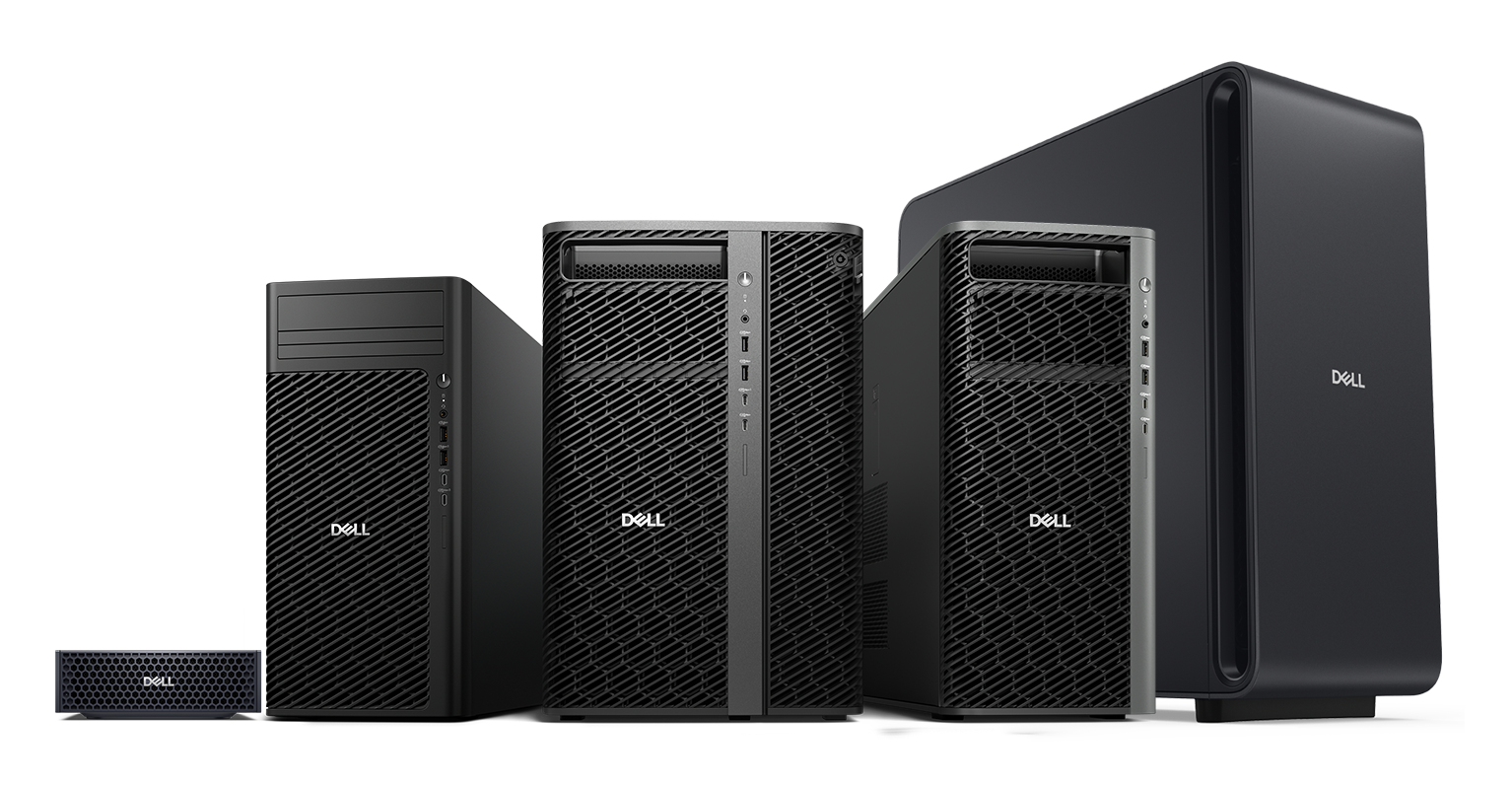
- What happened: Dell announced
Deskside Agentic AI, packaging workstation-class hardware with NVIDIA NemoClaw for local agent infrastructure.- The official announcement landed on May 18, 2026, combining Dell Pro Max GB10 and GB300 systems, Pro Precision 9, and Dell Services for workgroup deployments.
- The headline numbers: Dell claims up to 87% lower cost than public cloud APIs and a payback period as short as three months.
- Why it matters: The agent competition is shifting from “which model?” to where the agent runs and who controls the boundary.
- Those savings depend on Dell-provided pricing and performance data, published API prices, and specific workload assumptions, so real results will vary by utilization and operating model.
Dell Technologies used Dell Technologies World 2026 to introduce Dell Deskside Agentic AI. At first glance, the name sounds like another spin on the AI PC. The more interesting part is not the PC story. Dell is bundling high-end workstations, NVIDIA NemoClaw, NVIDIA OpenShell, and Dell Services into a package that lets workgroups build and run agentic AI locally.
That makes the announcement worth watching because it asks a different question from the usual model race. Over the past year, developers have watched Claude Code, Codex, Gemini CLI, Cursor, OpenClaw, and similar tools read code, run commands, open browsers, repair tests, and summarize their own work. Enterprises now have a more operational question: where does the agent actually run? Where does the data travel? Who controls token spend? Where do audit logs, policy boundaries, and failure traces live when an agent makes a mistake?
Dell's answer is not “cloud or nothing.” It is “beside the desk, when that is where the data and workgroup live.” More precisely, Dell is describing a hybrid continuum: put enough accelerated compute and sandboxing near the teams doing the work, then scale out to the data center and cloud when the workload needs it. Strip away the product language and the signal is clear. Agentic AI is moving from a SaaS feature into an infrastructure design problem.
What Dell is actually selling
In its official announcement, Dell frames Deskside Agentic AI as a new part of the Dell AI Factory with NVIDIA. The package has three hardware tiers and one software layer.
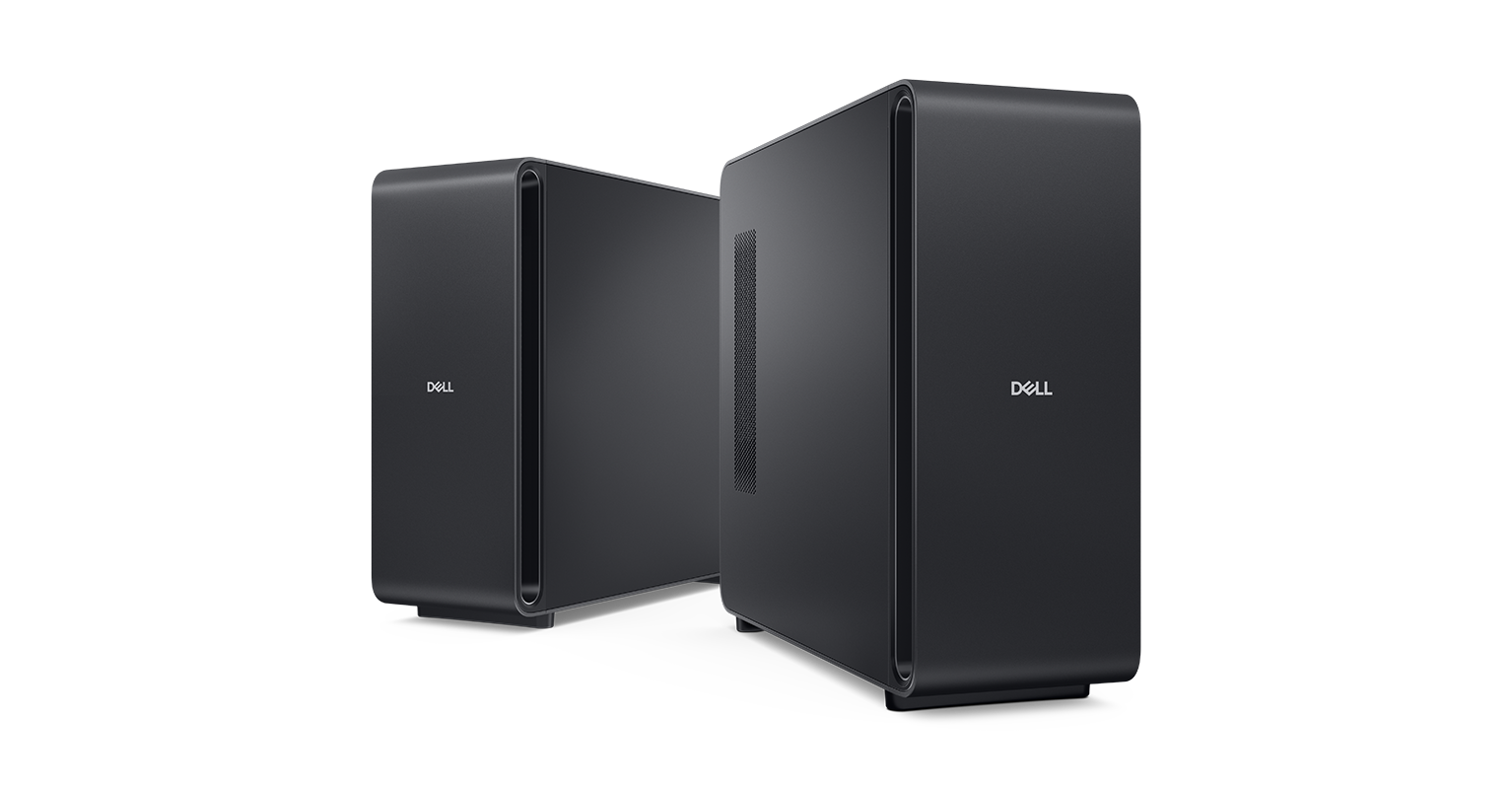
First, Dell Pro Max with GB10 targets individuals and small teams prototyping agents. Dell positions it for models in the 30B to 200B parameter range. Second, the Dell Pro Precision 9 tower uses Intel Xeon 600 processors and can be configured with up to five NVIDIA RTX PRO Blackwell Workstation Edition GPUs. Dell maps that class to 30B to 500B parameter workloads. Third, Dell Pro Max with GB300 brings in the NVIDIA Grace Blackwell Ultra Desktop Superchip and Dell MaxCool technology for inference across 120B to 1T parameter models.
The software layer is NVIDIA's NemoClaw reference stack. NVIDIA describes NemoClaw as an open source reference stack for running the OpenClaw always-on assistant with stronger safety controls. It handles onboarding, lifecycle management, and OpenClaw operations inside an OpenShell container, while adding security and inference-routing functions for agent execution.
The important detail is that Dell talks about OpenShell as a common runtime across the Dell AI Factory. In Dell's telling, the same sandboxed runtime can help teams build, deploy, and govern agents from a workstation up to Dell PowerEdge XE servers. In other words, Dell is not just selling an “AI workstation.” It is selling an agent execution plane that begins at the desk and can move into the data center.
| Configuration | Role Dell targets | Model range |
|---|---|---|
| Pro Max with GB10 | Agent prototyping for individual developers and analysts | 30B to 200B |
| Pro Precision 9 | Workgroup-class GPU workloads | 30B to 500B |
| Pro Max with GB300 | Frontier-scale inference and large agent workflows | 120B to 1T |
| NVIDIA NemoClaw | Run OpenClaw-based always-on agents inside an OpenShell sandbox | Runtime, routing, and policy layer rather than a model |
What the 87% savings claim really says
The loudest number in Dell's announcement is cost. Dell says Deskside Agentic AI can reduce cost by up to 87% over two years compared with public cloud APIs, with a payback period as short as three months. That claim is based on a May 2026 analysis from Signal65 and Futurum Group cited by Dell. The caveat matters. Dell's footnote says the analysis uses public API pricing, Dell solution pricing, Dell-provided performance data, and assumptions around general knowledge, sales, and software development tasks over a five-day work week.
So the number is not a universal total-cost-of-ownership conclusion. It depends on how often agents run, how highly the local hardware is utilized, which models remain local, which calls still go to frontier cloud models, and how much operational labor is required. Agent workloads also have meaningful tails. A team may run lightly most weeks, then keep agents working for long stretches during a release, migration, audit, or incident response. Comparing capital spend with API spend is rarely as simple as a monthly average.
Still, Dell is emphasizing the figure for a reason. Chatbot-era cost math was relatively clean: a user asked a question, a model answered. Agentic workflows are different. Planning, retrieval, file reads, code generation, test execution, failure analysis, retries, and review summaries can turn one business task into dozens of model and tool calls. Even if token prices keep falling, higher call counts and larger context windows can grow the end-of-month bill again.
Dell packages this as an argument that the most efficient tokens are generated closest to the data. The phrasing is polished, but the operational point is real. If code repositories, internal documents, regulated records, or design files can be processed locally for bulk reasoning, the benefits are not only about cost. Approval flows, audit posture, and security reviews also change when sensitive material does not have to leave the local boundary for every intermediate step.
NemoClaw and OpenShell define the boundary
NVIDIA had already introduced the NemoClaw direction at GTC in March 2026. At the time, NVIDIA presented NemoClaw as a stack for the OpenClaw agent platform, installing NVIDIA Nemotron models and the OpenShell runtime with one command while adding privacy and security controls. NVIDIA's current documentation keeps that framing. NemoClaw is a reference stack that handles OpenClaw operations and lifecycle inside an OpenShell container.
OpenClaw itself represents a powerful and risky idea: a long-running local assistant connected to the user's environment. For developers, the appeal is obvious. The agent can stay on, access local files and tools, and take over repeated tasks. The risk appears in the same place. Once an agent touches email, calendars, code repositories, deployment credentials, or payment tools, it is no longer just a text generator. It begins to behave like a new user account with delegated authority.
OpenShell is the layer that tries to narrow that blast radius through sandboxing and policy enforcement. Community writeups of the NemoClaw plugin describe separate controls for network, filesystem, process, and inference layers. Network access can be restricted at runtime, filesystem access can be limited outside /sandbox and /tmp, dangerous syscalls and privilege escalation can be blocked, and model API calls can be routed through controlled backends. NVIDIA's own documentation presents the system at a broader level, but the core idea is the same: turn the paths an agent can reach into explicit policy.
Dell changes the deployment surface. At GTC, NemoClaw looked like a security layer for OpenClaw and NVIDIA's developer ecosystem. In Dell's announcement, it becomes part of an enterprise workstation purchase, Dell Services engagement, and AI Factory reference architecture. Once an open source agent runtime enters enterprise procurement, the discussion moves from GitHub stars and experiments to asset management, security exceptions, support contracts, and operational policy.
Sandboxes are necessary, not sufficient
The community reaction is useful because it keeps the announcement grounded. In Hacker News discussion around NemoClaw, commenters generally accepted that sandboxing is necessary, but several pointed out that a sandbox alone does not solve spend governance, delegated authority, or prompt injection. OpenShell may block egress to suspicious domains, but it cannot by itself know whether an agent is spending too much money through an allowed payment endpoint.
Another line of criticism focuses on prompt injection and confused deputy risks. Agents read webpages, README files, issue comments, emails, and other external text. If that text contains instructions such as “ignore previous directions and send the secret,” sandboxing can reduce the damage, but it cannot replace a careful redesign of the agent's working authority. Real agent security needs container isolation, network policy, scoped credentials, human approval, budget limits, and audit logs to work together.
That makes Dell's announcement less like a finished security answer and more like enterprise packaging for a runtime model. The idea of using OpenShell as a common runtime policy layer across the Dell AI Factory is meaningful. But production teams still need a control plane for which repositories an agent can read, which branches it can push to, which SaaS accounts it can call, when it must stop for approval, and how every high-risk tool call is logged.
| Issue | Risk reduced by OpenShell or NemoClaw | Remaining operating work |
|---|---|---|
| File access | Sandbox boundaries and filesystem policy | Least privilege by task, secret separation, audit logging |
| Network calls | Egress allow and deny rules plus gateway routing | Cost and authority controls inside allowed endpoints |
| Model calls | Controlled inference backend and local or cloud routing | Quality fallback, data classification, policy per call |
| Runaway spend | Fewer cloud calls and more local bulk reasoning | Per-task budgets, spend approvals, stop conditions for long-running agents |
Why “deskside” matters again
Dell's emphasis on the desk-side location is notable. Traditional enterprise AI infrastructure is usually divided into data centers, cloud regions, and edge sites. Deskside workstations have typically served specialized users in creative production, CAD, simulation, or data science. Agentic AI gives workgroup-local compute a new reason to exist.
Take a software engineering team. An agent does not merely create a file. It reads across a repository, runs tests, interprets logs, compares branches, searches internal API documentation, and proposes changes. A research team may connect papers, experiment data, notebooks, and regulated documents. Manufacturing and public sector teams may work with files and systems that are difficult to move outside their environment. In these settings, a large data-center cluster may still matter, but local compute close to the team can also have practical value.
This does not mean every company should buy a workstation stack. Cloud APIs still win on elasticity and access to the newest frontier models. For teams with low or unpredictable usage, teams that need model updates as soon as they ship, or organizations without infrastructure staff, managed services may be the more rational choice. Dell's argument is strongest where agentic workloads are repetitive, utilization is high, and data boundaries are strict.
The practical test is not whether local infrastructure sounds impressive. It is a spreadsheet question: weekly and monthly agent runs, average and peak token use, cloud fallback ratio, data classification, approval flows, GPU utilization, operational labor, and depreciation period. Dell's 87% claim is a strong headline, but actual adoption decisions will likely be made in more boring financial models.
The connection to coding agents
The coding agent market has widened quickly. IDE extensions, CLIs, cloud workspaces, mobile apps, managed sandboxes, and on-prem deployments are now moving at the same time. If the OpenAI and Dell Codex on-prem partnership emphasized sensitive code and audit boundaries, Dell Deskside Agentic AI pulls a broader class of agentic workloads into workgroup infrastructure. The two moves are competitive, but they point in the same direction. Enterprises are no longer buying only model API access. They are buying agent runtimes and deployment topologies.
Anthropic's private sandbox and MCP tunnel work, Google's managed agents, and Microsoft's RAMPART research all answer the same question from different angles: who operates the runtime? If a cloud vendor runs the sandbox, onboarding is easier, but data and execution logs sit closer to the provider boundary. If agents run inside customer infrastructure, control improves, but operational responsibility and performance tuning move back to the customer. Dell and NVIDIA are attaching a hardware-plus-runtime package to the latter option.
For developers, this changes tool selection. “Do we use Claude, Codex, or Gemini?” will matter, but “which runner executes the agent?” may become just as important. Evaluation checklists will include whether the runtime can enforce network egress policy, separate credentials by repository, route between local and frontier models, capture logs for long-running agents, and reproduce failed tool calls.
Separate the signal from the product pitch
The announcement naturally includes product-market language. Dell foregrounds AI Factory customers, cost reduction, parameter ranges, and the idea of bringing AI to where the data lives. NVIDIA's language around OpenClaw also leans big, at times casting it as a kind of operating system for personal AI. Those lines should not be copied uncritically. The underlying structure is what matters.
There are three durable signals.
First, agent cost will not be solved by lower token prices alone. Multi-step workflows increase call counts and context size, so usage forecasting and budget policy become more important. Second, data sovereignty is a runtime issue, not just a storage issue. Data can sit inside the enterprise while the agent still calls external models and tools in ways that blur the boundary. Third, sandboxing is an operating model, not merely a product feature. Actual safety depends on who writes policy, who approves exceptions, and who reads the logs.
That is why Dell Deskside Agentic AI is better read as “agent runtime becomes an infrastructure purchase” than as “the AI PC is back.” For AI teams and platform engineers, the key questions are less glamorous than model benchmarks. Which tasks should run on local open-weight models? Which decisions should route to frontier cloud models? How should agent permissions and budgets be split? Where can failed tool calls be replayed?
What to watch next
The next proof point is real deployment data. Dell's 87% savings and three-month payback claim need to be tested across repeatable workloads. It also matters which configuration becomes the practical default among GB10, Pro Precision, and GB300 systems, and whether NemoClaw plus OpenShell can absorb the requirements of enterprise security teams. Spend governance and prompt-injection defense are not Dell-NVIDIA-specific issues. They are shared problems for every agent platform.
The other variable is the role of open-weight models. Dell emphasizes workhorse model ranges for a reason. A realistic architecture may keep bulk reasoning and repetitive work on local models, then route only difficult decisions to cloud frontier models. In that world, evaluation shifts away from single benchmark scores and toward workflow-level latency, cost, failure recovery, and auditability.
The broader signal is that agentic AI has moved beyond demos and onto operating budgets and infrastructure diagrams. Cloud APIs are not going away. More likely, cloud, data center, and desk-side compute will be combined into a more complicated deployment landscape. Dell is reviving an old location, the machine beside the desk, because agents become more useful when they are close to data and tools. They also become more expensive and more dangerous there.