Dell puts agents beside the desk, and token location becomes infrastructure
Dell Deskside Agentic AI reframes agent deployment around local workstations, data proximity, sandboxed runtimes, and the economics of repeated inference.
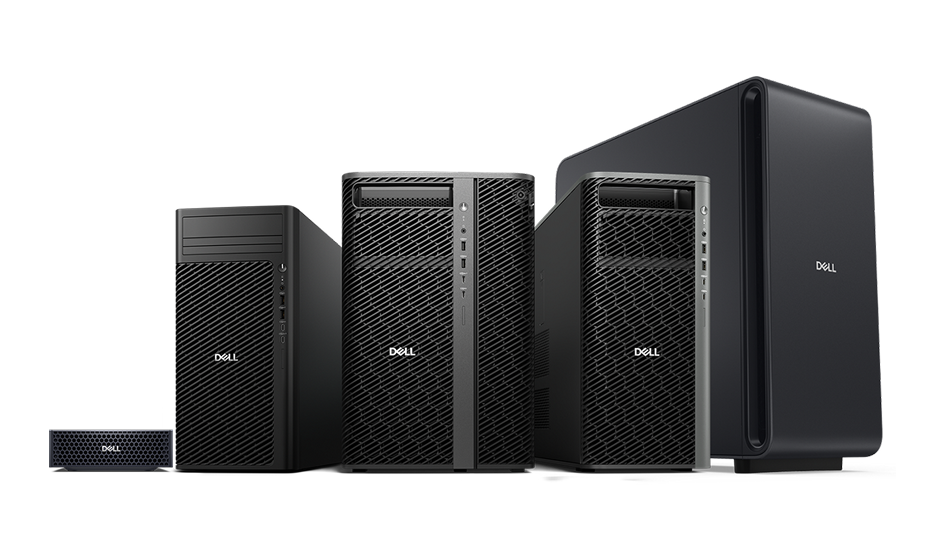
- What happened: Dell introduced
Deskside Agentic AIwith NVIDIA, moving agent execution closer to workgroups instead of treating every step as a remote API call.- The May 18, 2026 announcement bundles GB10, Pro Precision 9, and GB300-class workstations with NVIDIA NemoClaw and OpenShell.
- Key numbers: Dell claims a breakeven point in as little as 3 months versus public cloud APIs and up to 87% lower spend over 2 years.
- Why it matters: Agent competition is moving from model intelligence alone toward where tokens are generated, audited, and paid for.
- Watch: The economics depend on vendor-provided data and workload assumptions, so real TCO will vary by utilization, operations, and data sensitivity.
Dell Technologies used Dell Technologies World on May 18, 2026 to make an infrastructure argument about AI agents. The product name is Dell Deskside Agentic AI. At first glance, it looks like another workstation launch wrapped around NVIDIA hardware. The more interesting part is the workload Dell is trying to name: agents that read files, call tools, revise plans, run tests, repeat failed steps, and produce far more tokens than a normal chat session.
Dell's answer is not a better chatbot. It is a placement strategy. Build, test, and run agents beside the people and data they serve, then move successful workflows into the data center when scale and governance require it. That framing puts Dell in the same broad agent race as OpenAI, Google, Anthropic, and GitHub, but from a different angle. The announcement is less about a single model or application and more about the physical location where agent inference happens, the security boundary around it, and the accounting model that pays for it.
The core story is token location, not workstation specs
Dell's broader AI Factory announcement groups its Dell AI Factory with NVIDIA expansion into agentic AI, AI data platforms, next-generation infrastructure, and a partner ecosystem that includes Google, Hugging Face, OpenAI, Palantir, ServiceNow, and SpaceXAI. For builders, the most concrete pieces are Deskside Agentic AI and support for NVIDIA OpenShell.
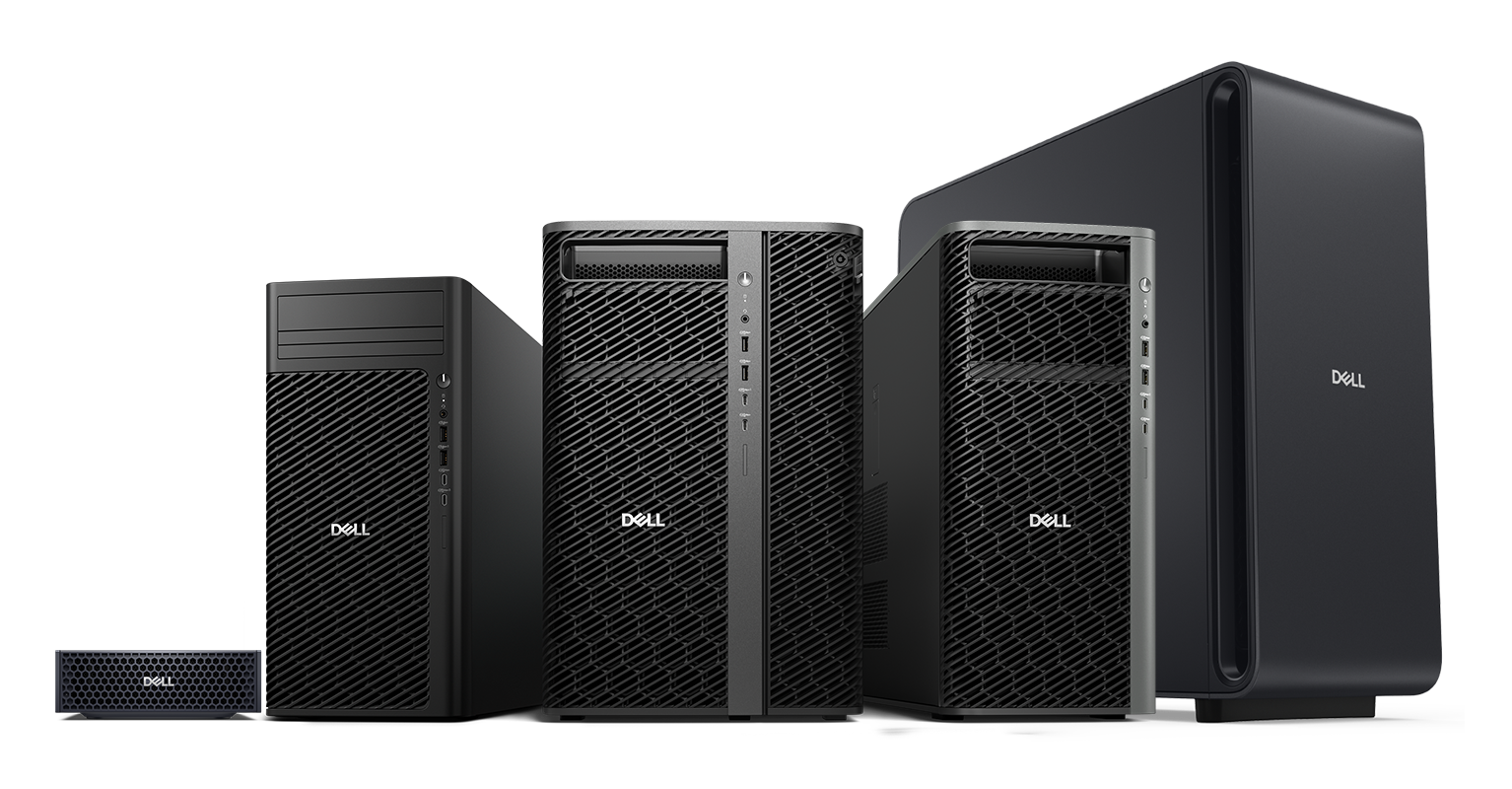
According to Dell, Deskside Agentic AI combines high-performance Dell workstations, the NVIDIA NemoClaw reference stack, and Dell Services. Dell Pro Max with GB10 targets personal or small-team prototyping for 30B to 200B models. Dell Pro Precision 9 uses Intel Xeon 600 processors and NVIDIA RTX PRO Blackwell workstation GPUs for 30B to 500B model ranges. Dell Pro Max with GB300, based on the NVIDIA GB300 Grace Blackwell Ultra Desktop Superchip, is positioned for inference from 120B models up to trillion-parameter-class systems.
Those numbers can easily turn the story into "large models under a desk." Dell's repeated emphasis points somewhere else. Agentic workflows are not a single prompt followed by a single answer. Multiple specialized agents may divide tasks, inspect files, rewrite plans, call external tools, and retry work. Token consumption does not grow linearly once the workflow becomes a loop. Even when token prices fall, total usage can rise faster than unit cost falls.
That is why "deskside" matters. Dell is not saying the cloud disappears. Frontier models, elastic scale, managed platforms, and centralized data centers will still belong in cloud and enterprise infrastructure. The claim is narrower: sending every step of every agent loop to a remote API can become a cost, latency, and data-boundary problem when the workflow touches sensitive code, research data, regulated records, or internal documents.
Dell's aggressive cost claim needs careful reading
Dell's most forceful numbers are the 3-month breakeven claim and the assertion that organizations can reduce spend by up to 87% over 2 years compared with public cloud API usage. Dell attributes the analysis to Signal65 and Futurum Group, and describes the model as using public API pricing, Dell solution pricing, Dell-provided performance data, and assumptions around general knowledge, sales, and software development agent workloads.

The numbers are attractive, but they should not be treated as portable truth. The economics of local or on-premises AI depend on hardware purchase price, power, cooling, maintenance, GPU utilization, model compression, operations staff, failure handling, and security review. Agent workloads also lack a mature standard unit of measurement. A chat API bill can be compared through input and output tokens. An agent bill has to include tool calls, file I/O, retries, failed paths, and the cost of discarded work.
The numbers still matter because they show how vendors are starting to talk about agent cost. For the last year, the AI market has mostly celebrated cheaper, faster models. Agents complicate that story. A coding agent that runs tests four times, scans a repository, rewrites a pull request, reacts to review comments, and backs out a failed approach can consume the savings from cheaper tokens through higher usage volume.
The real question is not simply whether a company should buy a Dell workstation. It is which parts of its agent inference should remain in the cloud, which parts should run near data, and which parts should graduate to a centralized data center. High-frequency repetitive work, sensitive code search, internal-document research, regulated decision support, and team-local prototyping are not always well served by a pure API-price comparison.
NemoClaw and OpenShell are the operating layer
The most important names in the announcement may be NVIDIA NemoClaw and OpenShell. Dell describes NemoClaw as a reference stack that brings together OpenClaw, NVIDIA Nemotron open models, and the OpenShell secure runtime. The target is not a one-off local demo. It is long-running, always-on, multi-step agents managed on local hardware.
OpenShell is the runtime and control layer. Dell says OpenShell will be supported across Dell AI Factory, from workstations to PowerEdge XE servers, with sandboxed execution environments and security and privacy controls. Dell's blog post on moving from agentic experiments to business impact describes OpenShell as a runtime that places each agent in its own isolated sandbox.
That maps directly to the broader platform race around agents. OpenAI Agents SDK, Google Gemini API Managed Agents, Anthropic's connector and permission model, and GitHub's agent infrastructure all face the same problem. An agent is not just a language model returning text. It can read files, execute commands, call external systems, and preserve state. Safe deployment needs more than prompt guardrails. It needs filesystem boundaries, network boundaries, tool approval, state management, audit logging, and policy enforcement.
Dell and NVIDIA connect that control plane to local infrastructure. A managed cloud agent says, in effect, "rent an isolated execution environment through an API." Deskside Agentic AI says, "place that isolated execution environment inside your own equipment and data location." Neither approach is universally better. The market is turning into a routing problem across cloud APIs, managed sandboxes, deskside workstations, and data-center servers.
| Deployment location | Strengths | Risks to check |
|---|---|---|
| Cloud API | Latest frontier models, elastic capacity, low upfront cost | Spend can become difficult to forecast in repeated agent loops |
| Deskside workstation | Data proximity, low latency, local handling of sensitive context | Utilization and operational skill decide the economics |
| On-premises data center | Central governance, internal data scale, stronger regulatory posture | Initial design and deployment lead time can be heavy |
The rise of workhorse models
Dell says its internal analysis finds that roughly half or more of agent workflows can run on open-weight models, and it treats the 30B to 284B parameter range as a workhorse tier for high-volume inference. The product material also says many real agent workloads fit 70B to 235B models. The important word is not "frontier." It is "workhorse."
AI news still rewards the largest model and the highest benchmark score. Enterprise agent operations may not. Code search, document classification, log summarization, internal report drafting, test failure analysis, and standardized tool calls can often be handled by sufficiently capable mid-sized models. The largest model can be reserved for ambiguous judgment, harder reasoning, or steps that need stronger external knowledge.
This is also a model-routing story. AI teams are moving away from choosing one model for every task. They combine fast models, cheap models, long-context models, coding-tuned models, local models, and auditable models. Dell and NVIDIA extend that routing layer into hardware placement. Some steps go through an API gateway to a cloud model. Some steps go to an open-weight model on a workstation. Others go to an internal GPU pool in a data center.
For builders, that changes application design. Abstracting model calls behind a single provider is useful, but not sufficient. Data location, tool permissions, sandbox policy, log retention, and retry location become part of the architecture. The sharper question is no longer only which model an agent uses. It is which stage of the agent runs on which infrastructure, under which policy, and with which audit trail.
This connects to the OpenAI-Dell Codex story
Around the same event window, OpenAI and Dell also announced work to bring Codex into hybrid and on-premises enterprise environments. devlery covered that as a signal that coding agents are moving beyond a developer's personal IDE helper and into enterprise repositories, security rules, deployment systems, and data platforms. Deskside Agentic AI is the broader infrastructure version of the same trend.
On-premises Codex is about placing a specific agent product inside enterprise environments. Deskside Agentic AI asks where multiple agents and models should physically run. Dell's examples include coding assistance, research agents, and private AI assistants for regulated industries. That means the target is not only software teams. It also includes research labs, manufacturing groups, finance, government, and other teams with sensitive data and repeated analysis workflows.
Dell's commercial interest is obvious. It wants to sell more workstations, servers, storage, and services. NVIDIA also benefits from a story in which agentic AI increases demand for local and on-premises inference. That is why the official cost numbers should be read cautiously until independent deployments build a record. The vendor incentive is real. But the problem statement is also real. Once agents become part of work processes, "just use a cheaper cloud API" is not a complete answer.
Community validation is still early
I did not find a large Hacker News or GeekNews discussion centered on this exact Dell Deskside announcement. Reddit reaction appears more visible in Dell and NVIDIA investor communities, where the conversation often blends the OpenAI-Dell partnership, Dell/NVIDIA AI Factory, and expectations around AI infrastructure demand. That is not the same as developer field experience.
The gap is itself useful context. Local agent infrastructure is not yet the kind of product individual developers can install, benchmark, and compare in a weekend. Codex, Claude Code, Gemini CLI, and Cursor-style tools are immediately testable by individuals. Deskside Agentic AI requires purchase decisions, deployment planning, security review, operating practices, and integration with local data. Early assessment will naturally lean on vendor material and press briefings.
Developers should therefore focus less on the product name and more on the architecture direction. Agent runtimes will keep facing three questions. Where is the data the agent needs? Which sandbox controls file access, command execution, and network calls? Who forecasts and limits the cost of repeated inference? Dell and NVIDIA are translating those questions into the language of workstations and data-center infrastructure.
What practical teams should inspect first
The immediate action is not to buy deskside AI hardware. It is to break down current agent usage. In coding agents, research agents, document summarization, support automation, and internal analytics, which steps are high-frequency loops? Which steps touch sensitive data? Which steps genuinely need a top frontier model? Which steps mainly need local context and predictable cost?
Then look at failure cost. An agent calling the wrong tool, sending sensitive context to an external API, spending millions of tokens during repeated tests, or leaving expensive local hardware idle are different failure modes. Cloud APIs are easy to start with, but costs can appear late if usage is not visible. Local equipment can fix unit economics, but weak utilization turns it into an expensive experiment. On-premises data centers offer stronger control, but the design and operations burden is heavier.
Finally, check runtime portability. Dell says OpenShell can span workstations and servers. Google connects Managed Agents and Antigravity harnesses to Gemini API and AI Studio. OpenAI is expanding Agents SDK and Codex deployment paths. Anthropic keeps strengthening SDKs, MCP, connectors, and enterprise deployment. In that competition, developers should avoid treating any vendor's control panel as the source of truth. Agent definitions, tool permissions, logs, and state should remain as portable as the organization can make them.
The deskside AI factory may be hype, but it is also a signal
Dell Deskside Agentic AI carries plenty of enterprise AI marketing language. "AI Factory," "agentic era," and "production-ready" are now everywhere. But underneath the language is a structural shift that is hard to dismiss. As agents multiply, inference stops being an abstract API call. It becomes an operating resource with location, power, cooling, data boundaries, logs, and governance.
The cloud is not going away. Stronger models and managed agent platforms will likely continue to arrive there first. But once agents repeatedly perform real work, sending every step to a remote API creates more exceptions. Sensitive data is hard to move. Long-running agents leave state behind. Repeated inference accumulates cost. Tool execution requires a defensible boundary.
So Dell's deskside AI factory is best read as a question, not a final answer. What is the default deployment unit for the agent era: a model API, a sandbox runtime, a workstation, or a data center? The market has not settled on one answer. Dell's announcement shows that infrastructure vendors are already preparing for the same conclusion: agents will work where data proximity and cost control meet.
Sources
- Dell Technologies: Dell Technologies delivers production-ready agentic AI from deskside to data center
- Dell Technologies: Dell Technologies closes the gap between AI ambition and AI outcomes
- Dell: Deskside Agentic AI
- Dell: The Agentic AI continuum
- Dell: Move faster from agentic experiments to business impact