Claude moves into the small business back office
Claude for Small Business packages QuickBooks, PayPal, HubSpot, Canva, and other tools into agentic workflows for SMB operations.
- What happened: Anthropic introduced
Claude for Small Businesson May 13, 2026.- The package connects QuickBooks, PayPal, HubSpot, Canva, Docusign, Google Workspace, and Microsoft 365 inside Claude Cowork workflows.
- Why it matters: This is not a generic chatbot pitch. Anthropic is packaging payroll planning, month-end close, invoice follow-up, and campaign planning as ready-to-run agent work.
- Builder signal: The AI agent market is moving from enterprise control planes into the messy operating systems of small companies: books, payments, CRM, design, documents, and approvals.
- Watch: Once money, contracts, and customer data are connected, approval UX, inherited permissions, audit trails, and liability become product-defining details.
Anthropic's latest announcement looks, on the surface, like a small-business SaaS bundle. Claude for Small Business, introduced on May 13, 2026, connects tools such as QuickBooks, PayPal, HubSpot, Canva, Docusign, Google Workspace, and Microsoft 365 inside Claude Cowork. But the more important story is not simply "Claude now has an SMB plan." It is that a frontier model company is packaging agentic workflows for non-technical operators and pushing execution into accounting, payments, CRM, marketing, contracts, and everyday administration.
Recent AI agent news has leaned heavily toward the enterprise. Microsoft Agent 365 framed agents as entities that need registration and control inside organizations. Red Hat tied agent execution to Ansible and OpenShift. Veeam moved agent trust toward data protection and recovery. UiPath connected coding agents such as Claude Code and Codex to enterprise automation runtime. These announcements all orbit the same question: when agents do real work, who owns permission, execution, audit, and recovery?
Claude for Small Business brings that question to a smaller company. Anthropic says small businesses account for 44% of U.S. GDP and almost half of private-sector employment, yet AI adoption lags larger companies. That is a policy point, but it is also a product strategy. Enterprises that already have AI programs can buy governance suites, consulting, and dedicated IT capacity. A small shop often has accounting, marketing, customer follow-up, contracts, hiring, tax prep, and vendor coordination concentrated in one owner and a few employees. "Write better prompts" is not enough of a product for that environment.
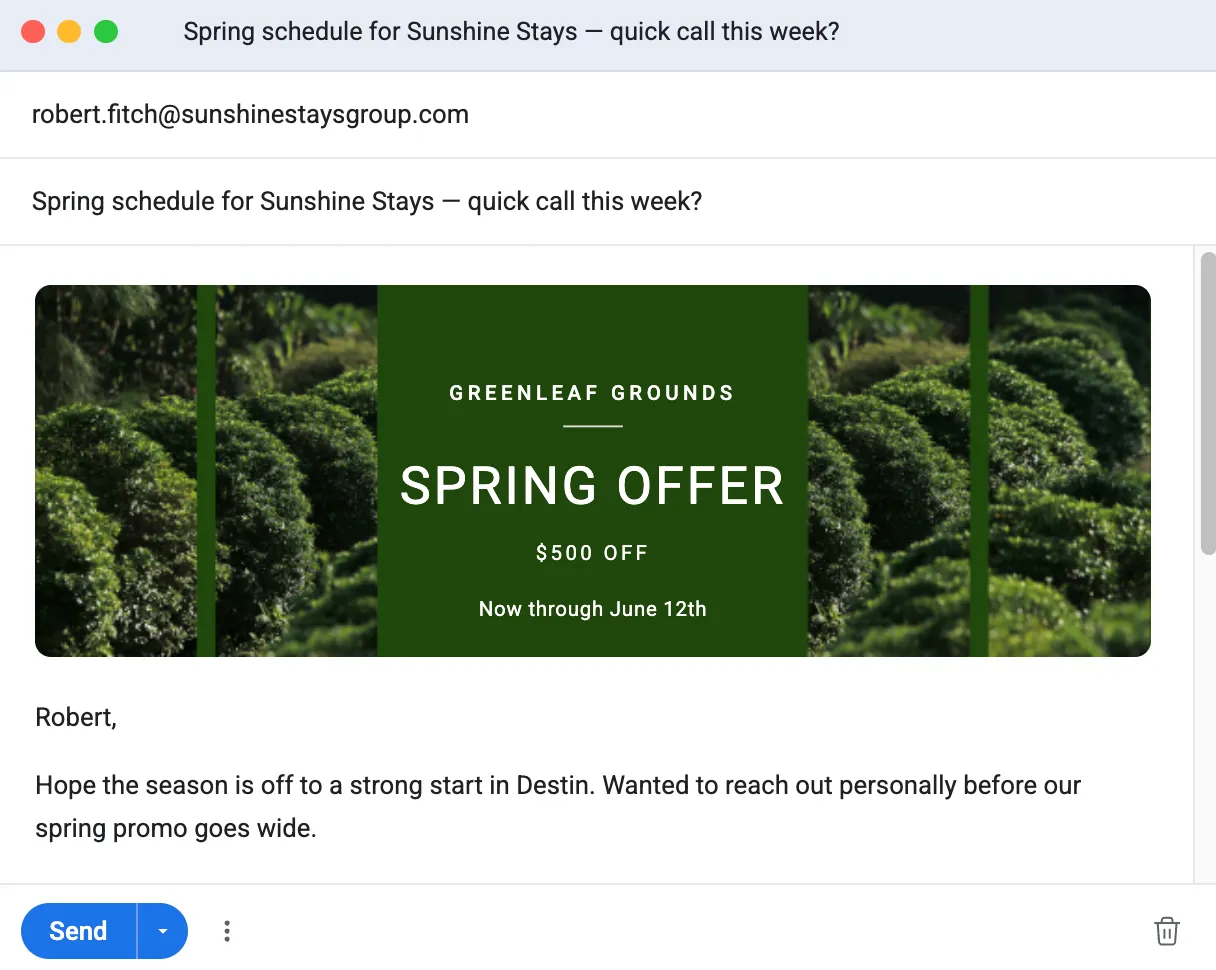
Anthropic's answer is a workflow package rather than a chat window. The announcement mentions 15 ready-to-run agentic workflows and 15 skills. The examples include payroll planning, month-end close, business pulse, campaign planning, invoice chaser, margin analyzer, tax-season organizer, contract reviewer, lead triager, and content strategist. The key detail is that these workflows do not end with a single generated answer. Claude can inspect cash position in QuickBooks, compare settlement data from PayPal, read pipeline context in HubSpot, prepare assets in Canva, and check contract status in Docusign.
The real product is an integrated work surface
Small businesses already have many AI tools. One tool drafts email. Another writes ad copy. Another summarizes meetings. Another helps with bookkeeping. Another schedules social content. The problem is that they often operate separately. For a small team, every additional tool can create more coordination cost. The more automation spreads across separate products, the more someone must remember which tool saw which data and what action it took.
Anthropic emphasizes one-toggle installation for Claude for Small Business. The solution page shows a flow in which users turn on plugins in the Claude desktop app, connect the tools they already use, and choose work to run. That is a stronger packaging move than a conventional integration marketplace. Instead of asking a user to assemble triggers and actions in Zapier or Make, Anthropic is defining work packages that Claude can explain and execute.
That may be a realistic shape for small businesses. Payroll preparation is not a single calculation. It touches cash balance, upcoming payments, receivables, overdue invoices, tax deadlines, and contractor payments. Marketing campaigns are similarly cross-functional. A company may need to find weak sales periods, select customer segments, draft a promotion, create a Canva asset, and prepare the campaign in HubSpot. Each component is small, but the person connecting the pieces becomes the bottleneck.
Claude for Small Business tries to remove that bottleneck by letting the agent move across tools. That is a bigger shift than ordinary productivity assistance. In the generation phase of AI products, a user asks for text and then copies the result into another app. In the agentic workflow phase, AI reads data from other systems, prepares artifacts, and gets the next step ready in the place where work actually happens. The human role moves from doing every micro-task to approving a plan and reviewing outputs.
The most important word is approval
Anthropic's announcement says Claude does the work while the user approves before anything sends, posts, or pays. That sounds like product copy, but it captures most of the safety model for small-business agents.
Small-business workflows contain sensitive actions. An invoice reminder is a real message to a customer. Payroll planning touches employee compensation and cash flow. Month-end close affects bookkeeping and tax preparation. Campaign planning uses customer segments and public-facing brand assets. Contract review summarizes obligations and commercial terms. In these contexts, an AI mistake is not just an awkward sentence. It can affect money, customer trust, compliance, and reputation.
That means the winning small-business agent is unlikely to be the product that grants full autonomy fastest. The stronger product is the one that designs approval boundaries well. A user should start the workflow, Claude should build a plan and prepare data or drafts, and the final external action should remain subject to human confirmation. Anthropic also says existing SaaS permissions are preserved. If an employee cannot see a QuickBooks record or Drive document directly, they should not be able to see it through Claude either.
The principle is familiar. The implementation is hard. Permission inheritance differs across every SaaS product. Google Drive document access, HubSpot contact access, QuickBooks payroll roles, PayPal settlement data, and Docusign envelope status all behave differently. An agent may combine those systems into one task, but the security model is not one system. Good UX can make the workflow feel simple, yet the internals still need to preserve connector permissions, approval state, and auditability.
| Workflow | Connected tools | Claude's role | Human boundary |
|---|---|---|---|
| Payroll planning | QuickBooks, PayPal | Compares cash position, settlements, and overdue invoices. | Payment execution and reminders should run only after approval. |
| Month-end close | QuickBooks, PayPal, Drive | Finds transaction mismatches and drafts a P&L narrative. | Accounting treatment and tax judgment still need review. |
| Morning brief | QuickBooks, HubSpot, Calendar, Slack | Condenses cash, pipeline, and schedule signals into a daily view. | Sensitive metrics must not leak to employees without permission. |
| Campaign planning | HubSpot, Canva, QuickBooks | Finds weak sales periods and prepares segments and creative assets. | Customer sends, discount terms, and brand language need approval. |
Why Canva, PayPal, QuickBooks, and HubSpot matter
The notable partners in this announcement include PayPal, Intuit QuickBooks, HubSpot, and Canva. They hold the operating data that many small businesses actually depend on. QuickBooks is the center of books, payroll, and cash flow. PayPal has settlements, invoices, disputes, and refunds. HubSpot holds leads, campaigns, and customer context. Canva is where small companies often create the assets that customers actually see.
When an AI agent can use these four categories together, many small-business operating loops start to close. It can identify a weak sales period, select a customer segment, draft a promotion, prepare a visual asset, and present the whole plan for review. During month-end close, it can compare payment settlements with books, flag mismatches, and draft the explanation that goes to an accountant. At that point, AI is no longer just writing documents. It is coordinating work.
Canva separately announced its Anthropic partnership and described support for campaign creation inside Claude for Small Business. That is not a minor detail. When a design tool enters a model company's agent surface, the user request can expand from "write ad copy" to "find last year's weak sales window, design a promotion, and prepare the campaign assets." The generative AI value chain moves from text to deliverable work products.
The PayPal AI Fluency for Small Business program is also telling. Anthropic is not only shipping connectors. It is also trying to teach small-business owners and teams what kinds of work they should delegate to AI. That matters for adoption. Enterprises can build internal enablement programs. Small businesses rely much more on vendor-provided onboarding, examples, and workshops. Anthropic is pairing the product launch with an online course and a 10-city workshop tour that began with Chicago on May 14, 2026.
The competition changes when the buyer is an operator
Anthropic's competitor in this market is not only another product named "Claude for small business." The practical alternatives include ChatGPT, Gemini, Microsoft Copilot, Intuit Assist, HubSpot AI, Canva AI, Zapier, Make, vertical SaaS automations, and local consultants. Small-business owners usually do not choose a stack ideologically. They pick the option that removes work with the least setup in the tools they already use.
Distribution therefore matters. ChatGPT has strong consumer awareness. Gemini has Google Workspace, Android, and Search touchpoints. Microsoft has Outlook, Excel, Teams, and Windows. Anthropic has Claude's reputation for reliability, long-document work, writing quality, and coding, but it does not own the default SMB work surface. Claude for Small Business tries to close that gap with connector bundles and partner workflows.
Claude Cowork becomes important in that strategy. If Claude remains just a chat app, the user still has to leave for every operational task. If Cowork becomes the execution surface, Claude can coordinate among Slack, QuickBooks, PayPal, HubSpot, Canva, and documents. That is different from Microsoft's approach of embedding Copilot into the productivity suite it already owns. Anthropic is trying to assemble an agentic workspace by connecting external SaaS systems.
The connector strategy also brings risk. Anthropic depends on partner API policies, permission models, rate limits, data freshness, and error handling. A small business does not want a workflow that "mostly connects." It wants something trustworthy enough for money and customers. If an API disconnects, permissions drift, settlement data arrives late, or a Canva asset misses brand requirements, trust can collapse quickly. In this market, workflow reliability can matter more than model intelligence.
Prompt injection enters accounting and payments
For developers, the security question is the most important part of this launch. A product like Claude for Small Business reads across email, documents, CRM, payments, accounting, and design assets. That surface is sensitive to prompt injection and data exfiltration. A malicious instruction could be hidden inside an invoice PDF, customer email, HubSpot note, or Drive document. If an agent treats that content as an instruction, it could send the wrong reminder, summarize sensitive data into the wrong place, or trust a fraudulent payment detail.
Anthropic emphasizes that the user starts workflows, approves execution, keeps existing permissions, and that Team and Enterprise plans do not use customer data for training by default. Those are important starting points. But agent security is broader than training policy. A serious product has to show which external content was read, whether that content influenced tool calls, whether the approval screen explains the real risk, and whether the execution log can be audited later.
The small-business market makes this harder. Large companies have security and legal teams. Small companies often have the owner as both approver and operator. If the approval UX is too complex, people will avoid it. If it is too simple, they will miss risk. A review screen should not merely say "Claude will send 12 invoice reminders." It should show which customers will receive which wording and why. A month-end close workflow should not just say a packet was prepared. It should explain which mismatches were found and which ones require a human.
Claude for Small Business will likely succeed or fail as much on product design as model capability. How much of an agent plan should be expanded for review? Which recurring tasks can be pre-approved? Which steps involving money or contracts require stronger confirmation? How does the product prevent a small team from granting overly broad access by accident? These are not secondary details. They are the product.
Why AI builders should pay attention
This is small-business product news, but it carries a strong signal for anyone building AI software. The next AI app competition is shifting from "we call a model well" to "we work inside the user's real operating system until the job is done." That end-to-end path is usually messy. API permissions, stale data, partial failures, approval state, audit logs, retries, rollback, and human handoff all become part of the user experience.
The Claude for Small Business pattern is reusable. First, define a vertical workflow instead of a broad category. Do not say "accounting automation" when the user needs payroll planning, month-end close, invoice chasing, or margin analysis. Second, bundle connectors by job. Third, define the artifact the AI will produce: a forecast, reminder draft, P&L narrative, campaign asset, or lead summary. Fourth, put an approval boundary before external execution. Fifth, treat education and examples as part of the product, not a marketing afterthought.
Internal agent products can follow the same sequence. A general agent leaves users wondering what to delegate. A narrow workflow that closes one recurring loop creates trust. In B2B SaaS, examples might include churn-risk briefs, monthly operating reports, renewal preparation, or support-ticket root-cause grouping. The model sits behind the experience. The front of the product should be recognizable work.
The other lesson is data locality. The important data of a small company is not in one database. It is scattered across QuickBooks, PayPal, HubSpot, Drive, Slack, Calendar, and Canva. Enterprise data is not cleaner. To create value, agents need to connect distributed systems while respecting permissions. RAG alone is not enough. Tool use alone is not enough. User intent, data access, execution state, and approval policy need to live inside the same workflow.
The launch still needs real-world proof
Claude for Small Business is early. Several questions remain open. First, how deep are the 15 workflows and 15 skills? A named template is very different from an operational package that handles connector-specific edge cases. The answer will only become clear through usage.
Second, how consistent are the connector permission and approval models? Tools involving money and contracts leave little room for vague UX. A small difference in confirmation wording or permission inheritance can create a much larger operational mistake.
Third, pricing and plan boundaries matter. Anthropic discusses Team and Enterprise data handling, but small businesses will need to know exactly which connectors and workflows they can use at what cost. This market is price-sensitive. Adoption depends on whether the time saved is obvious enough.
Fourth, localization and regulation are not trivial. Payroll, tax preparation, and contract review vary across countries and states. A workflow designed for U.S. small businesses may not transfer cleanly elsewhere. Claude can draft general material, but employment rules, tax deadlines, payment disputes, and contract terms are local. A global version would need localized workflows and a partner ecosystem that reflects those jurisdictions.
Fifth, responsibility remains unresolved. If a Claude-drafted reminder damages a customer relationship, who owns the outcome? If a month-end close workflow misses a mismatch, did the user treat the output as accounting advice? Anthropic emphasizes human approval, but as products become more capable, users naturally rely on automation more heavily. Every serious work agent will face that tension.
The next agent frontier is routine operational work
Claude for Small Business is not a massive model release. It is not a new benchmark leader or a coding-performance breakthrough. But it shows a clear market direction. AI agents are no longer confined to enterprise governance decks or developer IDEs. They are moving into the repeated back-office work of small companies: closing books, chasing receivables, preparing campaigns, reviewing contracts, and building morning briefs.
The winner in that market will not simply be the model with the smartest answer. The stronger product will connect safely to the tools users already rely on, produce outputs at the level of real jobs, stop before risky execution, and show evidence that a human can inspect. Anthropic is applying that formula to the SMB market with QuickBooks, PayPal, HubSpot, and Canva as the operating substrate. For small businesses, the value of AI is not an impressive conversation. It is fewer unfinished tasks.
The lesson for developers and AI product teams is the same. A useful agent product starts with a workflow wrapper, not a model wrapper. Teams need to design what job the user is trying to finish, which data and permissions the job requires, where a human must approve, and how failures are explained or reversed. Claude for Small Business still has to prove itself in production, but it is a useful signal of where work agents are heading. After the enterprise control plane comes the small-business back office.