Claude Platform on AWS is a native path outside Bedrock
Claude Platform on AWS brings Anthropic native features into AWS procurement and IAM, but its data boundary is not the same as Bedrock.

- What happened: Anthropic and AWS announced general availability for
Claude Platform on AWS.- It lets teams open Anthropic's native Claude API and Console through AWS accounts, IAM, CloudTrail, Marketplace billing, and AWS procurement paths.
- Why it matters: The offer combines faster access to Anthropic-native agent features with the AWS account model many enterprises already use.
- Watch: The operator and data processor are Anthropic, not AWS.
- Teams with data residency, HIPAA, or AWS-only processing requirements still need to evaluate Bedrock and other deployment paths separately.
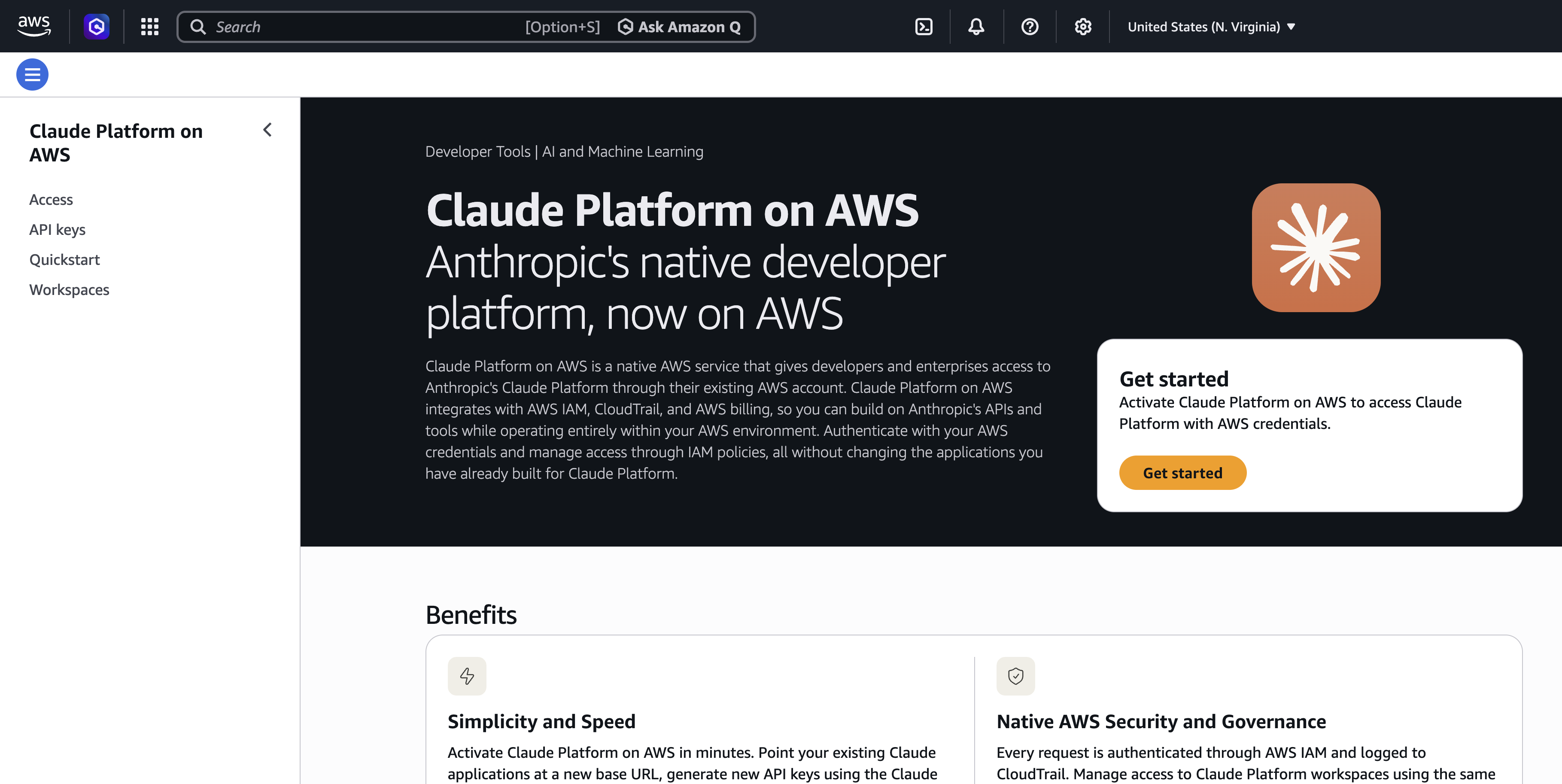
On May 11, 2026, Anthropic and AWS announced general availability for Claude Platform on AWS. On the surface, this looks like a familiar cloud marketplace integration. You enable it through an AWS account, assign permissions with IAM, watch activity through CloudTrail, and process spend through AWS Marketplace billing. The more important point is subtler: this is not simply "Claude came to AWS." It is Anthropic's native Claude Platform wearing AWS procurement, identity, and audit rails.
That distinction matters. Developers could already call Claude models through Amazon Bedrock. Bedrock is an AWS-operated model service with its own API surface, service boundary, release cadence, and regional strategy. Claude Platform on AWS is different. Anthropic operates the platform. Anthropic's documentation says Anthropic is the data processor for inference inputs and outputs, while AWS processes billing and identity metadata in the Marketplace model. In other words, the journey starts from an AWS account, but the execution boundary is not the same as Bedrock.
Why does this product exist now? The enterprise AI conversation is moving beyond benchmark tables and context length. By 2026, many teams spend more time asking who can approve a model, how usage appears in cost systems, where audit logs live, and how quickly new agent features arrive. Coding agents and business agents are not one-off API calls. They read files, call tools, move through browsers and terminals, write long session traces, and depend on product features around the model. That creates pressure for both a fast native AI platform and a familiar cloud operating model.
Claude Platform on AWS sits exactly between those needs.
This is native Claude API, not Bedrock
The AWS launch post describes Claude Platform on AWS as a new service that gives customers direct access to Anthropic's native Claude Platform experience through an AWS account, without separate credentials, contracts, or billing relationships. The included surface is broad: Messages API, Claude Managed Agents, advisor tool, web search, web fetch, MCP connector, Agent Skills, code execution, and Files API.
That list is the story. Calling a Claude model through Bedrock and using Claude Platform are both "Claude" in a loose sense, but they are different products. Anthropic's Claude Platform on AWS documentation compares the two as separate rows. Claude Platform on AWS uses Claude API paths such as /v1/{endpoint}, can pass beta features through the anthropic-beta header, and uses Claude Console. Bedrock uses Bedrock Runtime, Converse or InvokeModel APIs, and the Bedrock Console.
For developers, the difference shows up as feature velocity. Anthropic says new features and betas on Claude Platform on AWS are available on the same day as the native Claude API. Bedrock goes through the AWS service surface and release schedule. The reverse side is also important: Bedrock is closer to an AWS-operated path where AWS is the data processor. So this announcement should not be read as a strict upgrade from Bedrock. It creates a branch in the decision tree: prioritize Anthropic-native feature speed, or prioritize a Bedrock-style AWS service boundary.
AWS account, Anthropic operating boundary
The easiest sentence to misread appears in the AWS launch post. AWS states that Claude Platform on AWS is operated by Anthropic and that underlying requests and data are processed outside the AWS security boundary. That is not a scandal by itself. It is the design. But teams need to understand it before writing procurement or security language that says "we are using Claude on AWS."
Anthropic's documentation is more specific. The AWS Region selects the gateway endpoint, IAM scope, CloudTrail, and billing scope. It does not by itself pin model inference to that geography. To constrain inference to a particular geography, customers must configure inference_geo per request or set a workspace default. The documentation says the us inference geography keeps inference within U.S. data centers and carries a 1.1x price multiplier, while global can route through Anthropic-operated data centers worldwide at standard pricing.
The operational comparison looks like this:
| Comparison point | Claude Platform on AWS | Claude in Amazon Bedrock |
|---|---|---|
| Operator | Anthropic | AWS |
| API surface | Claude API and Claude Console | Bedrock Runtime, Converse, and Bedrock Console |
| Feature release path | Aims for same-day access with the native Claude API | Follows the Bedrock release surface and schedule |
| Data processor | Anthropic | AWS |
| Best fit | Teams that want Claude-native features through AWS procurement | Teams prioritizing AWS-operated processing and stricter regulatory boundaries |
This is more than a product comparison. It is a checklist for agent adoption. "We want Claude Code billed through AWS" and "our data cannot leave the AWS service boundary" are different requirements. Claude Platform on AWS makes that difference harder to blur.
Procurement becomes developer velocity
One of the more revealing reactions in the Hacker News discussion was organizational rather than technical. A commenter summarized the value as avoiding a new vendor contract, legal review, and procurement process when a team can enable the service through AWS. That is a useful way to read the product. Claude Platform on AWS is partly a product for reducing organizational friction.
The point is practical. Many engineering organizations already have AWS accounts, IAM roles, cost centers, security audit processes, centralized logging pipelines, and committed cloud spend. Bringing in a new API vendor can require separate contracts, invoices, security questionnaires, account administration, spend visibility, and approval paths. Claude Platform on AWS narrows that gap. Teams get access to Anthropic features while the first layer of access, billing, and audit follows AWS conventions.
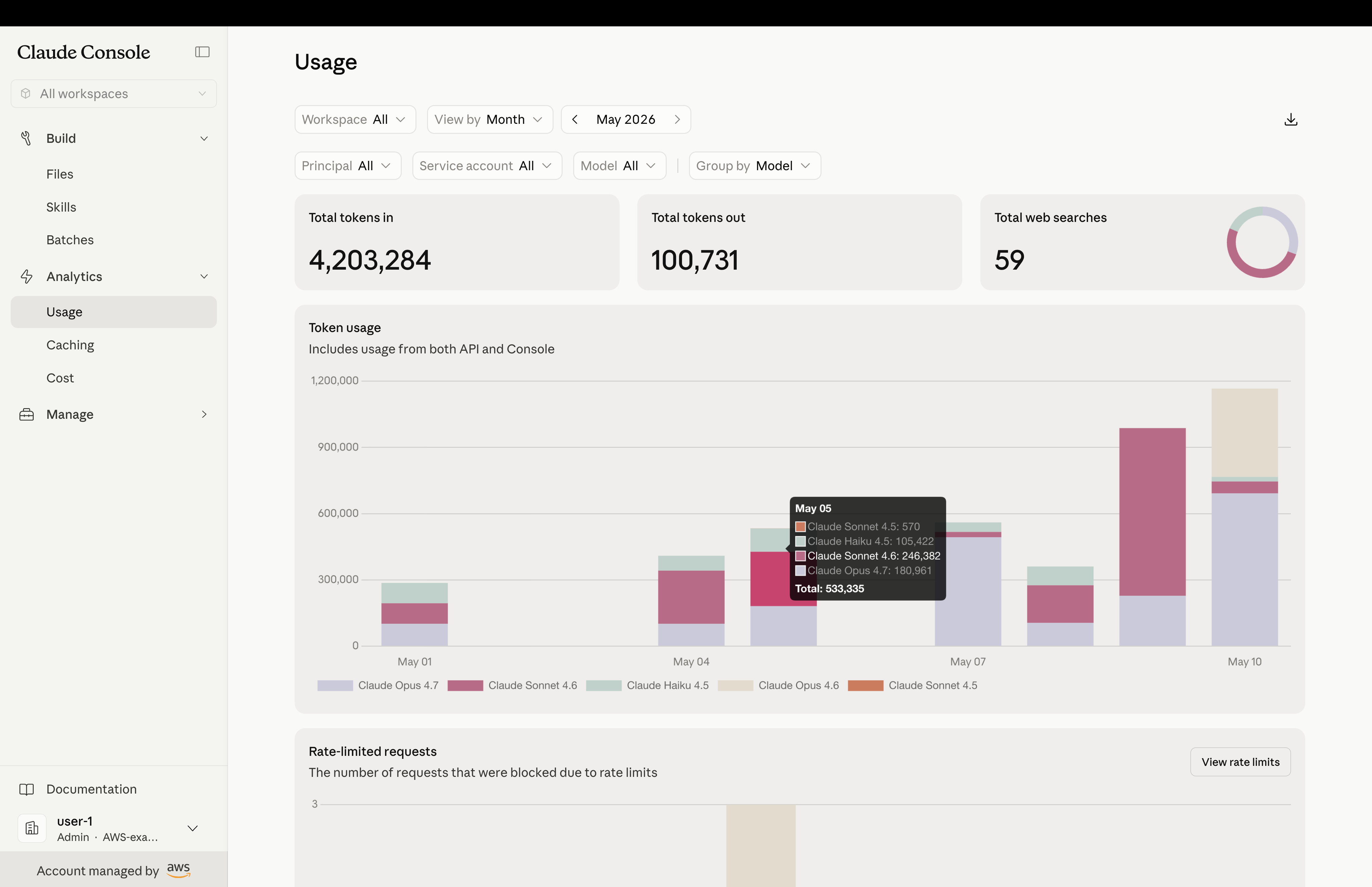
AWS emphasizes those controls directly. Authentication uses existing AWS IAM credentials. Usage is billed through AWS Marketplace on a consumption basis. Activity appears in CloudTrail. Workspaces can be treated as IAM resources, and permissions can be granted or denied against workspace ARNs. Client tools such as Claude Code and Claude Cowork can connect through this path by setting ANTHROPIC_BASE_URL and workspace headers.
That is an operational change, not just a pricing-page change. AI tools started in many companies as individual developer subscriptions, personal API keys, and credit-card experiments. Agentic tools need to graduate into corporate accounts, budgets, audit logs, policy documents, and incident review. Claude Platform on AWS is Anthropic and AWS lowering that adoption barrier together.
Feature speed has a boundary cost
This does not make Claude Platform on AWS the better path for every team. Anthropic's documentation lists meaningful limitations. HIPAA-ready programs are not supported. Workspace member management, spend limits, OAuth authentication, OpenAI-compatible endpoints, and webhooks are currently unavailable. Claude Managed Agents do not support multiagent orchestration in this path. Self-hosted sandboxes are absent, and MCP tunnels are limited to publicly accessible MCP servers.
Those limitations can change buying decisions. If a healthcare or regulated-industry team needs HIPAA readiness, "it can be enabled from AWS" is not enough. If an internal agent architecture depends on private MCP tunnels, that limitation matters. If a platform team needs dedicated Claude Code workspace analytics or strict spend limits at the workspace level, the current usage analytics and AWS-side controls may or may not be sufficient.
Community reaction clustered around this exact point. In an r/aws discussion, some users argued that if Anthropic operates the service and data is processed outside AWS boundaries, Bedrock remains the clearer enterprise path. In r/ClaudeAI, others framed the launch as the full Anthropic API wrapped in AWS procurement, identity, and billing rather than as a Bedrock replacement. Those readings are not contradictory. They answer different questions.
The dangerous phrase is "Claude on AWS." It is too broad. It can mean Claude through Bedrock. It can mean Claude Platform on AWS. Those paths differ in operator, API surface, feature velocity, data processor, and compliance fit. An AI infrastructure team should document which path is approved for which data class and workload type.
Agent features are reshaping cloud procurement
The timing is important because the feature list is agent-heavy: Claude Managed Agents, code execution, Agent Skills, MCP connector, web search, web fetch, and Files API. For simple chat or summarization, many teams can use a model endpoint through a managed cloud service. For long-running work, tool use, file processing, code execution, and connector-heavy workflows, the model provider's native platform features become more attractive.
This matches the broader direction of the market. OpenAI, Google, GitHub, Cursor, Datadog, Honeycomb, Mistral, and others are all building around the idea that an agent is not just a model. It is an operating surface. Who approves tool access? Where do execution logs live? How do teams allocate spend? Can a failed session be replayed or audited? How quickly do new model features and beta tools arrive? Those questions increasingly shape product selection.
Claude Platform on AWS is interesting because it answers those questions with a cloud marketplace shape. Anthropic wants to preserve the speed and surface area of its native platform. AWS wants to preserve its role as the center of enterprise identity, billing, and audit. Customers want to avoid new vendor friction, but they do not want to accidentally weaken data-boundary requirements. The launch does not satisfy all three goals equally. It makes the trade-off explicit.
What development teams should check now
The first decision is whether to treat this as a Bedrock substitute or as a procurement path for the Anthropic API. If the goal is to move an existing Bedrock workload unchanged, the API and data processing differences are material. If the goal is to use Claude-native API features, Managed Agents, Skills, or MCP connector through the AWS account model, Claude Platform on AWS is the more direct candidate.
The second check is data classification. Anthropic's documentation says data may not remain inside AWS, inference can route through Anthropic's primary cloud, and underlying subprocessors may change. Security reviews should quote that language directly. Choosing an AWS Region and pinning inference geography are not the same operation.
The third check is spend and usage observability. CloudTrail and AWS Cost Explorer integration are real advantages, but Anthropic says spend limits are not currently supported in Claude Platform on AWS. Teams should test whether AWS billing controls, IAM workspace scoping, and Claude Console usage analytics fit their FinOps model before scaling the service across teams.
The fourth check is agent architecture. A proof of concept can fail late if it assumes multiagent orchestration, self-hosted sandboxes, private MCP tunnels, or dedicated Claude Code analytics that are not available in this path. Teams connecting Claude Code should test the workspace header, base URL, IAM or API key flow, and audit trail before declaring the route production-ready.
The conclusion: Claude with an AWS door, not Claude inside AWS
Claude Platform on AWS captures the direction of AI infrastructure competition. Model providers are building richer native platforms. Cloud providers are protecting the enterprise operating layer around identity, billing, audit, and procurement. Customers are being asked to choose between fast native features and tighter cloud-operated boundaries depending on workload and data class.
For developers, the upside is clear. AWS accounts and IAM can now open a path to Anthropic's latest Claude features without a separate account and billing relationship. CloudTrail and AWS Marketplace fit better with existing enterprise workflows than scattered API keys and invoices. For teams waiting on native Claude features such as Managed Agents, Skills, MCP connector, and code execution, this is a practical route.
The warning is just as clear. This is not Bedrock under a new name. The operator, data processor, feature limitations, and inference geography need to be checked against the documentation. In the agent era, infrastructure choices are not only about which model is smartest. They are about which boundary the work runs in, which logs explain it, which invoice captures it, and how quickly the platform can expose new capabilities. Claude Platform on AWS is a sign that those questions are becoming the real adoption surface.
Primary sources and community discussion
- Anthropic announcement: Claude Platform on AWS
- AWS Machine Learning Blog: Introducing Claude Platform on AWS
- AWS What's New: Claude Platform on AWS general availability
- Anthropic docs: Claude Platform on AWS
- AWS docs: Claude Platform
- Hacker News discussion
- Reddit r/ClaudeAI discussion
- Reddit r/aws discussion